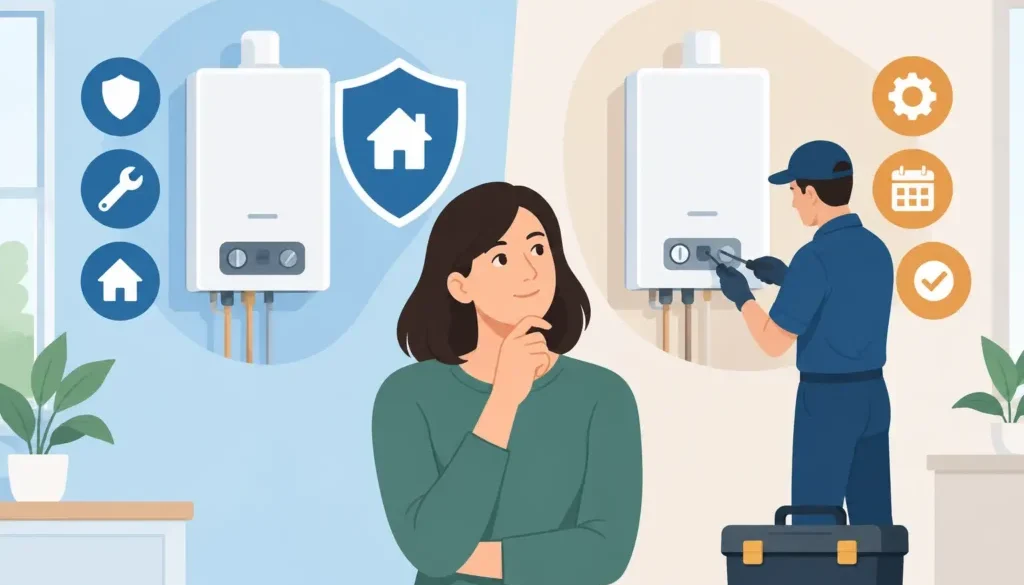
Boiler Cover vs Servicing – Which Suits You?
A boiler rarely chooses a convenient time to fail. It is usually on a cold morning, before work, or when the house is full. That is why the choice between boiler cover vs servicing matters. They can both help you look after your heating, but they do different jobs – and paying for one does not automatically mean you have the other.
For most households in Warrington and the North West, the sensible option depends on the age and condition of the boiler, how much risk you are comfortable carrying, and whether you want predictable monthly costs or a straightforward annual maintenance plan.
What is boiler cover?
Boiler cover is usually a monthly or annual plan designed to help with the cost of certain breakdowns. Depending on the provider and level of cover, it may include an engineer call-out, labour, replacement parts and, in some cases, an annual boiler service.
The attraction is clear: instead of facing an unexpected repair bill, you pay a regular amount for access to help when a covered fault occurs. For a household with an older boiler, that reassurance can feel worthwhile, particularly through winter.
However, cover is not the same as an open-ended guarantee that every heating problem will be fixed free of charge. Policies have terms, exclusions and limits. Many providers will not cover pre-existing faults, damage caused by sludge or poor system condition, certain older boilers, or parts that are considered obsolete. Some charge an excess each time you make a claim.
Before taking out a plan, check whether it covers the boiler only or also includes central heating controls, radiators, hot water cylinders, pipework and plumbing. These are often separate levels of cover, with very different prices.
Questions to ask before choosing cover
Read the policy wording rather than relying on the headline price. Check whether there is a waiting period before you can claim, whether an initial inspection is required, and what happens if your boiler cannot be repaired economically.
It is also worth checking the call-out arrangements. A plan may offer a response target rather than an immediate visit, and availability can be particularly stretched during cold weather. Local independent engineers can often provide a more direct option for repairs, without tying you into a monthly contract.
What does a boiler service include?
A boiler service is a planned annual inspection and maintenance visit carried out by a Gas Safe registered engineer. Its main purpose is to check that the boiler is operating safely and efficiently, and to identify developing faults before they turn into a complete breakdown.
During a typical service, the engineer will inspect the boiler and flue, check for safe combustion, test key safety devices, assess operating pressure and look for signs of leaks, corrosion or worn components. They may also clean parts where required and record the service in the boiler documentation.
A service does not normally include replacement parts or repairs. If a fault is found, the engineer should explain what needs doing and provide clear advice on the next step. This is one of the key differences in the boiler cover vs servicing decision: servicing is preventive maintenance, while cover is primarily financial protection against specified repair costs.
For boilers still within the manufacturer warranty period, annual servicing is commonly a condition of keeping that warranty valid. Missing a service could leave you responsible for a repair that may otherwise have been covered by the manufacturer.
Boiler cover vs servicing: the practical difference
Think of an annual service as looking after the boiler you have. It gives the system a regular professional check, supports safe operation and can help spot small issues early. It is a planned expense, usually booked at a time that suits you.
Boiler cover is about reducing the financial shock if something goes wrong later. It may include a service, but only if the specific policy says so. Equally, a boiler that is serviced every year can still suffer an unexpected component failure, so a service does not remove every repair risk.
For many homeowners, an annual service plus a contingency fund for repairs is the most cost-effective route. This can work well where the boiler is relatively modern, reliable and supported by a manufacturer warranty. Rather than paying monthly for cover that may never be used, you keep money aside for a future repair or replacement.
Cover may be more suitable where the boiler is older but still repairable, household budgets need to be predictable, or an unexpected bill would be difficult to manage. The value depends on the price of the plan, the excess, the exclusions and how likely the system is to need attention.
When boiler cover can be worthwhile
Boiler cover can offer peace of mind, but it is worth approaching it realistically. It may suit you if you have a boiler that is out of warranty, you do not have savings set aside for emergency repairs, and the policy covers the parts most likely to cause concern.
It can also be useful for busy households that want one contact point for breakdowns and annual maintenance. That said, convenience should not override the policy details. A lower monthly payment can look appealing until you discover that a system fault, damaged pipework or an old unavailable part is excluded.
If your boiler is nearing the end of its working life, cover can become harder to obtain or less valuable. Repeated repairs on an inefficient boiler can add up. In that situation, it may be better to put the monthly cost of a plan towards a replacement boiler that is more efficient, reliable and covered by a new manufacturer warranty.
When an annual service is the better priority
Every gas boiler should be serviced regularly, regardless of whether you have a cover plan. Safety is the first reason. A properly maintained boiler is more likely to operate as intended, while an inspection can identify concerns with combustion, flues or leaks that should not be ignored.
There is a practical comfort benefit too. A service can reveal issues such as low system pressure, inconsistent heating performance or early wear in components. Addressing these problems before winter gives you a better chance of avoiding a no-heating call-out when demand is highest.
An annual service is particularly important for homeowners with a boiler warranty and for landlords. Landlords also need a valid annual Gas Safety Record, often called a CP12, for each rental property with gas appliances. A boiler service and a landlord gas safety check are related but not automatically the same service, so make sure the visit covers the right legal and maintenance requirements.
Costs, repairs and avoiding false savings
The cheapest option is not always the one with the lowest monthly price. Compare the annual cost of cover with the likely cost of a service and occasional repair, then consider the boiler’s age and repair history. If you have paid for cover for several years without making a claim, that does not automatically mean it was poor value – you were paying for protection – but it is reasonable to review whether it still suits your circumstances.
Keep an eye on warning signs between services. Noises such as banging or whistling, pressure that keeps dropping, cold radiators, recurring error codes, leaks, or unreliable hot water should be checked promptly. Continuing to reset a boiler without finding the cause can make a small problem more expensive.
Good maintenance also extends beyond the boiler itself. Dirty system water, inadequate inhibitor levels, failing controls and air in radiators can all affect heating performance. In some cases, a power flush or targeted system treatment may be recommended, but only after the heating system has been assessed properly.
Choosing the right approach for your home
There is no single answer for every household. A newer boiler with a valid warranty may only need its annual service and sensible budgeting for the future. An older boiler, or a home where a surprise repair bill would cause real pressure, may justify a carefully chosen cover plan alongside regular servicing.
The key is not to treat cover as a replacement for maintenance. Whether you use a national policy or prefer to arrange repairs locally, book an annual service with a qualified engineer and keep the paperwork safe. If your boiler has been unreliable, an experienced local engineer can help you understand whether repair, maintenance or replacement is the most sensible next step – before the cold weather makes the decision for you.