How to Detect Gas Leaks Safely in Your Home
A gas leak is not a problem to monitor overnight or investigate with a bit of DIY. If you are wondering how to detect gas leaks, the priority is knowing the warning signs, acting calmly and getting professional help when there is any doubt.
Natural gas is treated with a distinctive sulphur-like smell so that leaks can be identified quickly. However, smell is not the only sign, and not every gas-related danger has an obvious odour. Knowing what to look for can help protect your household, property and heating system.
Common signs of a gas leak at home
The most recognisable sign is a strong smell often compared with rotten eggs or cabbage. Gas suppliers add this odour to natural gas because gas itself has no smell. If that smell appears suddenly near your boiler, cooker, gas fire, meter or pipework, treat it seriously.
You may also hear a hissing or whistling sound near a gas appliance or pipe. This is more likely with a larger leak and should never be ignored. Outside, dead or discoloured plants around an exposed gas pipe can sometimes indicate a leak, although there may be other causes.
A gas appliance that repeatedly goes out, produces an unusual flame or is not working as it normally does can also need attention. A healthy gas flame should generally be crisp and blue. A lazy yellow or orange flame may point to incomplete combustion or an appliance fault. It is not proof of a gas leak, but it is a reason to stop using the appliance and arrange for a Gas Safe registered engineer to inspect it.
Other possible signs include unexplained condensation around windows, soot or dark staining near an appliance, and household members developing symptoms that improve when they leave the property. Headaches, dizziness, nausea and tiredness should be taken seriously, particularly when they occur alongside appliance problems. These can be signs of carbon monoxide exposure rather than a gas leak, which requires equally urgent action.
How to detect gas leaks without taking risks
Your senses can alert you to a possible leak, but they should not be used to investigate one closely. Do not put your face near pipework, a meter or an appliance to try to locate the smell. Never use a naked flame, lighter, match or cigarette to test for escaping gas.
If you can smell gas but are unsure where it is coming from, avoid trying to tighten fittings or remove appliance panels. A leak can occur at a connection, within an appliance or on pipework that is not visible. The safest approach is to treat the smell as genuine until a qualified engineer confirms otherwise.
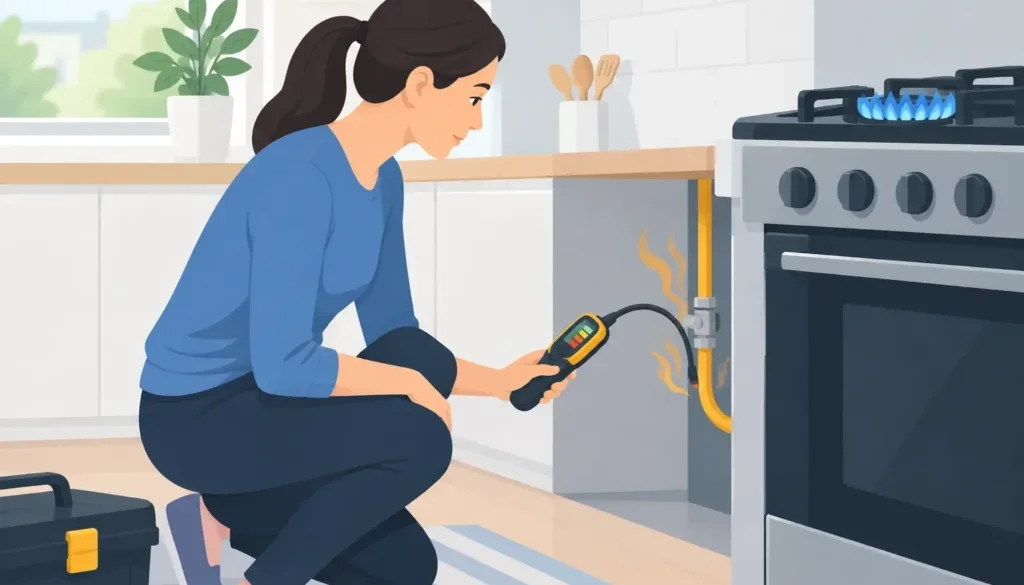
A gas leak detection spray or soapy water solution can reveal bubbles at an accessible connection, but this is not a suitable diagnostic method for most homeowners. It should not be used on a suspected major leak, concealed pipework, boiler components or any part you would need to disturb to reach. More importantly, it must never delay calling for emergency help if you can smell gas.
Gas alarms can offer additional reassurance, particularly in homes with gas appliances, but they are not a replacement for proper installation, servicing and professional inspection. Choose equipment designed for its intended purpose and follow the manufacturer’s instructions on location, testing and replacement. A carbon monoxide alarm detects carbon monoxide, not a natural gas leak, so it is sensible to understand the difference.
What to do if you smell gas
If you suspect a gas leak, do not panic, but act straight away. Avoid using anything that could create a spark. Do not turn electrical switches on or off, use doorbells, light matches, smoke, start a vehicle nearby or use your mobile phone inside the property.
Open doors and windows if you can do so safely, then leave the building with everyone else, including pets. If it is safe and you know how, turn off the gas supply at the emergency control valve beside your gas meter. Do not take risks to reach the meter, particularly if the smell is strong or you hear gas escaping.
Once outside and away from the property, call the National Gas Emergency Service on 0800 111 999. This free number is available 24 hours a day. Follow the advice given and do not return indoors until you are told it is safe.
If anyone feels unwell, seek medical advice urgently. For severe symptoms, collapse or difficulty breathing, call 999. Fresh air is important, but it is not a substitute for medical attention where carbon monoxide poisoning may be involved.
Gas leak or carbon monoxide problem?
Gas leaks and carbon monoxide risks are related, but they are not the same issue. A gas leak means unburned gas is escaping from pipework, a meter or an appliance. It creates a fire and explosion risk, and the added smell is often the first warning.
Carbon monoxide is produced when fuel does not burn properly. It has no colour, taste or smell, which is why a working audible carbon monoxide alarm is essential in rooms containing fixed combustion appliances such as boilers, gas fires and solid-fuel appliances. Symptoms can be mistaken for flu, tiredness or a virus, but unlike flu they may ease when you are away from home.
If your carbon monoxide alarm sounds, turn off appliances if it is safe to do so, open doors and windows, leave the property and seek urgent professional advice. Do not silence the alarm and assume it was a false alert. The appliance must be checked before it is used again.
Prevention: the safest way to find faults early
Most gas issues are less likely when appliances are installed correctly and maintained regularly. An annual boiler service allows a qualified engineer to check that the appliance is burning gas safely, ventilating correctly and operating as it should. It can also identify worn parts or developing faults before they lead to a breakdown.
Landlords have a legal duty to arrange an annual gas safety check for relevant gas appliances and flues in their rental properties. A current Gas Safety Record, commonly known as a CP12 certificate, helps demonstrate that these checks have been completed. Homeowners are not legally required to have an annual check, but regular servicing remains a sensible safety measure.
Do not block air vents or permanently close ventilation grilles near appliances. Modern homes can be draught-proofed effectively, but gas appliances may still need adequate ventilation to work safely. If you are having building work, a new kitchen fitted or a boiler relocated, make sure any gas work is carried out by a suitably qualified Gas Safe registered engineer.
When to call a Gas Safe registered engineer
Emergency gas escape concerns should always be reported first through the National Gas Emergency Service. For non-emergency concerns, such as a yellow boiler flame, staining around an appliance, recurring pilot light problems or a faint intermittent gas smell that has stopped, arrange an inspection promptly.
An engineer can test the installation properly, check appliance pressure and combustion, inspect flues and ventilation, and identify whether the fault lies with the appliance or the gas supply. This is safer and more reliable than attempting a repair yourself. Gas work is not a place to cut corners, regardless of how small the job may appear.
For homeowners and landlords in Warrington and the wider North West, AquaHeat Heating Services can inspect domestic gas appliances and heating systems with a safety-first approach. The key thing is not to wait for a suspected fault to become an emergency: if something smells, sounds or behaves differently, stop using it and arrange the right help.