Boiler Flue Inspection for a Safer Household
A boiler can appear to be working normally while its flue has a problem that is not obvious from inside the house. A professional boiler flue inspection checks the route that combustion gases take from your boiler to the outside, helping to identify faults before they become a safety issue. For homeowners and landlords in Warrington, it is a sensible part of keeping a gas heating system safe, reliable and compliant.
Why the boiler flue matters
Your boiler burns gas to produce heat. This process also creates combustion products, including carbon monoxide, which must be carried safely outside through the flue. The flue is the pipework that performs this job, usually running from the boiler through an external wall, roof or chimney.
If the flue is damaged, poorly installed, blocked or disconnected, fumes may not leave the property as intended. In some cases, the boiler may shut down and display a fault code. In others, there may be no clear warning until an engineer carries out the correct tests.
A flue must also draw fresh air correctly where required. Modern room-sealed boilers use a concentric flue, often a pipe within a pipe, to bring air in and take combustion gases out. Both paths need to be clear, correctly fitted and suitably supported.
What happens during a boiler flue inspection?
A qualified Gas Safe registered engineer will assess the flue as part of a boiler service, gas safety check or a specific investigation where there is a concern. The exact work depends on the boiler type, flue route and access available, but the inspection normally starts with a visual check of the boiler and visible pipework.
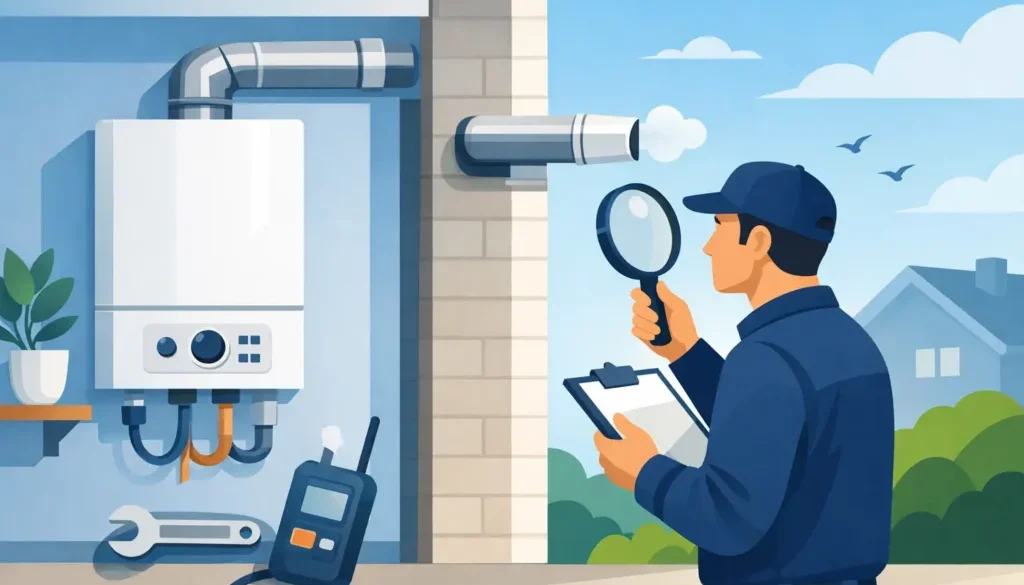
The engineer will look for signs of damage, loose joints, corrosion, unsuitable flue materials, inadequate support and incorrect angles. They will check that the terminal – the outlet visible outside the property – is in a safe position and clear of obstructions such as leaves, debris, fencing or building work.
The boiler is then tested while operating. This can include checking combustion readings with calibrated equipment to confirm that the appliance is burning gas correctly and that products of combustion are being removed safely. The engineer may also inspect seals, the condensate arrangement and the condition of the boiler casing.
Where a flue runs through a void, ceiling, boxed-in section or behind fitted units, a full inspection may require more than a quick look. Proper access is particularly important because joints hidden from view can deteriorate or be disturbed during later building work.
Concealed flues need safe access
A concealed flue is one that cannot be seen along its full length because it passes through a wall, ceiling void, floor void or cupboard boxing. This does not automatically mean there is a fault. However, the flue needs to be installed so that it can be inspected and maintained appropriately.
Access panels may be required where flue joints are hidden. These allow an engineer to check the condition of the pipework without removing large sections of wall or ceiling. If suitable access is not available, the engineer will explain the options. This might involve fitting inspection hatches, altering the boxing, or carrying out further investigation before confirming the installation is safe.
It can feel inconvenient, particularly where a kitchen or bathroom has been recently refurbished. However, covering a flue completely can create a bigger problem later. Planning access early is usually simpler and less costly than opening finished surfaces after a concern has been identified.
Signs that you should arrange an inspection
Do not wait for an annual appointment if something about the boiler or flue has changed. A new boiler fault code, repeated shutdowns, staining around the boiler or external flue terminal, unusual smells, or visible damage after bad weather all justify a prompt professional check.
You should also arrange an inspection if building work has taken place near the flue. Extensions, replacement windows, new extractor fans, external cladding, roof repairs and altered garden structures can affect terminal clearances or damage pipework. A terminal that was correctly positioned when the boiler was fitted may need reassessment after changes to the property.
Condensation or dripping around the flue terminal can sometimes be normal, especially in cold weather, but excessive water, staining or signs of corrosion should not be ignored. Likewise, a flue terminal blocked by stored items, vegetation, snow or a newly fitted cover needs attention. Never attempt to alter the flue yourself.
A carbon monoxide alarm is strongly recommended in rooms containing a gas boiler. It provides an essential warning if carbon monoxide is detected, but it is not a substitute for a properly installed boiler, a sound flue and regular professional checks. If a carbon monoxide alarm sounds, leave the property, seek urgent advice and do not re-enter until it is safe to do so.
Is a boiler service the same as a flue inspection?
A proper annual boiler service should include checks on the flue and combustion performance, so for many homes it provides the routine inspection needed. The engineer will assess what can be seen and accessed, then advise if further work is necessary.
However, a separate boiler flue inspection may be needed where the flue is concealed, where installation work has recently been completed, or where there are concerns about the boiler’s operation. It may also be requested when buying a property with an older or unfamiliar heating system.
For homeowners, an annual boiler service is not generally a legal requirement, but it is a practical way to maintain safety, efficiency and manufacturer warranty conditions. For landlords, gas safety responsibilities are more specific. A landlord must ensure an annual gas safety check is completed by a Gas Safe registered engineer and provide the relevant gas safety record to tenants. The condition of associated flues is part of that safety assessment.
How often should flues be checked?
In most domestic properties, annual checking alongside the boiler service is the sensible baseline. More frequent attention may be appropriate if the boiler is older, has a history of faults, operates in a demanding environment, or has a flue route that is difficult to access.
A check is also worthwhile after storm damage, a roof leak, pest activity in a loft, or major internal alterations. Properties that have been empty for a long period should have the heating system checked before it is put back into regular use.
There is no benefit in arranging unnecessary work simply because a flue is not visible from every angle. The right approach depends on the appliance, installation and evidence available. A qualified engineer can explain what is required, what is recommended and why.
Preparing for an engineer’s visit
Clear access to the boiler, controls and any visible flue boxing before the appointment. If the flue runs through a loft, make sure it is safe to enter and that there is a clear route where possible. Let the engineer know about recent alterations, previous boiler faults, leaks, unusual noises or any work carried out near the external terminal.
It is also useful to keep previous service records and installation paperwork. These can help identify the boiler model, flue configuration and any recommendations made at earlier visits. If access panels are present, make sure they can be opened without moving fixed furniture or stored items.
A flue does its most important work out of sight, which is exactly why it deserves professional attention. If you are due a boiler service, have noticed a change in how your boiler is running, or are unsure whether a concealed flue can be checked properly, arrange an assessment with a qualified local gas engineer. A clear answer now can prevent a more serious problem later.