Power Flush Before and After Results Explained
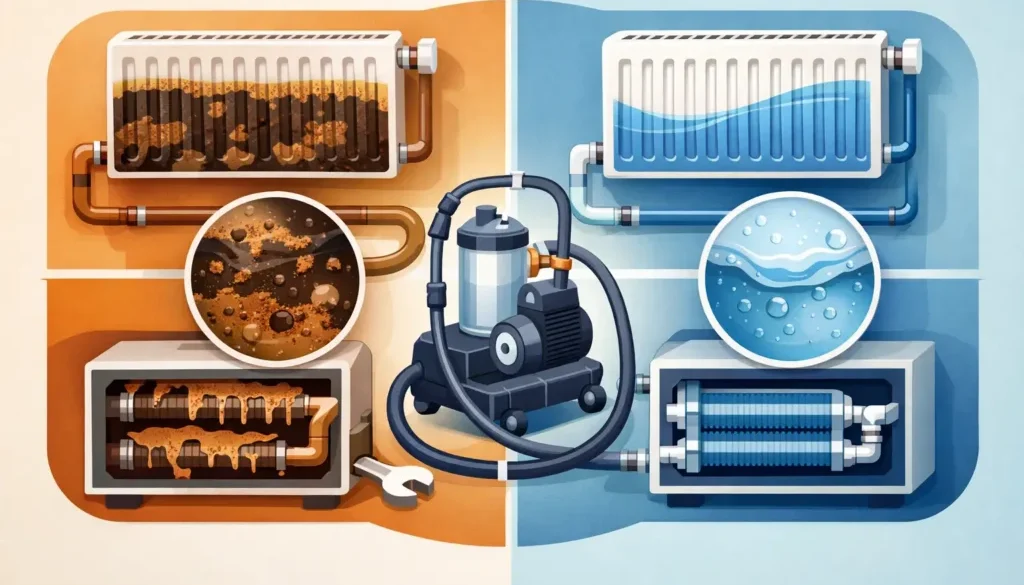
A heating system rarely stops working without warning. Radiators may take longer to warm up, stay cold at the bottom, make tapping noises or need frequent bleeding. Looking at a power flush before and after can help explain why this happens: the change is not just darker water coming out of the system, but cleaner circulation and more even heat around the home.
A power flush is a professional clean for a wet central heating system. It removes sludge, rust particles and debris that have built up in radiators, pipework and boiler components over time. For many homes in Warrington and the North West, it can be a practical way to improve heating performance without replacing a system that is otherwise in good condition.
What does a power flush do?
Most domestic heating systems contain water and metal components. Over the years, a natural chemical process can create magnetite, a black iron oxide sludge. This sludge settles in low points, particularly at the bottom of radiators, and restricts the flow of heated water.
A power flushing machine connects to the heating system and circulates water at a controlled high flow rate. An engineer works through the system, often treating individual radiators as needed, to dislodge and remove debris. Appropriate cleaning chemicals may be used where the system condition calls for them, followed by a thorough rinse. Once the water is clear, inhibitor is added to help protect the system against future corrosion.
It is not a quick drain and refill. Draining a system removes some dirty water, but much of the settled sludge can remain behind. A proper power flush is more thorough and should be carried out carefully to suit the age and condition of the system.
Power flush before and after: the changes to expect
The most noticeable result is usually more consistent radiator heat. Before cleaning, a radiator may be hot along the top but cool or completely cold at the bottom. After a successful flush, heat should spread more evenly across the panel because water can circulate properly again.
Homeowners often also notice that rooms warm up faster. When sludge is restricting the system, the boiler has to work harder and for longer to deliver heat. Removing that restriction can help the system respond more effectively to the thermostat. This may reduce wasted energy, although the exact saving depends on the boiler, controls, insulation, radiator sizes and how the property is used.
Other before-and-after differences can include quieter operation. Kettling, gurgling or banging is not always caused by sludge, but debris and poor circulation are common contributors. Cleaning the system may reduce these noises where they are linked to contamination.
The water removed during the job is often a clear visual indicator. A heavily contaminated system may produce very dark, almost black water at the start. By the end, the aim is to leave the system circulating clean water with the correct level of inhibitor. The colour alone is not the full measure of success, but it is a useful sign of the debris that was affecting the system.
Signs your heating system may need cleaning
A power flush is not necessary for every heating issue. A faulty pump, stuck valve, failed thermostat or boiler fault needs the right diagnosis rather than an automatic flush. However, the following signs are worth having checked:
- Radiators are cold at the bottom or have noticeable cold patches.
- Some radiators stay cool while others heat normally.
- The boiler is noisy, particularly when heating water.
- The system needs regular bleeding or loses performance over time.
- A boiler repair, replacement or new radiator installation has highlighted dirty system water.
Older systems are more likely to have accumulated sludge, particularly if inhibitor has not been maintained. Equally, a newer system can become contaminated if it has been altered, poorly maintained or filled repeatedly with fresh water.
When a power flush is recommended before a new boiler
Installing a modern boiler onto a dirty heating system can cause avoidable problems. Debris already sitting in radiators and pipework may be carried towards the new boiler, affecting pumps, heat exchangers and valves. Modern boilers are efficient, but their internal components can be less tolerant of poor water quality than older equipment.
For this reason, an engineer may recommend a power flush before fitting a replacement boiler, especially if the existing system water is heavily discoloured or the radiators show clear signs of sludge. In other cases, a less intensive clean may be sufficient. The right approach depends on the system condition, not simply its age.
This is also a good time to consider system protection. A magnetic filter can catch circulating metallic debris before it reaches sensitive boiler parts, while inhibitor slows down corrosion inside the system. Neither replaces good installation and regular servicing, but together they help keep clean systems cleaner for longer.
What happens during the appointment?
A power flush normally takes several hours. Larger properties, systems with many radiators or heavily contaminated systems can take longer. The engineer will first inspect the heating system and discuss any concerns, such as leaks, problem radiators or a boiler that is already showing faults.
The flushing equipment is then connected at a suitable point in the system. Each radiator may be worked on in turn to encourage trapped debris to move, and the flow may be reversed to improve the clean. Floors and nearby areas should be protected, and the system should be refilled, vented and tested once the work is complete.
There can be a little disruption while radiators are being treated, but there should not be unnecessary mess. You should also be told if the engineer finds a separate fault that cleaning alone will not resolve.
Important limits to understand
A power flush can improve circulation, but it cannot repair a damaged radiator, a leaking pipe, a worn-out pump or a boiler component that has failed. If a radiator is internally corroded beyond recovery, replacement may be more sensible than trying to clean it indefinitely.
There is also a judgement call with very old systems. Sludge can sometimes mask weak points in ageing pipework or radiators. Once debris is removed and circulation improves, an existing weakness may become apparent. A qualified engineer should assess the system first and explain any risks clearly, rather than promising a guaranteed cure.
That said, avoiding a needed clean can create its own problems. Poor circulation places extra strain on a boiler and can leave parts of the home uncomfortable, even when the heating is switched on for hours.
Keeping the results after a power flush
The aftercare matters. Inhibitor should be present at the correct concentration after cleaning, and a magnetic filter should be checked during annual boiler servicing if one is fitted. Avoid repeatedly topping up the heating system unless advised, as fresh water introduces oxygen and minerals that can encourage corrosion.
If you are replacing radiators, extending pipework or having major heating work completed, ask how the system will be cleaned and protected afterwards. This is especially relevant for landlords, who need reliable heating for tenants and want to reduce the risk of avoidable call-outs.
AquaHeat Heating Services can assess whether poor heating performance is likely to be caused by sludge or whether another repair is needed. The useful result is not simply cleaner water in the system, but a heating system that warms your home reliably, protects your boiler and gives you a clearer idea of what condition it is in.