Boiler Servicing Guide for Homeowners
A boiler rarely picks a convenient time to go wrong. It is usually on a cold morning, before school, before work, or just as you realise there is no hot water. That is why a good boiler servicing guide matters. Regular servicing helps keep your heating reliable, keeps safety checks up to date, and gives you a better chance of spotting wear before it turns into a breakdown.
For most households, a boiler service is not about fixing a fault there and then. It is about prevention. A properly serviced boiler can run more efficiently, suffer fewer avoidable issues, and stay in line with manufacturer requirements if the appliance is still under warranty. For landlords, it also sits alongside wider legal responsibilities for gas safety.
What a boiler service actually covers
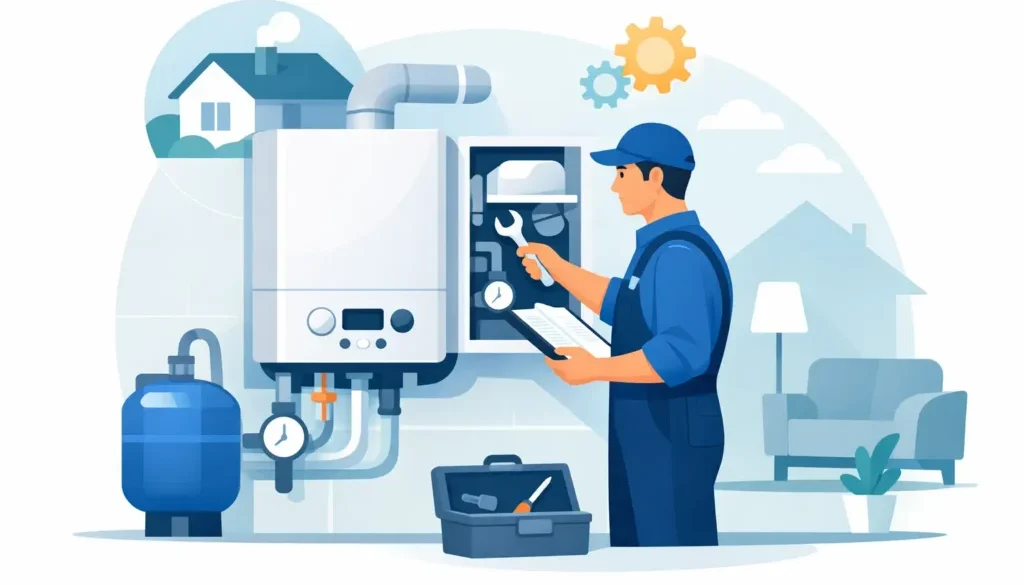
A boiler service is a planned inspection and maintenance visit carried out by a qualified Gas Safe engineer. The exact checks vary slightly depending on the boiler type, age and manufacturer guidance, but the aim is consistent – to make sure the appliance is operating safely and as it should.
In most homes, the engineer will start by inspecting the boiler and its immediate surroundings. That includes looking for signs of corrosion, leaks, poor ventilation, damage to seals, and anything that suggests the unit has been under strain. They will also check that the boiler is installed correctly and that flues and pipework appear sound.
From there, the service usually moves on to operational and safety checks. Controls are tested, gas pressure may be checked, and key components are examined for wear or blockage. Combustion readings can also be taken to confirm the boiler is burning fuel correctly. If parts need cleaning, that may be done as part of the visit, although a heavily neglected appliance can sometimes need further work beyond a standard service.
A service is not exactly the same as a repair. If the engineer finds a failed component, major leak, or an unsafe condition, extra work may be needed. That is why it is best to see servicing as routine maintenance rather than a catch-all fix for every heating problem.
Boiler servicing guide: when to book
The simplest answer is once a year. Annual servicing is the standard recommendation for domestic boilers, and in practical terms it makes sense. Leaving a system untouched for years increases the chance that small issues go unnoticed until the heating stops working altogether.
Timing also matters. Many people wait until autumn or winter to think about their boiler, but that is when engineers are busiest and breakdown demand rises. Booking in late spring or summer often gives you more flexibility and means any problems can be dealt with before the colder weather arrives.
There are a few situations where yearly servicing becomes even more important. If your boiler is older, if it has had repeated faults, or if it works hard in a busy household, keeping to a strict service schedule is sensible. Likewise, if your manufacturer requires annual servicing to maintain a warranty, missing a year can prove costly later.
For landlords, a service can be arranged at the same time as other gas safety work, but it is worth remembering that a boiler service and a CP12 certificate are not identical things. They may happen during the same visit, but they serve different purposes.
Why regular servicing is worth it
The first reason is safety. Gas appliances need to burn correctly and vent safely. Servicing helps identify issues that may not be obvious to a householder, such as problems with combustion, seals, or flue performance.
The second reason is reliability. Boilers contain working parts that naturally wear over time. A service gives an engineer the chance to spot signs of strain before they become a complete failure. That does not eliminate the risk of breakdowns, but it can reduce it.
There is also the question of efficiency. A boiler that is dirty, poorly adjusted or developing faults can work harder than it should. In some homes the savings from servicing are modest, while in others, especially where maintenance has been neglected, the difference can be more noticeable. It depends on the condition of the boiler and the wider heating system.
Finally, regular servicing helps with record keeping. If you ever need to make a warranty claim, sell a property, or demonstrate a pattern of responsible maintenance, a documented service history is useful.
Signs your boiler should be checked sooner
Even with annual servicing in place, some warning signs should not wait. Strange noises such as banging, whistling or gurgling can point to pressure issues, trapped air, limescale build-up or component wear. Water around the boiler should always be taken seriously, even if it seems minor.
Other common signs include inconsistent heating, radiators taking longer to warm up, hot water cutting in and out, pressure that keeps dropping, or error codes on the display. If your pilot light behaviour changes on an older appliance, or your boiler keeps needing resets, it is worth getting it looked at.
A service may identify the cause, but if the appliance is actively faulty, you may need a repair appointment instead. That is why it helps to describe the symptoms clearly when booking.
What homeowners can do between services
A boiler is not a DIY appliance, and internal gas work should only be handled by a qualified engineer. That said, there are a few practical checks homeowners can carry out safely.
You can keep the area around the boiler clear, check the pressure gauge if your model has one, and make sure external vents and flue terminals are not obstructed. Bleeding radiators when needed can also improve system performance, although persistent air in the system may point to a deeper issue.
It is also worth paying attention to changes in how your heating behaves. If the boiler starts short-cycling, the hot water becomes unreliable, or you notice new noises, do not ignore them for months. Early attention often means simpler work.
If you have a condensate pipe that runs outside, be aware that it can freeze during very cold weather. That is a common winter problem with condensing boilers and can stop the system from working. The remedy depends on the installation, so if you are unsure, get advice rather than guessing.
Boiler servicing guide for landlords
Landlords have an extra layer of responsibility because gas safety in rented property is a legal matter, not just a maintenance preference. An annual gas safety check is required for relevant appliances and flues, and records must be handled correctly.
A boiler service is still a worthwhile separate step, even when the gas safety certificate is current. The CP12 confirms safety at the time of inspection, while a service is more focused on the condition, operation and upkeep of the appliance. In practice, combining the two can be efficient, but one does not automatically replace the other.
For managed properties or portfolios, planning ahead is the key. Leaving certificates and servicing until the last minute creates pressure for both landlord and tenant, especially during peak heating season.
How much a boiler service costs
Prices vary by area, boiler type and what is included, so there is no single figure that fits every property. A straightforward annual service on a modern domestic boiler is usually less expensive than an emergency repair, but if faults are found, parts and additional labour can increase the final cost.
Cheapest is not always best. What matters is that the service is carried out properly by a qualified Gas Safe engineer who checks the appliance thoroughly and explains any concerns clearly. A rushed appointment that misses developing problems is poor value, however low the initial price.
For homeowners, fair pricing and clear communication matter more than headline promises. You should know what is included, whether any repairs are extra, and if the engineer recommends follow-up work, why that recommendation has been made.
Choosing the right engineer
When booking a service, qualifications and experience matter. The engineer should be Gas Safe registered and competent to work on your type of appliance. Beyond that, look for a business that turns up when it says it will, explains findings in plain English, and treats safety as non-negotiable.
Local firms often have an advantage here because reputation is built job by job. For households in Warrington and the wider North West, working with an established domestic heating company can make ongoing maintenance easier, especially if servicing, repairs and wider plumbing or heating work may all be needed over time.
A good engineer will not create panic where none is needed. Sometimes a boiler needs urgent repair or replacement. Sometimes it simply needs routine care and a small adjustment. The difference matters, and honest advice is part of the service.
When servicing is not enough
There comes a point when annual maintenance cannot make an ageing boiler economical or dependable. If you are paying for repeated repairs, struggling with parts availability, or dealing with uneven heating year after year, replacement may be the better long-term decision.
That does not mean every older boiler should be changed immediately. Some continue to run well with proper care. But if servicing keeps revealing new faults, it is sensible to weigh the repair costs against the benefits of a newer, more efficient model. A trustworthy engineer should talk you through that balance without pushing a replacement unnecessarily.
If there is one useful rule in any boiler servicing guide, it is this: do not wait for a complete failure before paying attention to your heating system. A boiler tends to give small warnings before it gives up altogether, and acting on them early usually leaves you with more options, less stress, and a warmer home when you need it most.