Homeowner Guide to Boiler Warranties Explained
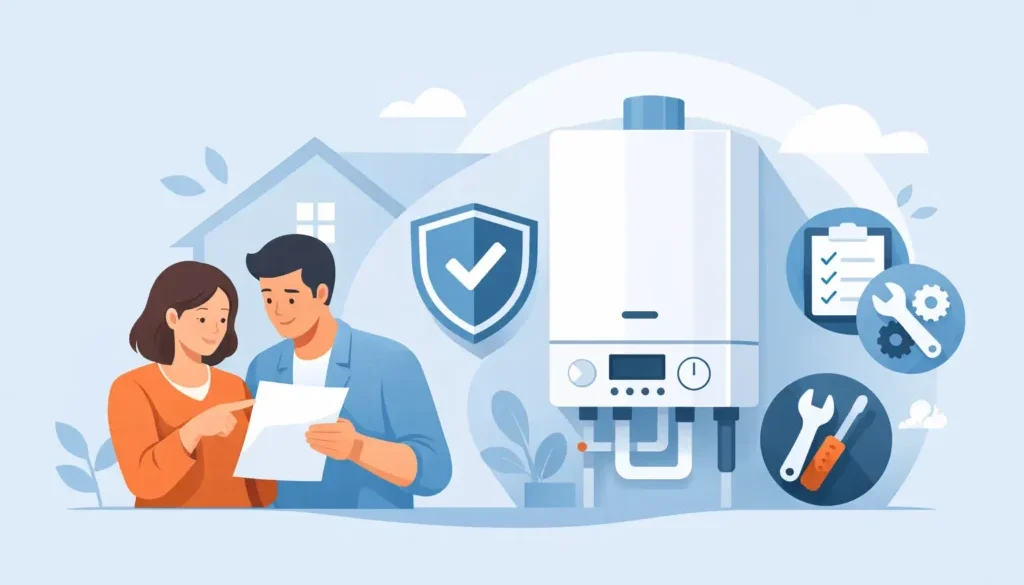
A new boiler warranty can provide valuable reassurance, but only if the installation, registration and ongoing servicing meet the manufacturer’s conditions. This homeowner guide to boiler warranties explains what is usually covered, what can invalidate cover, and how to avoid an unwelcome repair bill when you need your heating most.
What a boiler warranty actually covers
A boiler warranty is the manufacturer’s promise to repair or replace specified faulty parts within a set period. Depending on the make, model and installer accreditation, this may range from a few years to 10 years or more. The length is useful, but the terms behind it matter just as much.
Most manufacturer warranties cover faults caused by defective materials or manufacturing. For example, if an internal component fails because it was faulty, the manufacturer may supply the part and arrange an approved repair. Some warranties cover labour as well as parts, while others have separate terms. Always check this before assuming a repair will be free of charge.
A warranty is not the same as a service plan, insurance policy or home emergency cover. These products can help with a wider range of breakdowns, call-out charges and repairs, but they come with their own exclusions and excesses. Your boiler warranty is generally focused on defects in the boiler itself.
Warranty, guarantee and insurance: the difference
The words warranty and guarantee are often used interchangeably, and manufacturers do not always use them in exactly the same way. In practical terms, the paperwork supplied with your boiler will set out the protection you have and the conditions you must meet.
A manufacturer warranty usually applies to the boiler and its original installation. A workmanship guarantee, on the other hand, comes from the installer and relates to the quality of their work. If a pipe joint installed during the job develops a leak, that is not necessarily a boiler manufacturer issue.
Home emergency insurance can be useful for sudden heating or plumbing problems, but it may not cover pre-existing faults, routine wear and tear, or every part of your heating system. Read the policy carefully rather than relying on the headline level of cover.
The conditions that keep boiler cover valid
The most common reason for a warranty claim to be refused is not that the boiler is too old. It is that one of the warranty conditions has not been met. These requirements are normally straightforward, but they need attention from day one.
Professional installation and commissioning
Your boiler must be installed by a suitably qualified Gas Safe registered engineer. The system should be correctly commissioned, with the boiler settings, gas rate, safety checks and system performance recorded in the manufacturer’s benchmark documentation or digital record.
The engineer should also explain how to use the controls, top up pressure where appropriate, and recognise warning signs. Keep your installation paperwork, invoice and commissioning record somewhere safe. A photo stored securely on your mobile phone or computer can be helpful as backup.
Registering the boiler on time
Many manufacturers require the boiler to be registered soon after installation, often within 30 days. Some installers register it for you, but do not assume this has happened. Ask for confirmation and retain the registration details.
Without registration, you may still have limited statutory rights, but you could lose access to the longer manufacturer warranty that formed part of the purchase. Check the date promptly after installation rather than leaving the paperwork in a drawer.
Annual servicing
Most extended boiler warranties require an annual service by a Gas Safe registered engineer. This helps keep the appliance safe, efficient and working as intended, while giving an engineer the chance to spot small issues before they become a breakdown.
The service must usually be completed every 12 months, not simply once during each calendar year. If a boiler was serviced in February one year and then in March the next, the gap may exceed the permitted interval. Manufacturers vary, so follow the wording in your warranty documents.
Keep every service record. A stamped benchmark book, digital certificate, invoice and service report all provide useful evidence. If you make a claim years later, the manufacturer may ask to see this history.
What boiler warranties often do not cover
A long warranty does not mean every heating fault is included. Many problems are caused by the wider system, poor water quality, external pipework or lack of maintenance rather than a defective boiler part.
Common exclusions can include accidental damage, frost damage, limescale, sludge and corrosion, blocked condensate pipes, damage caused by power surges, and faults linked to unsuitable system pressure. Repairs to radiators, thermostats, pumps, valves and pipework may also sit outside the boiler warranty, unless they are integral covered components.
Frozen condensate pipes are a familiar issue during cold North West weather. The boiler may stop to protect itself, but clearing a frozen external pipe is not usually a manufacturer warranty repair. The same applies where a boiler loses pressure repeatedly because there is a leak elsewhere in the heating system.
Unauthorised repairs can also create problems. If someone who is not appropriately qualified works on the boiler, alters the installation or fits incompatible parts, the manufacturer may decline a later claim. For gas appliances, this is a safety issue as well as a warranty issue.
Water quality matters more than many homeowners realise
Modern boilers are designed to work with clean, correctly treated system water. Over time, older heating systems can build up magnetite sludge, scale and debris. This restricts circulation, affects radiator performance and can place extra strain on boiler components.
A proper installation may involve cleaning the system where needed, fitting suitable protection such as a magnetic filter, and adding inhibitor. The right approach depends on the condition and age of the existing system. A new boiler connected to a dirty system is not always an immediate failure, but it can shorten component life and lead to disputes over responsibility later.
Ask your installer what work has been done to protect the new boiler and what ongoing checks are recommended. During annual servicing, the filter and inhibitor level can be checked as part of good system care.
A practical homeowner guide to boiler warranties
You do not need to become a heating engineer to protect your cover. A few simple habits make a genuine difference:
- Keep the installation invoice, warranty confirmation, commissioning record and every annual service report together.
- Register the boiler as soon as possible and check the confirmation shows the correct appliance and installation date.
- Arrange the annual service before it is due, particularly before the busy autumn and winter period.
- Report faults promptly and use the manufacturer’s approved repair route when the boiler is under warranty.
- Do not ignore repeated pressure loss, strange noises, error codes or uneven heating. Early investigation can prevent wider damage.
If you are unsure whether a fault is covered, have the boiler model, serial number, installation date and service history ready before you call. This saves time and helps the engineer identify whether the issue is likely to be the appliance, controls or heating system.
Buying a new boiler: look beyond the warranty length
A 10-year warranty sounds better than a 5-year warranty, but it should not be the only factor in your decision. The boiler must be suitable for your property, hot water demand and existing system. An oversized or poorly matched boiler can be inefficient and may not deliver the comfort you expect.
Also ask what the warranty includes. Does it cover parts and labour? Is annual servicing mandatory? Does the warranty depend on a specific filter, control system or installer accreditation? Can it transfer to a new owner if you sell the property? These details differ between manufacturers and product ranges.
For landlords, annual boiler servicing also supports wider responsibilities. A warranty service is not automatically the same as a landlord gas safety check. A valid CP12 certificate must be completed annually by a Gas Safe registered engineer for rented properties, and should be arranged separately unless the engineer confirms both tasks have been carried out.
When to call an engineer instead of the warranty provider
Contact the manufacturer first if the boiler itself has developed a fault and is still within its warranty period. Follow their instructions before paying for a repair, as using an unapproved route could affect your claim.
However, call a qualified local heating engineer where the problem appears to involve the wider system, such as leaking pipework, cold radiators, a faulty external control, poor circulation or a frozen condensate pipe. AquaHeat Heating Services can assess domestic boiler and heating faults across Warrington and the surrounding area, explain the likely cause clearly, and advise on the most sensible next step.
If you smell gas, suspect a gas leak, or a carbon monoxide alarm sounds, turn off the gas supply if it is safe to do so, open doors and windows, leave the property, and contact the Gas Emergency Service on 0800 111 999. Do not try to diagnose or repair the appliance yourself.
A warranty is most useful when it is treated as part of proper boiler care, not a substitute for it. Put your next service date in the calendar now, keep the paperwork together, and you will be in a much stronger position if your heating ever lets you down.