How to Spot Radiator Cold Spots in Your Home
A radiator that feels hot at one end and chilly at the other is more than an annoyance on a cold Warrington morning. It can leave rooms slow to warm up, make your boiler work harder and point to an issue within your heating system. Knowing how to spot radiator cold spots gives you a useful first clue about whether the radiator needs bleeding, balancing or professional attention.
The location of the cold area matters. A cold patch at the top of a radiator usually has a different cause from one at the bottom, and treating the wrong problem can waste time or make matters worse.
How to Spot Radiator Cold Spots Safely
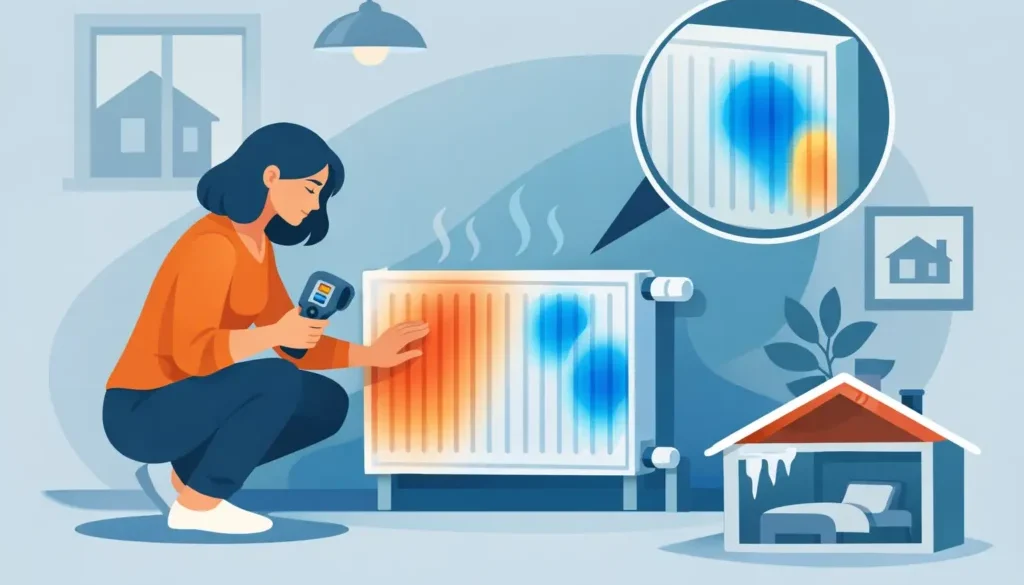
Turn your central heating on and allow it to run for 20 to 30 minutes. The radiator should be warm across most of its surface once the system has had time to heat up. Carefully hold your hand close to the front of the radiator, moving from top to bottom and from side to side. You do not need to press your palm against it, particularly if the heating is very hot.
Check each radiator in the property, not just the coldest room. A single radiator with a cold section often points to a local issue. Several radiators heating unevenly can indicate a wider problem, such as poor system balance, low pressure, restricted circulation or sludge in the system.
Take note of where the cold spot is and whether one pipe is noticeably hotter than the other. This information makes it much easier to identify the likely cause. It is also useful to listen for gurgling, trickling or banging noises while the heating is running.
Cold at the Top, Warm at the Bottom
When the top of a radiator is cold but the bottom is warm, trapped air is the most common reason. Air rises inside the radiator and prevents hot water from filling the upper section properly. You may also hear a gurgling sound when the heating starts.
In many cases, bleeding the radiator will resolve this. Switch the heating off first and let the radiator cool enough to handle safely. Use a radiator key or suitable bleed key, with a cloth or small container underneath, then turn the bleed valve slowly anti-clockwise. Air will usually hiss out first. Once water begins to come through steadily, close the valve securely.
After bleeding one or more radiators, check the boiler pressure. On many sealed heating systems, pressure may drop after air is released and need topping up in line with the boiler manufacturer’s instructions. If you are unsure how to repressurise the system, or pressure repeatedly falls, it is best to arrange a qualified heating engineer.
Cold at the Bottom, Warm at the Top
A radiator that is cold along the bottom, especially if the upper half is hot, is often affected by sludge or debris. Over time, corrosion within a central heating system can create dark deposits that settle in the lower parts of radiators. These deposits restrict the flow of hot water and reduce the radiator’s output.
Bleeding will not remove sludge. Depending on the extent of the issue, the solution may involve removing and flushing an individual radiator, cleaning the system, or carrying out a professional power flush. The right approach depends on the age and condition of the system, how many radiators are affected and whether there are other signs of contamination.
Dirty heating water can also cause boiler and pump problems if left untreated. A professional assessment can establish whether a targeted clean is enough or whether the system would benefit from more thorough work.
Cold at One Side of the Radiator
If one side of the radiator is hot while the other remains cold, the water may not be circulating through it correctly. A partially closed valve, a stuck thermostatic radiator valve (TRV), a seized lockshield valve or an imbalance in the heating system can all be responsible.
Start by checking that both radiator valves are open. The TRV is normally the numbered control valve, while the lockshield valve is usually covered by a plain plastic cap at the opposite end. Avoid making major adjustments to a lockshield valve unless you understand how the system is balanced, as changing it too far can affect heating elsewhere in the house.
A TRV pin can sometimes stick after being turned down over summer. With the heating off and the valve head removed, the small metal pin beneath should move gently up and down. Do not force it. If it is stuck, damaged or difficult to access, an engineer can free or replace the valve safely.
Other Signs Your Heating System Needs Attention
Cold spots are often the first thing people notice, but they are not the only warning sign. Look out for radiators taking much longer than usual to warm up, rooms that never reach a comfortable temperature, boiler pressure that keeps dropping, or discoloured water when a radiator is bled.
Uneven heating throughout the home can also mean the system needs balancing. This is where the flow of hot water is adjusted so that radiators nearer the boiler do not take all the heat before it reaches those further away. Balancing is particularly relevant if upstairs rooms stay cold, an extension never warms properly, or new radiators have been added to an existing system.
It is worth remembering that a radiator may feel cooler near the bottom even when it is working normally. Hot water enters and cools as it gives out heat, so a gentle temperature difference can be expected. The concern is a clearly cold strip, a large cold patch, or a radiator that is only partly heating while others are very hot.
When You Can Try a Simple Fix Yourself
For a radiator cold at the top, careful bleeding is a reasonable first step for many homeowners. Keep the heating off while you do it, protect nearby flooring and furniture, and check the boiler pressure afterwards. If the radiator heats evenly once the system is back on, the problem may be resolved.
Checking that a thermostatic valve is set above the room temperature is also straightforward. For example, a TRV set to a low number in a warm room may close as intended, making the radiator feel cool. This is not a fault, but normal temperature control.
Do not attempt to dismantle valves, drain down the system or interfere with boiler components without the right knowledge. Heating water can be dirty, hot and difficult to contain, while incorrect valve adjustments can create leaks or leave other rooms without enough heat.
When to Call a Heating Engineer
Professional help is sensible when cold spots return soon after bleeding, several radiators are affected, the bottom of radiators is cold, or boiler pressure continually drops. These can be signs of sludge, circulation issues, a failing component or a leak that needs proper investigation.
You should also arrange an inspection if you notice water around a valve, corrosion on the radiator, unusual boiler noises or unreliable heating and hot water. Landlords should deal with heating faults promptly to keep tenants safe and maintain a properly functioning system alongside their gas safety responsibilities.
A qualified engineer can assess radiator valves, system pressure, water quality, pump performance and boiler operation rather than guessing at one visible symptom. In some homes, a simple valve repair or system rebalance is all that is needed. In others, cleaning the system and adding suitable inhibitor will help protect it for the longer term.
Preventing Radiator Cold Spots
Annual boiler servicing helps identify developing heating issues before they become a winter breakdown. It is also sensible to run the heating occasionally during warmer months, particularly if thermostatic valves have a tendency to stick.
If your system has been cleaned or power flushed, inhibitor should be added to help reduce internal corrosion. Keep an eye on boiler pressure and deal with small leaks promptly. When replacing radiators or extending pipework, make sure the system is properly filled, vented and balanced afterwards.
A radiator should deliver dependable, even warmth without constant adjustment. If yours has cold areas that keep returning, treating the underlying cause now can help protect comfort, heating efficiency and your boiler through the colder months.