Smart Heating Controls Review for UK Homes
A smart heating controls review should start with a simple question: are you paying to heat empty rooms, or heating your home at times that do not suit your routine? For many Warrington households, that is where smart controls can make a real difference. They give you more control over when your heating runs, how warm each area feels and, in some cases, how much energy is being wasted.
They are not a cure for a failing boiler, poor insulation or cold radiators. However, when fitted to a sound, well-maintained heating system, the right controls can make day-to-day heating easier to manage and may help reduce unnecessary use.
What are smart heating controls?
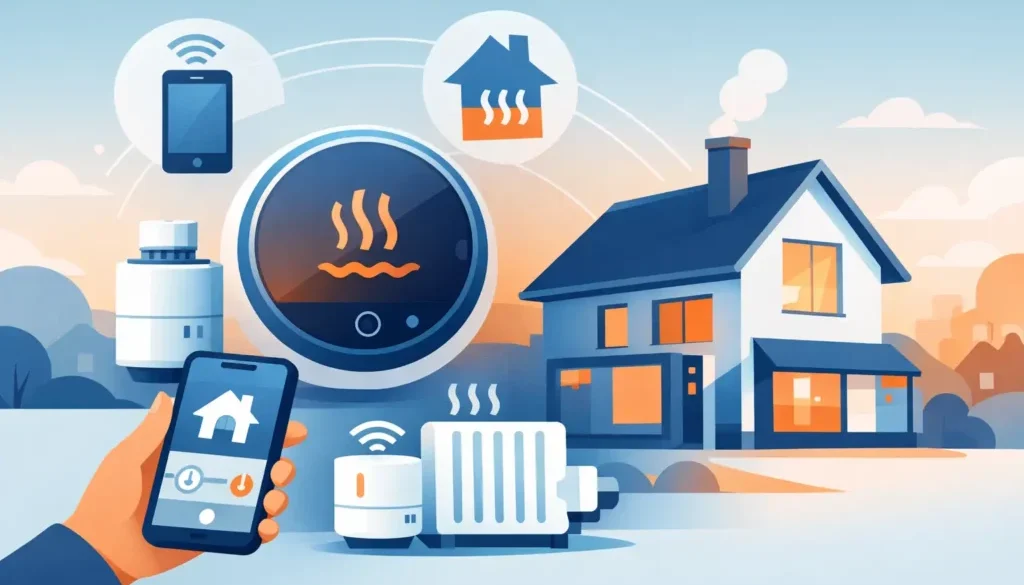
Smart heating controls are internet-connected devices that let you manage your central heating through an app, a wall thermostat or both. Most replace or work alongside a traditional room thermostat and programmer. Rather than setting the same timetable every week, you can adjust the heating from your phone, set schedules around your household and see whether the system is currently on or off.
The most common starting point is a smart thermostat. This controls the temperature in a main area of the home, usually the hallway or living room, and tells the boiler when to fire up. Some systems also include smart thermostatic radiator valves, often called smart TRVs. These fit to individual radiators and allow rooms to be controlled separately.
For example, a family may want the lounge warm in the evening, bedrooms cooler overnight and a home office comfortable during working hours. With compatible smart TRVs, those requests can be set room by room instead of heating every radiator to the same level.
Smart heating controls review: the main benefits
The strongest reason to install smart controls is control, rather than a promise of instant large savings. A well-programmed traditional thermostat can be efficient too. The advantage of a smart system is that it is generally easier to adjust, so households are more likely to use their heating schedule properly.
Better timing around real life
Schedules can be changed quickly when plans change. If you are delayed getting home, you can postpone the heating rather than warming an empty property. If you are returning early on a cold afternoon, you can switch it on before you arrive.
Many systems offer features such as geofencing, which uses your phone’s location to help identify when the house is empty, and pre-heating, which learns how long your property takes to warm up. These functions can be useful, but they should not replace sensible settings. A large, older house may cool down quickly, while a well-insulated modern property may retain heat for longer. Every home behaves differently.
Room-by-room comfort
Smart radiator valves are particularly useful in homes where certain rooms are always too hot or too cold. They can help prevent the spare bedroom being heated to lounge temperature, or allow a colder north-facing room to receive more heat when needed.
This is often called zoning. It can improve comfort, but it needs to be planned carefully. Closing down too many radiators at once can affect water flow through the system. A correctly installed bypass arrangement or an always-open radiator may be needed, depending on the boiler and heating layout. This is one reason it is worth asking a qualified heating engineer to assess compatibility rather than fitting a full system blindly.
Clearer visibility of your heating
An app makes it easier to spot waste. You may find that the heating is regularly left on after everyone has gone out, or that a high target temperature is being used simply because the controls are confusing. Seeing the schedule clearly can encourage small changes that add up over a heating season.
Some controls also show usage reports. Treat these as a helpful guide rather than an exact account of cost. Gas use is affected by outdoor temperature, insulation, hot water demand, boiler efficiency and how many people are at home.
Where smart controls are less useful
A smart thermostat will not make an inefficient or unreliable boiler efficient. If your boiler is losing pressure, making unusual noises, frequently locking out or failing to heat radiators evenly, the underlying fault should be investigated first. Likewise, cold patches on radiators, sludge in the system or poor circulation may require a repair, balancing or power flush rather than a new app.
The same applies to draughts and heat loss. If warmth is escaping through poorly sealed doors, uninsulated pipework or inadequate loft insulation, controls can only manage the heat you produce. They cannot keep it in the building.
Smart TRVs can also be unnecessary in a small flat or compact home with a simple routine. If you have only a few radiators and are happy with a straightforward timer, a quality programmable thermostat may offer most of the benefit at a lower cost. Technology should fit the property and the household, not be added for its own sake.
Choosing the right setup for your home
There is no single best smart heating system. The right option depends on your boiler, the number of rooms, your existing controls and how you use the property.
| Setup | Best suited to | Points to consider | |—|—|—| | Smart thermostat only | Smaller homes or households wanting easier scheduling | Usually the simplest and most cost-effective upgrade | | Smart thermostat with smart TRVs | Larger homes with different room temperatures and routines | Higher upfront cost and requires careful setup | | Smart controls with hot water scheduling | Homes with a stored hot water cylinder | Check that the chosen system supports your cylinder controls | | Standard programmable thermostat | Homes with predictable routines and limited need for app control | Less flexible, but often reliable and straightforward |
Before choosing a product, check whether it works with your boiler and current heating controls. Most modern gas boilers can work with smart thermostats, but the wiring arrangement varies. Some older systems, electric heating systems, heat pumps and properties with separate heating zones need more specific advice.
It is also worth considering how the controls communicate. Some use your home Wi-Fi, while others use a separate hub and radio signal. Thick walls, poor broadband coverage or a weak signal near the boiler can affect reliability. A control that disconnects regularly soon becomes frustrating, however good its features look on paper.
Installation and safety considerations
Replacing a battery-powered thermostat head is usually straightforward, but installing a smart thermostat often involves electrical connections at the boiler, programmer or wiring centre. That work should be carried out correctly to avoid damage to the boiler controls or an unreliable heating system.
A qualified engineer can check the existing system, install the control in the appropriate location and confirm that the boiler responds correctly. They can also make sure radiator valves, lockshield valves and system pressure are in reasonable order before smart zoning is introduced.
For landlords, smart controls can be a useful practical upgrade between tenancies, especially where occupants need simple heating instructions. They do not replace legal gas safety responsibilities, annual checks or a valid CP12 certificate. The boiler and gas appliances still need to be maintained safely.
How to get worthwhile results after fitting
The app alone will not lower bills. The savings come from using less heat when it is not needed while keeping the home comfortably warm when it is. Start with realistic temperatures. Many households find around 18-21°C comfortable in occupied living areas, but personal needs vary, particularly for older residents, young children or people with health conditions.
Set bedrooms cooler if that suits your household, and avoid turning the heating fully off for long periods in very cold weather if there is a risk of pipes freezing. A steady, sensible background temperature may be preferable in some properties, especially those that are damp, poorly insulated or left empty.
Give the schedule a fortnight before judging it. Adjust one thing at a time: the start time, the target temperature or which rooms are heated. This makes it much easier to see what improves comfort without increasing waste.
A smart control is most effective as part of a well-looked-after heating system. Keep the boiler serviced, deal with leaking radiator valves promptly, bleed radiators where needed and seek advice if some rooms never warm up properly. AquaHeat Heating Services can help homeowners in Warrington and the wider North West assess whether their existing boiler and controls are suitable before an upgrade.
The best smart heating controls are the ones you can understand, trust and use every day. Choose a setup that suits your home rather than the one with the longest feature list, then let good maintenance and sensible settings do the hard work.