How to Isolate Water Safely in Your Home
A leaking pipe can put a surprising amount of water through a kitchen ceiling or bathroom floor in minutes. Knowing how to isolate water before an emergency happens gives you time to protect your home, reduce damage and arrange the right repair without panic.
For most homes, the main job is simple: locate the internal stop tap and know which way to turn it. However, not every leak needs the entire property’s water supply switched off. Isolating a washing machine, toilet or boiler supply may be the better option where the fault is localised.
How to isolate water at the main stop tap
The internal stop tap controls the cold mains water entering your property. Turning it off stops fresh water feeding taps, toilets, appliances and, in many homes, the boiler. It is the first valve to use if there is a serious leak, a burst pipe or water escaping where you cannot safely isolate the affected fitting.
In houses, the stop tap is often found under the kitchen sink, in a utility room, beneath the stairs, near the front door or close to where the water pipe enters the building. In a flat, it may be in a kitchen cupboard, hallway cupboard, service riser or communal meter area. If you are a landlord, make sure tenants know its location too.
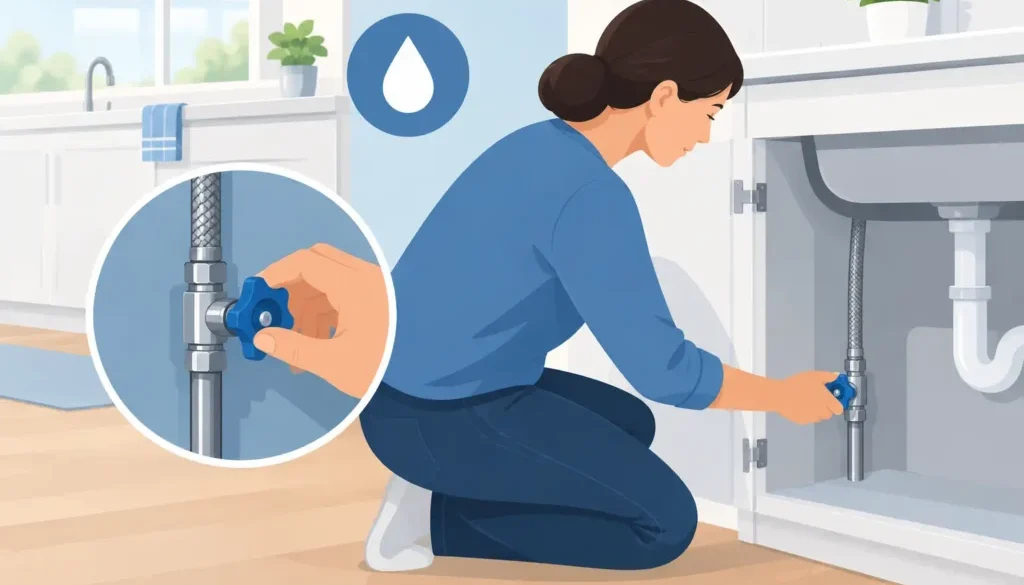
A traditional stop tap has a round handle. Turn it clockwise, slowly, until it stops. Do not force it if it feels seized or corroded, as an old valve can break or begin leaking around its spindle. Some newer properties have a lever valve instead. A lever sitting across the pipe is usually in the closed position, while one running in line with the pipe is usually open.
Once you have closed the valve, open the cold tap nearest to it, then a tap on an upper floor if you have one. This checks whether the flow has stopped and relieves pressure in the pipework. Water may continue to run briefly from taps, and a small amount can still escape from the damaged section of pipe. That is normal – the aim is to stop the continuous supply.
What the main stop tap does not isolate
Closing the stop tap does not instantly remove all water from your plumbing system. Water already in pipes, radiators, cylinders and storage tanks can still drain out through a leak. In older homes with a cold-water storage tank in the loft, taps and fittings supplied by that tank may continue running until the stored water is depleted.
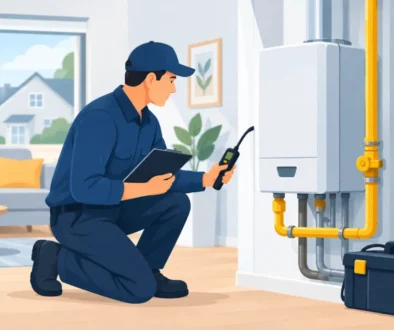
It also does not make a gas or electrical fault safe. If water is leaking near sockets, consumer units, lights or electrical appliances, avoid the area and do not touch wet switches or wiring. Switch off power only if you can do so safely from a dry location. If you smell gas, hear hissing from a gas pipe or suspect a gas leak, leave the property and follow gas emergency advice rather than attempting a repair.
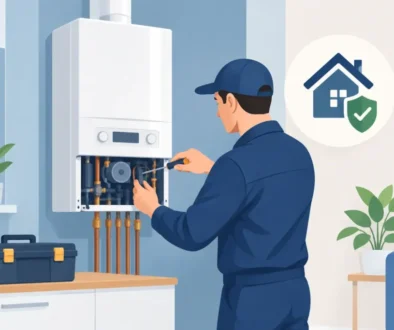
For a boiler leak, turn the boiler off at its controls if it is safe to do so. Do not remove the boiler casing or interfere with gas components. A boiler has water, electrical and gas connections, so the source of a leak should be checked by a qualified engineer.
Isolating water to one appliance or fitting
A local isolation valve is often the sensible choice for a smaller problem. It allows you to keep water available elsewhere in the house while preventing water reaching the faulty appliance or fitting.
Look for small valves on the pipes beneath a sink, behind a toilet, or on the hoses feeding a washing machine or dishwasher. Many have a slotted screw head. A quarter-turn with a flat-head screwdriver usually closes the valve when the slot sits across the pipe. Appliance hoses may also have a dedicated tap or lever valve behind the machine.
Before disconnecting an appliance, isolate its water supply and switch off its electrical supply. Put down towels and have a shallow tray ready, as water trapped in the hose will still spill out. If the valve will not fully close, do not rely on it while you work. Shut off the main stop tap instead and arrange a replacement valve.
Toilets commonly have an isolation valve on the small pipe feeding the cistern. Closing this can stop a continuously running toilet or a failed fill valve while leaving the kitchen and bathroom taps in use. Do not keep turning a faulty valve back and forth in the hope it will seal better. If it is worn, it may need replacing.
How to isolate water to a boiler
Modern combi boilers are usually connected directly to the mains cold-water supply. There may be isolation valves beneath the boiler, but their layout varies by manufacturer and installation. Closing the wrong valve can affect heating, hot water or the pressure in the sealed heating system.
If there is water escaping from underneath the boiler, the safest immediate action is generally to turn off the boiler and close the main stop tap if the leak is significant. If the leak is minor and clearly from an external pipe or valve, an engineer can identify the correct local isolation point without unnecessarily shutting down the whole property.
Do not use the filling loop to try to solve a leak or pressure problem. A filling loop adds water to the heating system; leaving it open can raise pressure and make matters worse. Similarly, low boiler pressure, dripping from a pressure relief pipe or frequent loss of pressure needs diagnosis rather than repeated topping up.
Homes with a hot-water cylinder and loft tank are different. They may have separate valves for the mains supply, cold-water tank and cylinder feed. These systems can be more complicated to isolate correctly, particularly where older pipework has been altered over the years. If you are unsure, turn off the main supply to limit further water entering the property, then seek professional help.
When you should turn off the outside water supply
Most properties have an external stop valve at the boundary, often near the water meter. This may be in a small chamber in the pavement, driveway or front garden. It can be useful if the internal stop tap has failed or cannot be found, but access and responsibility can vary.
Avoid forcing an external valve, particularly if it is difficult to move or sits in a shared area. Damage to the valve or meter can create a larger problem. Your water supplier may be able to assist where the external stop valve is faulty, while an internal stop tap is normally the homeowner’s responsibility.
After isolating the water
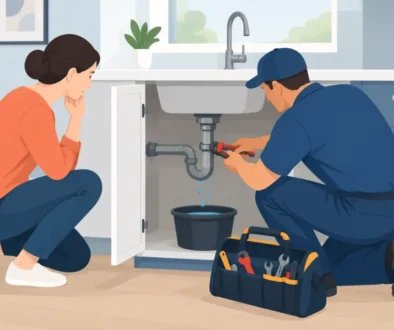
Once the water is under control, move belongings away from the affected area and catch drips with buckets or towels. If water has reached ceilings, watch for sagging plasterboard, as it can become heavy and unsafe. Take clear photographs for your insurer before repairs begin, where this is safe to do.
Do not turn the supply back on just to see whether the leak has stopped unless the repair has been completed. When it is time to restore water, open the stop tap slowly and check the repaired area closely. Then open taps gradually to let air escape. A little spluttering is normal after the supply has been off.
It is worth testing your stop tap once or twice a year, particularly before winter or before a long holiday. If it is stiff, leaking or inaccessible behind cupboards, have it repaired or repositioned before an emergency. A clearly labelled, working isolation valve is a small job that can prevent major disruption.
For homeowners and landlords in Warrington, AquaHeat Heating Services can help with leaking pipework, faulty valves, boiler-related leaks and wider plumbing repairs. The most useful preparation is simple: find your stop tap now, make sure everyone in the home knows where it is, and keep its route clear for the day you need it quickly.