Gas Hob Installation Rules for UK Homeowners
A new gas hob can make a kitchen feel more practical straight away, but it is not a fitting to treat like a standard appliance swap. Gas hob installation rules exist to protect your household from gas leaks, fire risks and unsafe combustion. The work needs proper planning around the hob itself, the worktop, the gas supply and the room ventilation.
For homeowners in Warrington and across the North West, the safest approach is straightforward: choose the hob you want, check it suits your kitchen layout, then have it installed and commissioned by a suitably registered Gas Safe engineer. The final details will depend on the model and your property, which is why the manufacturer’s instructions must always be followed.
Who can install a gas hob?
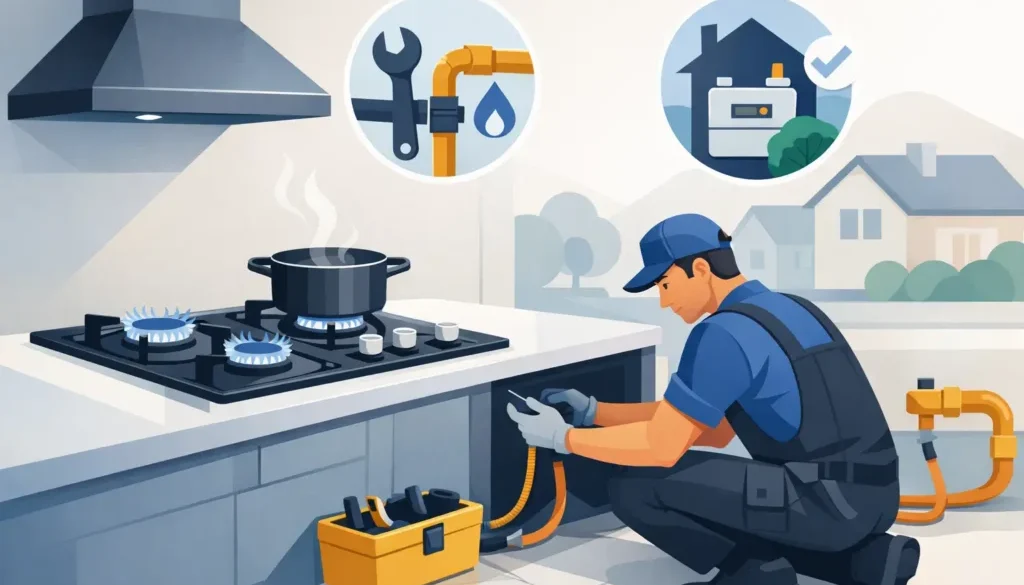
A gas hob should be installed by a Gas Safe registered engineer who is qualified for domestic gas cooking appliances. They have the training, equipment and legal registration needed to work safely on the gas supply, make the connection, test the installation and commission the appliance.
It may be tempting to ask a capable friend or kitchen fitter to connect the hob while they are already working in the room. That is a false economy. An incorrect joint, damaged pipe or missed test can create a serious risk that is not always obvious at the time.
You can usually arrange the non-gas preparation separately, such as fitting the worktop, cutting the aperture and positioning cabinets. However, the gas connection, safety checks and putting the appliance into service should be left to the engineer. They also need access to the gas meter or emergency control valve where appropriate.
Gas hob installation rules start with the manufacturer
There is no single clearance measurement that applies to every gas hob. The correct distances above, below and around the appliance come from its installation manual. These instructions are not optional suggestions. They form part of a safe, compliant installation.
Before work starts, check the required size of the worktop cut-out and make sure the hob is designed for the fuel available at the property. Most homes use natural gas, while some rural properties use LPG. An LPG hob or conversion kit must be correctly specified, fitted and set up for LPG – it must never simply be connected to a natural gas supply.
The engineer will also check that the worktop material can tolerate the appliance and that the hob can be sealed properly. A poor cut-out can leave gaps, affect the seal or place pressure on the glass or enamel surface. Replacing a broken worktop later is far more inconvenient than getting this stage right first time.
Clearances from cupboards, walls and extractor hoods
Gas flames produce heat directly above the burners, so cabinets, shelving and extractor hoods need sufficient clearance. The hob manual will set out the minimum height to an extractor or other surface above it, along with any side clearances to walls and tall units.
This matters especially in compact kitchens. A hob squeezed tightly beside a wall can make it difficult to use the nearest burner safely, while a low cupboard above the hob can be exposed to heat and grease. If your preferred layout does not meet the appliance instructions, it may be better to move the hob, choose a different model or alter the surrounding units.
Do not assume that an existing position is automatically suitable for a replacement hob. New models can have different dimensions, burner layouts and clearance requirements. The same applies when changing from electric to gas, as the existing kitchen layout may need alterations.
Ventilation must not be overlooked
A gas hob needs an adequate air supply so the burners can operate correctly. In many modern kitchens, the required ventilation depends on the hob’s heat input and the existing ventilation in the room. An extractor fan helps remove cooking smells and moisture, but it does not automatically meet every ventilation requirement.
The engineer will assess the room and the appliance instructions before installation. Avoid blocking permanent air vents, even during cold weather. They are there for safety, not just draught control.
Signs of poor combustion, such as yellow or lazy flames, staining around the hob, unusual smells or headaches while the appliance is in use, should be taken seriously. Turn the appliance off if you are concerned and arrange for it to be checked by a Gas Safe engineer.
The gas supply needs a safe, accessible connection
The pipework supplying a gas hob must be correctly sized, securely installed and capable of delivering enough gas for the appliance to work as intended. This is particularly relevant in properties where additional gas appliances have been added over time, or where old pipework has been altered during a kitchen refit.
A suitable isolation valve is required so the hob can be safely turned off for servicing, repair or replacement. It should be accessible without having to remove fixed kitchen units or pull out the appliance. Hiding a valve where nobody can reach it may look tidier, but it creates problems when quick isolation is needed.
Flexible connectors and hoses must also be appropriate for the appliance and installed in a position where they cannot be crushed, stretched, overheated or damaged by storage in the cupboard below. The space under a gas hob is not always as simple as it looks, particularly where drawers, ovens or internal cabinet shelves are planned.
Testing and commissioning are part of the job
Connecting the pipe is only one part of a proper installation. Once the hob is fitted, the engineer should carry out the relevant gas tightness testing to confirm there are no leaks on the system. They will check the burners ignite properly, assess flame picture and stability, and confirm that the appliance has been set up for the correct gas type.
They should also explain the basic operation of the controls, point out the isolation valve and make you aware of any specific care instructions. Keep the appliance manual somewhere safe. It will be useful if you need replacement parts, cleaning advice or help understanding an error with the ignition system.
If you smell gas at any point, do not try to find the leak with a naked flame. Turn off the gas supply if it is safe to do so, open doors and windows, avoid electrical switches and contact the relevant emergency service or a qualified gas engineer.
Building Regulations and paperwork
Gas appliance work in homes can fall under Building Regulations requirements, particularly where a fixed gas appliance is installed or replaced. The exact notification route can depend on the work, the property and the location within the UK. In England, a suitably registered installer can normally deal with any applicable notification through the appropriate competent person scheme.
Ask your engineer what paperwork applies to your installation and retain it with your home documents. It can be useful for future servicing, insurance queries and when selling the property. If a kitchen company is managing the project, make sure it is clear who is responsible for arranging the gas work and confirming compliance.
Extra responsibilities for landlords
Landlords have a legal duty to keep gas appliances, pipework and flues that they provide in a safe condition. This includes arranging an annual gas safety check and providing tenants with the required gas safety record. A supplied gas hob should be included in the inspection where relevant.
If a tenant owns and has installed their own gas hob, responsibilities can be more complicated. The landlord remains responsible for the property’s gas installation and pipework, while the appliance itself may sit outside the normal annual check requirement. In practice, it is wise to clarify ownership, installation evidence and ongoing maintenance before a tenancy begins or a new appliance is fitted.
For a homeowner, the practical rule is simple: do not choose a gas hob installation based on the quickest quote alone. Check that the engineer is Gas Safe registered for the work, make sure the kitchen design meets the model’s instructions, and expect proper testing before the hob is used. A safe installation gives you the benefit of gas cooking without uncertainty every time you turn on a burner.