Landlord Gas Safety Certificate Warrington Guide
A rented property can look well maintained and still have a serious gas safety issue hiding behind a boiler casing or appliance. A landlord gas safety certificate Warrington landlords arrange each year is not simply paperwork for a tenant file. It is the formal record that gas appliances, pipework and flues have been checked by a Gas Safe registered engineer.
For landlords, the priority is straightforward: keep tenants safe, meet your legal duties and avoid a last-minute scramble when a certificate is about to expire. Planning the inspection properly also gives you an early warning of faults that could lead to a boiler breakdown, an unsafe appliance or an expensive repair during a tenancy.
What is a landlord gas safety certificate?
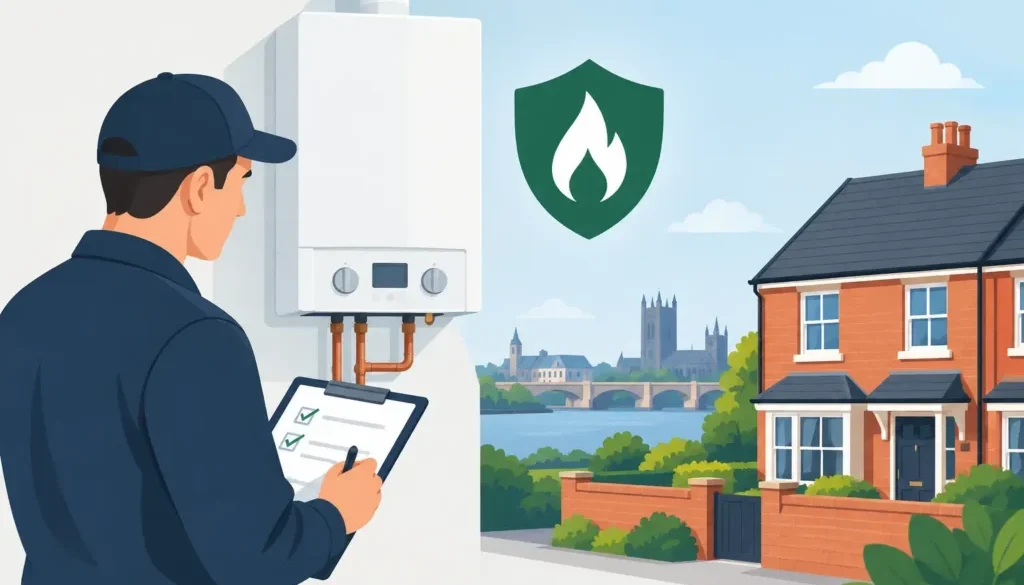
A landlord gas safety certificate is commonly called a CP12 or Gas Safety Record. It is issued after a Gas Safe registered engineer has completed the required safety checks on the gas appliances and installations for which the landlord is responsible.
The check usually covers the gas boiler, gas fires, gas hobs and ovens supplied with the property, along with relevant pipework, flues and ventilation. The engineer will check that appliances are operating safely, burning gas correctly, receiving an adequate gas supply and venting combustion products safely outside.
A CP12 is not a general condition report and it is not the same thing as a boiler service. A boiler service is more detailed maintenance designed to keep the boiler working efficiently and identify wear before it becomes a fault. A gas safety check confirms safety at the time of inspection. In many rental properties, arranging both at the same visit is sensible, but they remain different services.
Landlord gas safety certificate Warrington requirements
Under the Gas Safety (Installation and Use) Regulations, landlords must ensure that a gas safety check is carried out at least every 12 months. The work must be completed by an engineer who is on the Gas Safe Register and qualified for the type of appliance being inspected.
You must provide a copy of the current Gas Safety Record to existing tenants within 28 days of the check. New tenants must receive a copy before they move in. Landlords must also keep records for at least two years.
The requirement applies to appliances and flues that you provide as part of the tenancy. If a tenant has brought their own gas appliance into the property, the position can be different. However, shared pipework, flues and chimneys may still be relevant to the landlord’s responsibilities. If there is any uncertainty, speak to a qualified engineer rather than assuming an appliance falls outside the check.
These duties apply whether you manage one flat or a larger portfolio. Using a letting agent does not remove the landlord’s legal responsibility, even where the agent arranges the appointment on your behalf.
What happens during a CP12 inspection?
A competent engineer will carry out visual checks and operating tests appropriate to each appliance. They will look for obvious signs of damage, unsafe positioning, inadequate ventilation and problems with the flue. They will also test that appliances are burning gas properly and that safety devices are working as intended.
The exact work depends on what is installed in the property. A modern combi boiler, for example, requires different checks from an older gas fire. Access also matters. If a boiler is boxed in, inspection hatches need to be suitable and accessible. If the flue runs through a loft or cupboard, the engineer must be able to inspect it where required.
For the visit to run smoothly, tenants should be told the appointment time in advance and asked to make the appliances accessible. A simple delay caused by a locked cupboard or no access to the property can create avoidable pressure if the certificate is due to expire.
If the system is found to be safe, the engineer will issue the Gas Safety Record. Where defects are found, the certificate will explain them and record any action taken. Serious safety concerns may mean an appliance is turned off or labelled as unsafe until repairs have been completed. This can be inconvenient, particularly when heating or hot water is affected, but it is the correct action where there is a risk to occupants.
When should you book the annual check?
Do not wait until the expiry date. Booking a landlord gas safety inspection a few weeks in advance gives you time to arrange access, deal with any repair work and receive the completed record without pressure.
There is a useful renewal window for annual checks. A check carried out between 10 and 12 months after the previous one can allow you to keep the existing renewal date, provided the new check is completed before the current record expires. This is helpful for landlords who want to keep inspections organised around the same month each year.
It still pays to use a diary reminder or property management system. Certificates do not renew automatically, and an expired record is not put right by booking an inspection after the fact. In a busy period, especially before winter, early booking makes it easier to secure a suitable appointment.
Common issues that can hold up a certificate
Some problems are quick to resolve, while others need more work. Boiler faults, damaged seals, poorly fitted flues, restricted ventilation and signs of unsafe combustion are all issues that need proper attention. Older appliances can sometimes need replacement parts that are no longer readily available, which is another reason not to leave the check until the last day.
Landlords should also be alert to changes made during a tenancy. A tenant may have fitted shelving around a boiler, blocked an air vent to reduce draughts or stored items in a cupboard containing the boiler. These actions may seem minor, but they can affect safe access, ventilation or the ability to inspect the appliance.
Carbon monoxide alarms are another practical part of rental safety. In England, landlords must ensure a carbon monoxide alarm is fitted in every room used as living accommodation that contains a fixed combustion appliance, excluding gas cookers. The alarm must be tested and working at the start of each new tenancy. A CO alarm is not a substitute for a CP12, but it provides an important additional warning for tenants.
Choosing the right engineer in Warrington
Price matters, but the lowest quote is not always the best value if the inspection is rushed, the paperwork is unclear or follow-up repairs cannot be handled promptly. Check that the engineer is Gas Safe registered and qualified for the appliances at your property. You should also expect a clear explanation of what the visit includes and what happens if a fault is identified.
For a landlord with a boiler, gas hob and fire, using an engineer who can inspect the full installation and carry out domestic heating repairs can make the process simpler. It avoids having to find a second contractor when a repair is needed and helps keep the property’s heating records in one place.
AquaHeat Heating Services Limited provides landlord gas safety certificates across Warrington, carried out by qualified engineers with a safety-first approach. With more than 15 years in business and extensive domestic heating experience, the focus is on clear advice, reliable appointments and work completed properly.
Keeping tenants informed
Good communication prevents many certificate problems. Let tenants know why access is needed, give reasonable notice and explain that the check is for their safety as well as legal compliance. Ask them to report boiler problems, unusual smells, soot marks, pilot light issues or a carbon monoxide alarm sounding without delay.
Tenants should never attempt to repair gas appliances themselves. If they smell gas, they should turn off the gas supply at the emergency control valve if it is safe to do so, avoid switches and naked flames, leave the property, and contact the National Gas Emergency Service on 0800 111 999. A suspected gas escape needs immediate action, not a routine maintenance appointment.
Treat the annual CP12 as part of a well-run property rather than a box to tick. Book early, retain the record, respond quickly to defects and keep tenants informed. That approach protects the people living in your property and gives you far fewer surprises when the next inspection is due.