Radiator Balancing Guide for a Warmer Home
A radiator that stays lukewarm while the room nearest the boiler feels tropical is a common heating frustration. This radiator balancing guide explains why it happens, what you can safely check yourself, and when an engineer should investigate the system. Done correctly, balancing helps hot water reach radiators more evenly, making the most of the heat your boiler is already producing.
What does balancing a radiator system mean?
Radiator balancing is the process of adjusting the flow of heating water through each radiator. It is not the same as bleeding a radiator. Bleeding releases trapped air, while balancing controls how quickly water moves through the radiator circuit.
Without balancing, water tends to take the easiest route. Radiators close to the boiler or circulating pump can heat up quickly, using much of the available flow. Those further away may take far longer to warm up, or never reach a useful temperature at all.
A balanced system should allow all rooms to heat at a similar rate when the heating comes on. That does not mean every radiator will feel identical from top to bottom. In a well-performing system, the top will usually be warm and the bottom a little cooler. The aim is comfortable, consistent rooms rather than piping-hot radiators everywhere.
Signs your radiators may need balancing
Uneven heating is the usual clue. You may find that the lounge is hot within minutes, while a bedroom upstairs remains cold long after the boiler has fired up. You might also be turning some thermostatic radiator valves down sharply to stop nearby rooms overheating.
Other signs include radiators at the far end of the house taking much longer to warm up, or a recently added radiator upsetting the performance of the rest of the system. Balancing can also be worth considering after heating system alterations, a new boiler installation, or certain repair work.
However, not every cold radiator is a balancing issue. A radiator that is cold at the top may have air trapped inside and need bleeding. One that is cold at the bottom can point to sludge or debris. If several radiators are poor, or the boiler is losing pressure, the cause could be more significant than a lockshield adjustment.
Before you start: make a few basic checks
Start by making sure the boiler pressure is within its normal operating range when the system is cold. Many sealed systems sit around 1 to 1.5 bar, but always follow the guidance for your specific boiler. Check that the boiler is working normally and that the heating controls are calling for heat.
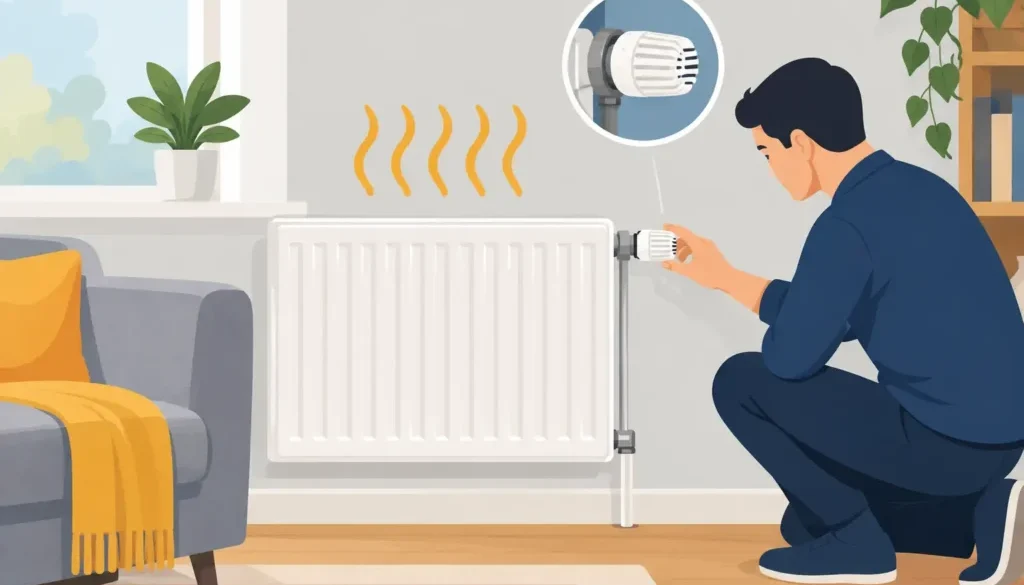
Open all thermostatic radiator valves fully before balancing. These are the numbered controls, usually found on one side of the radiator. If a valve is stuck or the radiator stays cold with the valve fully open, do not force it. The valve pin may be seized and may need attention.
Bleed any radiators that are cold at the top before you begin. Switch the heating off and allow the system to cool first. Keep a cloth and small container handy, open the bleed valve slowly, and close it as soon as water appears. Check the boiler pressure again afterwards, as bleeding can reduce it.
You will also need access to the lockshield valve on each radiator. This is normally under a plain plastic cap on the opposite side to the thermostatic valve. The cap often pulls or screws off to reveal a small spindle, which can be turned with an adjustable spanner or grips. Take care not to damage the valve or pipework.
Radiator balancing guide: the practical method
Balancing takes patience. It is easiest to do when the house is reasonably cool, as you need to feel or measure how rapidly each radiator heats up. An inexpensive pair of clip-on digital thermometers makes the job more accurate, but it can be done carefully by hand if you are confident.
1. Turn the heating off and open every valve
With the system cool, open both valves on every radiator fully. Turn the lockshield anti-clockwise, counting the turns as you go if possible. This gives you a useful reference point if you need to return it to its original setting.
Do not remove a lockshield valve spindle or loosen any nuts joining the valve to the radiator. Those parts can release heating water and create a leak.
2. Identify the radiator that warms first
Turn the heating back on, set the room thermostat high enough to keep the system running, and allow the radiators to heat. The radiator closest to the boiler or pump often warms first, though pipe layouts vary widely between properties.
Once you have identified the first radiator, allow it to get properly warm. This is usually the radiator that will need the greatest restriction at its lockshield valve.
3. Restrict the quickest radiator gradually
Turn the lockshield clockwise in small stages, perhaps a quarter-turn at a time. Wait several minutes after each adjustment. The goal is to slow the water flow through that radiator so more heat is available to the rest of the circuit.
If you are using thermometers, measure the temperature of the pipe entering and leaving the radiator. A typical target is a temperature drop of around 10 to 12°C across each radiator. The exact figure can vary by boiler settings and system design, so treat this as a useful working guide rather than an absolute rule.
Without thermometers, use caution when feeling pipes. They can become hot enough to cause injury. You are looking for an outlet pipe that is clearly cooler than the inlet, but not stone cold.
4. Work through the remaining radiators
Move from the quickest-heating radiator towards the slowest. Near radiators usually need their lockshields more closed, while radiators further from the boiler may be left more open. Make one adjustment at a time and give the system time to respond.
This is where balancing can feel slow. Opening or closing a valve on one radiator affects the rest of the system, so rushing through the house and making large adjustments often leads to more uneven results. Small changes and a little patience produce better results.
5. Check the system as a whole
When all radiators are warming at a similar pace, reset the room thermostat to your usual temperature. Set thermostatic radiator valves to suit each room. Bedrooms may be comfortable at a lower setting than living spaces, while a bathroom may need a little more warmth.
Run the heating through a normal cycle over the next day or two. If one room is still noticeably cooler, make a minor adjustment to its lockshield rather than changing several valves at once. Keep notes of which radiator you have adjusted and by how much, particularly in larger homes.
When balancing will not fix the problem
Balancing cannot clear a blocked radiator, repair a failed valve, or correct a boiler fault. If a radiator is cold at the bottom, brown or black water comes out when bleeding it, or there are frequent cold spots across the property, sludge may be restricting circulation. A professional system clean or power flush may be more appropriate than further valve adjustments.
Persistent banging, gurgling, pressure loss, water leaks, or a boiler that repeatedly switches itself off should also be investigated by a qualified heating engineer. Do not remove the boiler casing or attempt to alter gas appliances. Those jobs require the right training and equipment.
Older systems can be more complex. They may have ageing pumps, partially blocked pipework, manual valves that no longer move freely, or controls that are not operating as they should. In these cases, a heating engineer can assess the full system rather than treating one cold radiator in isolation.
A few ways to keep heat more even
Balancing works best alongside sensible heating maintenance. Keep furniture clear of radiators where possible, as a large sofa directly in front of one can hold heat in the wrong part of the room. Avoid covering radiators with heavy covers, and make sure thermostatic valves are not enclosed by curtains.
Have the boiler serviced at the recommended interval, particularly before winter. If work is carried out on the heating system, ask whether the radiators should be rebalanced afterwards. For landlords, maintaining a safe and reliable heating system also helps avoid avoidable tenant complaints and emergency call-outs.
AquaHeat Heating Services can assess uneven heating, faulty radiators and circulation problems across Warrington and the wider North West. A properly balanced system should be quiet, comfortable and predictable. If yours is still leaving rooms cold after careful adjustment, it is worth getting the underlying cause checked before the colder weather arrives.