How to Thaw Frozen Pipes Safely in Your Home
A frozen pipe can quickly turn from an inconvenience into a serious leak. If a tap has stopped running during a cold spell, knowing how to thaw frozen pipes safely can help protect your home while you arrange professional help if it is needed. The key is to work slowly, avoid direct flames and act quickly if there are any signs the pipe has split.
How to tell if a pipe is frozen
The most obvious sign is little or no water coming from a tap, especially one served by pipework near an outside wall, in a loft, garage, cupboard or under a kitchen unit. You may also notice frost on an exposed pipe, a bulge in the pipework, or unusual noises when you turn a tap on.
Before assuming the pipe is frozen, check whether the problem affects one tap or the whole property. If only one fitting is affected, the frozen section is likely close to that tap. If several taps have stopped working, the blockage could be in a main supply pipe or another more concealed area.
A frozen pipe is not always visibly icy. Copper and plastic pipes can freeze behind walls, beneath floors or inside boxed-in areas, so do not start removing panels or damaging finishes to find it. A qualified plumber can trace the problem safely where the affected pipe is inaccessible.
What to do before thawing a frozen pipe
First, turn off your internal stopcock. This is usually found under the kitchen sink, near the water meter, in an airing cupboard or where the mains water supply enters the house. Turning it clockwise should shut off the incoming water. If the frozen pipe cracks as it thaws, this step can greatly reduce the amount of water escaping into your home.
Then open the affected cold tap fully. This gives melting water and pressure a route to escape once the ice begins to clear. If you believe a hot water pipe is frozen, open the relevant hot tap instead. Keep the tap open while you warm the pipe.
Look carefully along any pipework you can see. If you find a split, damp patch, bulge or active drip, do not attempt to thaw it yourself. Keep the water off, contain any small amount of water with towels or a bucket, and contact a plumber. A pipe may only begin leaking once the ice melts, so continue checking it throughout.
How to thaw frozen pipes safely
Start at the end of the pipe nearest to the open tap, then work gradually back towards the frozen section. Warming the pipe in this direction helps melted water escape rather than becoming trapped behind the ice.
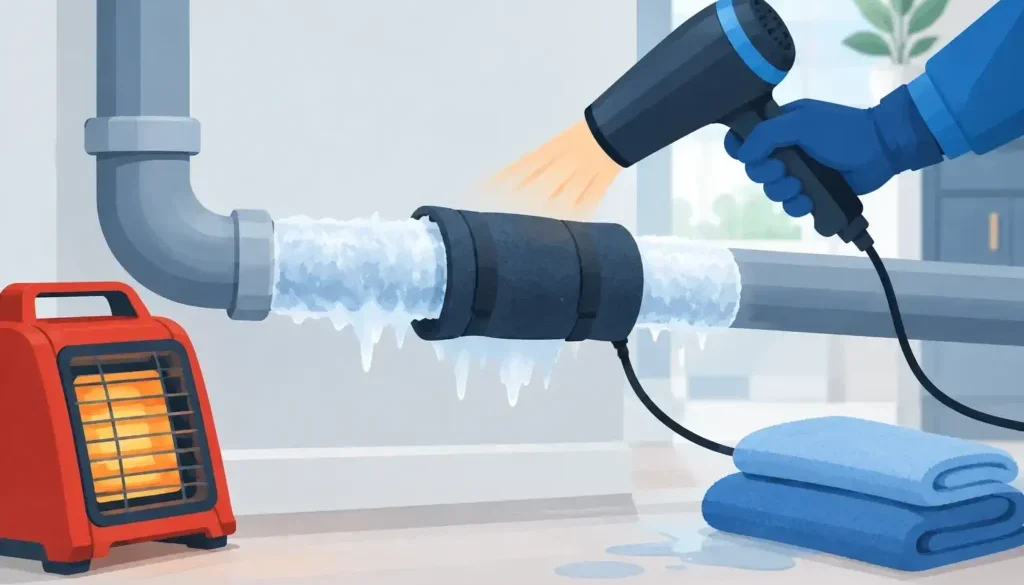
Use gentle, even heat. A hairdryer on a low or medium setting is often suitable for accessible pipework, provided you keep it away from standing water and never leave it unattended. Move it steadily along the pipe rather than concentrating heat in one spot.
You can also wrap warm, damp towels around the pipe, refreshing them as they cool. A hot water bottle held against the pipe can work well for a small, accessible section. The water should be hot but not boiling. Boiling water can cause sudden temperature changes, potentially damaging pipework or fittings, particularly on older installations.
A portable electric heater may help warm the surrounding room, such as an airing cupboard or kitchen unit area, but it should be kept well clear of water, fabrics and combustible materials. Do not place a heater inside a cupboard, cover it, or leave it running without supervision.
As the ice melts, you may hear water moving through the pipe or see a slow flow return from the tap. Keep warming gradually until the water runs normally. Once the pipe is clear, leave the tap running for a short time and inspect the pipework again for leaks.
Never use a naked flame or high heat
Do not use a blowtorch, heat gun, candle, gas hob or any other naked flame to thaw frozen pipes. Aside from the obvious fire risk, excessive heat can weaken joints, scorch surrounding materials and damage plastic pipework. Pipework often runs close to timber, insulation, cables and other concealed materials, making this method particularly unsafe.
Avoid using electrical appliances where there is a leak, pooled water or damp electrical wiring. If you are unsure whether it is safe to use a hairdryer or heater, stop and call a professional. The cost of a call-out is small compared with repairing water damage caused by a burst pipe.
It is also best not to repeatedly turn the stopcock on and off while the pipe remains frozen. Keep the supply isolated until water is flowing freely and you are satisfied there is no damage.
When to call a plumber straight away
Some frozen-pipe problems are not suitable for a home fix. Call a qualified plumber if you cannot locate the frozen section, the pipe is behind a wall or under a floor, or there is no improvement after gentle warming. Professional help is also the right choice if you have seen a bulge, crack or leak.
If a pipe has burst, turn off the stopcock immediately. Switch off the electricity at the consumer unit only if it is safe to do so and water is near electrical sockets, fittings or appliances. Do not touch wet electrical equipment. Move valuables away from the area where possible and contact an emergency plumber.
Landlords should treat a loss of water supply or an active leak as urgent, particularly where tenants, children, older residents or vulnerable occupants are affected. Prompt action can limit damage and help keep the property safe.
Be aware that a boiler fault during freezing weather may not always be caused by frozen water pipes. Condensate pipes can freeze and prevent a condensing boiler from operating correctly. Do not remove the boiler casing or interfere with gas components. A Gas Safe registered engineer can assess the cause and carry out the right repair safely.
What to check after the pipe has thawed
Once water flow has returned, turn the stopcock back on slowly and inspect the area closely. Check joints, valves and the length of the pipe for drips. Pay attention over the next few hours too, as a small crack may not show immediately.
If water has escaped, dry the area as thoroughly as possible. Wet cupboards, flooring and plasterboard can develop further problems if left damp. For significant leaks or visible damage, your insurer may also need to be informed, so take clear photographs before any repairs are made where practical.
If the pipe froze in a loft, garage or outside cupboard, consider whether the space needs better insulation or ventilation management. The solution depends on the property. Sealing draughts can help, but pipework should not be enclosed so tightly that it becomes difficult to inspect or repair.
Reducing the risk of frozen pipes next time
Lagging exposed pipes is one of the most effective preventative measures. Focus on lofts, garages, external cupboards, underfloor areas and pipes close to outside walls. Check that insulation is secure and has not slipped, split or become wet.
During very cold weather, keep your heating on a low, consistent setting rather than allowing the house to become completely cold. Open cupboard doors beneath sinks if pipework is on an external wall, allowing warm air to circulate. If you are away from home, do not leave the heating off for long periods and make sure someone can check the property during prolonged freezing conditions.
Knowing where your stopcock is, and making sure it turns freely, is just as valuable as pipe insulation. In an emergency, every minute matters. If you are concerned about frozen or damaged pipework in Warrington or the surrounding area, AquaHeat Heating Services can provide practical plumbing support and help identify the best long-term way to protect your home.