Plumber vs Heating Engineer: Who Should You Call?
A dripping pipe and a cold radiator can both feel urgent, but they do not always need the same trade. When comparing a plumber vs heating engineer, the right choice comes down to the system involved, the qualifications required and, above all, whether gas is part of the job.
For homeowners and landlords, getting this right can save time, avoid repeat visits and protect your household. A good local company may provide both plumbing and heating services, but it is still worth knowing what each role normally covers – particularly when safety and boiler work are involved.
Plumber vs Heating Engineer: The Main Difference
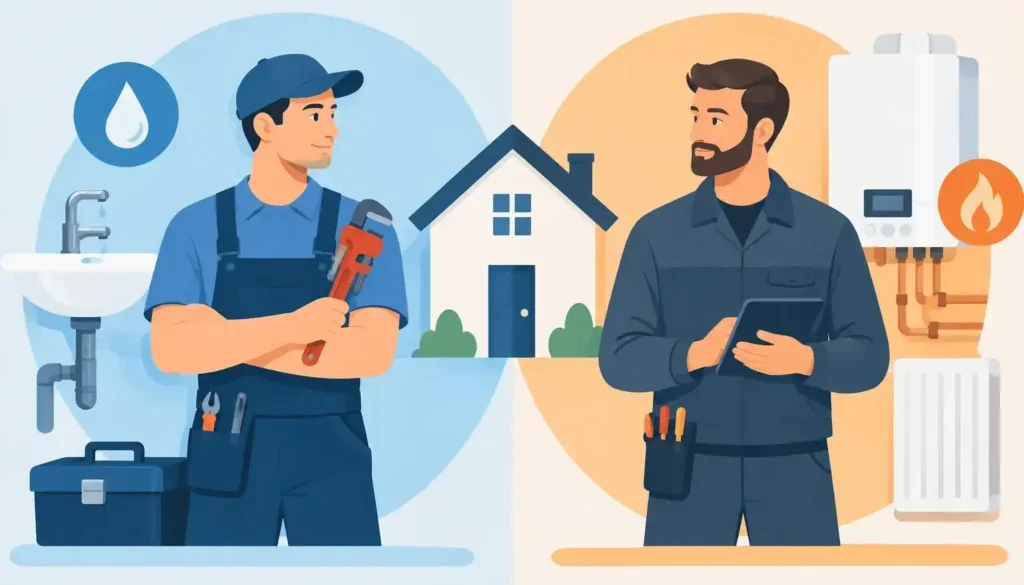
A plumber works primarily on water supply, waste water and sanitary plumbing. They deal with the pipework and fittings that bring water into your home and take it away again. This can include taps, toilets, baths, showers, sinks, leaking pipes, stop taps and drainage connections.
A heating engineer specialises in systems that heat your home and hot water. Their work commonly includes boilers, radiators, thermostats, heating controls, cylinders, pumps and central-heating pipework. If the heating system is gas-fired, they must be Gas Safe registered and qualified for the work being carried out.
There is a natural overlap. A heating engineer may repair pipework around a boiler or replace a radiator valve, while a plumber may install bathroom pipework connected to hot and cold water supplies. Many experienced domestic engineers are qualified in both areas, which is useful when one fault affects more than one system.
The key point is that job titles alone do not prove competence. Before any gas work, boiler servicing or gas safety inspection, always check that the engineer is Gas Safe registered and appropriately qualified for that appliance type.
When You Need a Plumber
Call a plumber when the issue is mainly about water, waste or bathroom and kitchen fittings. Common examples include a toilet that will not flush properly, a leaking waste pipe under the sink, low water pressure at one tap, a failed shower valve or a cold-water leak hidden beneath a floor.
Plumbers are also the right people for many bathroom projects. They can alter pipe routes, fit baths and basins, connect appliances and make sure waste water drains correctly. For a larger bathroom refit, several trades may be needed, but plumbing is usually central to the job.
A leak should not be ignored just because it appears small. Water can damage flooring, plaster, cupboards and electrical areas over time. If you cannot contain a leak, turn off the water at the stop tap if it is safe to do so, then arrange professional help promptly.
A plumber may also be able to help with radiators and heating pipework. However, if the fault appears to involve the boiler, controls or a gas appliance, a suitably qualified heating engineer is the safer choice.
When You Need a Heating Engineer
A heating engineer is the right person to call when your boiler, central heating or hot-water system is not working as it should. This includes a boiler that has stopped firing, radiators that remain cold, inconsistent hot water, strange boiler noises or heating controls that do not respond.
Boiler installation, servicing and repairs need the correct knowledge and, where gas is involved, Gas Safe registration. Modern boilers are efficient but complex appliances. A fault may relate to the pressure, condensate pipe, pump, fan, heat exchanger, thermostat, safety devices or gas supply. Guesswork is not a sensible option.
A heating engineer can also assess whether a system needs maintenance rather than a major repair. For example, some cold spots on radiators may be caused by trapped air, while repeated cold areas, dirty system water or poor circulation could point to sludge. In suitable cases, power flushing can improve circulation and help the heating system run more effectively.
If you are replacing an older boiler, an engineer should consider more than the boiler itself. The size of the property, hot-water demand, existing pipework, controls and condition of the wider system all affect the best option. The cheapest quote is not necessarily good value if important system work or controls have been left out.
Gas work requires the right registration
Any work on a gas boiler, gas fire, cooker or gas pipework must be completed by a Gas Safe registered engineer. This is not simply a preference. Incorrect gas work can create risks including gas leaks, carbon monoxide exposure and fire.
If you smell gas, suspect a gas leak or your carbon monoxide alarm sounds, treat it as an emergency. Avoid operating electrical switches or creating a flame, leave the property if necessary and follow the emergency gas guidance for your supplier. Do not try to find or repair the issue yourself.
Common Jobs and Who to Call
Some household problems are straightforward. A dripping kitchen tap, blocked basin waste or leaking toilet cistern is usually a plumbing job. A boiler losing pressure, heating that will not come on or hot water that cuts out is usually one for a heating engineer.
Other jobs can sit in the middle. A leaking radiator valve may be handled by an experienced plumber or heating engineer. But if several radiators are cold, the boiler is displaying a fault code or the system needs balancing, flushing or diagnosis, a heating specialist is generally better placed to investigate the cause.
A faulty shower can also depend on its type. A standard mixer shower may be a plumbing repair. An electric shower involves electrical work as well as water connections, so it may require a qualified electrician alongside a plumber. A shower supplied by a combi boiler could be affected by a heating or boiler fault rather than the shower unit itself.
What Landlords Need to Know
Landlords have specific responsibilities where gas appliances are concerned. A valid annual gas safety check must be completed by a Gas Safe registered engineer, with the appropriate landlord gas safety record provided to tenants.
This check is different from a boiler service, although both are worthwhile. A gas safety inspection focuses on whether gas appliances and flues are safe. A boiler service is more detailed maintenance intended to keep the appliance working efficiently and identify wear before it leads to a breakdown. Depending on the property and appliance, it can make sense to arrange both at the same visit.
Landlords should also act quickly on reports of leaks, loss of heating or hot water, and plumbing faults that could damage the property. Keeping clear service and repair records helps with compliance, tenancy management and future fault-finding.
Questions Worth Asking Before You Book
The best trade is not always determined by the signwritten van or the wording of an advert. Ask whether the engineer regularly handles your type of fault and whether they hold the required registration for gas work. For boiler work, confirm Gas Safe registration and ask if the quote includes diagnosis, parts, labour and any follow-up testing.
It is also sensible to ask when the work can be completed, especially during colder weather or where a water leak is causing damage. A reliable local firm should explain the likely next step in plain language rather than promising a fix before the fault has been properly assessed.
For larger jobs, such as a boiler replacement or bathroom plumbing changes, a written scope helps avoid misunderstandings. It should make clear what is included, who is responsible for making good any access areas, and whether any additional work could be needed once the system is opened up.
Choosing a Local Engineer for Both Services
Using one company for plumbing, heating and gas work can make household maintenance simpler. If a boiler problem also affects your hot-water pipework, or a bathroom alteration needs heating pipes moved, there is less risk of one trade blaming another.
That said, breadth of service should never replace proper credentials. Choose engineers with relevant experience, suitable insurance and the qualifications for the job. AquaHeat Heating Services Limited provides domestic plumbing, heating and gas engineering support across Warrington and the wider North West, with a focus on clear advice, safe work and fair pricing.
The practical rule is simple: call a plumber for water and waste issues, and a properly qualified heating engineer for boilers, central heating and gas appliances. If you are unsure, describe the symptoms rather than trying to diagnose the fault yourself – a reputable local engineer can help you decide the safest next step.