Combi Boiler Installation Warrington Explained
A combi boiler installation in Warrington is often prompted by a familiar problem: rising heating bills, unreliable hot water, repeated repair visits, or a boiler that has reached the end of its working life. Replacing it is a significant home improvement, so the right choice is not simply the cheapest boiler available. It needs to suit your household’s hot water demand, your property and the condition of the existing heating system.
For many homes, a modern combi boiler is a practical and efficient answer. It provides heating and hot water from one compact unit, without the need for a separate hot water cylinder or cold-water storage tank. That can free up useful cupboard or loft space while giving you hot water when you turn on the tap.
Is a combi boiler right for your home?
Combi boilers are particularly well suited to flats, smaller houses and homes with one bathroom, where space is limited and hot water is unlikely to be used heavily at several outlets at once. They heat water directly from the mains supply, so there is no stored cylinder of hot water to run out.
The trade-off is flow rate. If two people regularly need showers at the same time, or a shower and several hot taps are commonly used together, a combi may not always give the best experience. A system boiler with an unvented cylinder can be a better option for larger households, provided there is room for the cylinder and the incoming mains supply is suitable.
This is why a proper survey matters. An engineer should ask how many bathrooms the property has, how many people live there, whether showers are used at the same time, and whether any extension or bathroom refurbishment is planned. Choosing too small a boiler can leave a household disappointed even when the installation itself is faultless. Choosing an unnecessarily large model can add cost without delivering a useful benefit.
What happens during combi boiler installation in Warrington?
Every property is different, but a straightforward like-for-like replacement can often be completed in a day. Moving a boiler to another room, converting from a conventional or system boiler, changing pipework, or correcting old installation issues will take longer. The work should be planned around the property rather than rushed to fit a standard template.
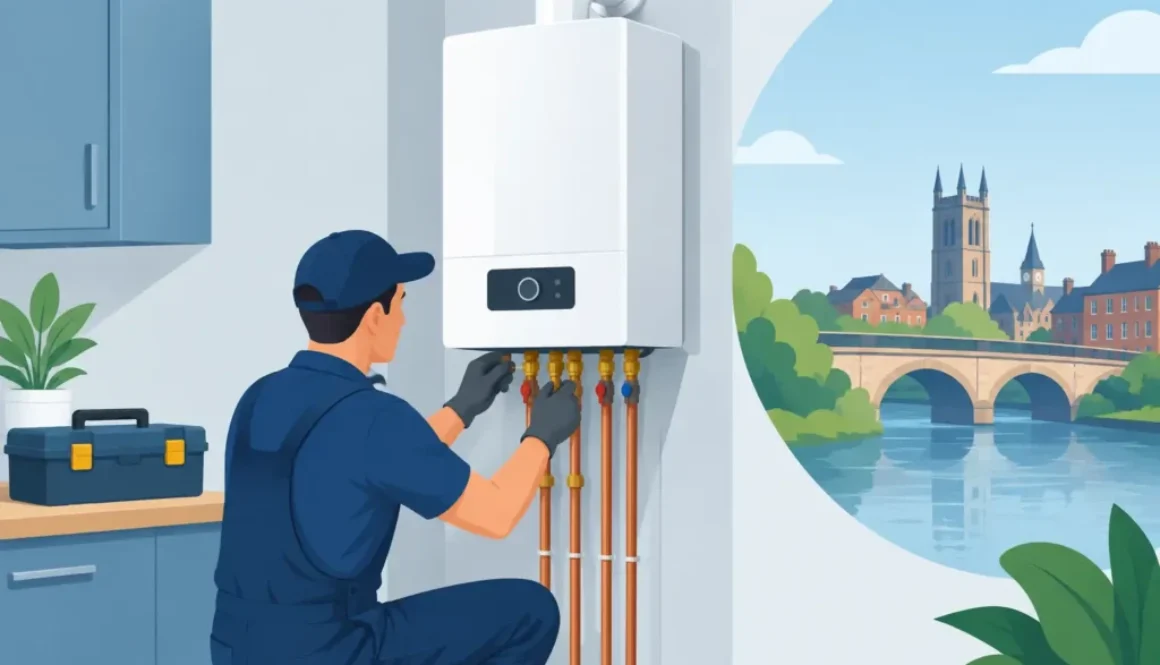
Before installation, the engineer will assess the existing boiler, flue route, gas supply, water pressure, radiator system and controls. They will also check where the condensate pipe can be run and whether the proposed location meets current safety and manufacturer requirements. The flue removes combustion gases from the boiler, so its position and termination point are essential parts of a safe installation.
On the day, the old appliance is isolated and removed, then the new boiler, flue and necessary pipework are fitted. The heating system may need cleaning before the new boiler is connected. This is especially relevant in older systems, where sludge and debris can restrict circulation, reduce radiator performance and affect the lifespan of a new boiler.
Once fitted, the boiler must be commissioned correctly. That includes checking the gas installation, testing combustion, setting up the controls and confirming safe operation. The installer should explain how the controls work, how to adjust heating and hot water settings, and what to do if the boiler displays a fault code. The installation must be notified to the relevant building regulations scheme, and the warranty paperwork should be completed in line with the manufacturer’s requirements.
Boiler size is about demand, not just bedrooms
People often describe a boiler as being sized for the number of bedrooms. While this gives a rough starting point, it is not the full picture. Boiler output for central heating depends on heat loss, insulation, radiator capacity and the size of the property. For a combi boiler, domestic hot water performance is just as important.
A one-bedroom flat with a powerful shower may need different hot water performance from a well-insulated three-bedroom home with a modest shower. Mains water pressure and flow rate also influence the result. A high-output combi boiler cannot create more water flow than the property receives from the mains.
An experienced engineer can assess these details and recommend a boiler that is appropriate rather than simply selecting the largest model. This helps keep the installation cost sensible and makes sure the system meets day-to-day needs.
What affects the cost of a new combi boiler?
A reliable quotation should reflect the full scope of work, not just the boiler itself. The appliance, warranty length, location, access, flue requirements, controls, pipework changes and condition of the heating system all affect the final price.
A like-for-like replacement in an accessible position is generally more straightforward than moving a boiler from a kitchen to a loft or airing cupboard. Relocation can involve extending the gas supply, altering heating and hot water pipework, creating a new flue route and making good the former boiler position. If the old system has significant sludge, a power flush or other cleaning work may also be recommended.
It is sensible to be cautious of a price that seems unusually low without a survey. Essential work can be missed at the quotation stage, only to appear later as an extra. A clear written quotation should explain what is included, which boiler and controls are being supplied, and whether any additional work may be needed if hidden problems are found.
Controls and system protection make a difference
A new boiler will only perform as well as the system around it. Good controls help avoid heating empty rooms or running the boiler hotter than necessary. A programmable thermostat allows heating times to match household routines, while thermostatic radiator valves let you set different temperatures in individual rooms.
Smart controls can be useful for households with changing schedules, but they are not essential for everyone. A simple, well-set programmable control can still make a meaningful difference to comfort and energy use. The right option depends on how the home is occupied and how confident you feel using technology.
System protection also deserves attention. A magnetic filter helps capture circulating debris before it reaches the boiler, and inhibitor helps protect against internal corrosion. These are modest additions compared with the cost of a boiler replacement, but they can help protect the new appliance and maintain heating performance over time.
Why qualified installation matters
Any work on a gas boiler must be carried out by a Gas Safe registered engineer. This is not only about paperwork. Boilers burn gas and produce combustion gases, so correct installation, flueing and testing are essential for the safety of everyone in the property.
Using a qualified local engineer also gives you someone who can assess the whole heating system rather than treating the boiler as an isolated box on the wall. Issues such as poor radiator circulation, a weak mains supply, unsuitable controls or a badly positioned condensate pipe can affect how the installation performs long after the fitting date.
AquaHeat Heating Services Limited brings more than 15 years in business and over 40 years of combined industry experience to domestic heating work across Warrington and the surrounding area. The focus should always be on a safe, tidy installation, clear advice and a boiler that is right for the home.
Looking after your new boiler
After a replacement, annual servicing is the best way to support safe and efficient operation and to meet most manufacturer warranty conditions. A service allows an engineer to inspect the boiler, check its combustion performance and identify signs of wear before they become a breakdown.
You can also help by keeping the boiler area accessible, checking the system pressure occasionally where applicable, and responding to faults rather than repeatedly resetting the boiler. If radiators develop cold spots, heating takes longer than usual, or pressure drops frequently, arrange an inspection before the issue becomes more costly.
A new combi boiler should provide dependable heating and hot water for years, but the result starts with the survey. Take the time to discuss how your household uses hot water, what is not working with the current system and what you expect from the replacement. That conversation is often what turns a new boiler from a necessary expense into a worthwhile improvement to everyday comfort.