How to Repair a Leaking Radiator Safely at Home
A radiator leak can start as a small damp patch on the carpet and quickly become a bigger problem if it is left alone. If you need to repair a leaking radiator, the first job is to find exactly where the water is coming from. The right solution depends on whether the leak is at a valve, a pipe connection, the bleed point or the radiator itself.
Central-heating water can stain floors, damage skirting boards and reduce pressure in your boiler system. Acting promptly helps protect your home and prevents a minor issue becoming a cold-radiator call-out.
Find where the radiator is leaking
Dry the radiator, valves and nearby pipework thoroughly with an old towel. Then place dry kitchen roll around each likely point and watch for fresh moisture. This is usually more reliable than trying to trace water running down the back of a radiator.
A leak around the valve at the bottom of the radiator is common. It may be coming from the spindle beneath the thermostatic head or manual control, the nut joining the valve to the radiator, or the pipe connection below it. Water at the top of the radiator is more likely to be from the bleed valve or blanking plug.
If water is coming through the radiator panel, especially from underneath or along a seam, internal corrosion is often the cause. This needs a different approach from a loose valve connection. Sealants may appear to stop it for a short time, but they are rarely a dependable long-term repair for a corroded radiator.
Before touching any fitting, turn the heating off and allow the radiator to cool completely. Hot central-heating water can cause injury, and working on a warm system makes it harder to see where a slow leak begins.
How to repair a leaking radiator at a valve
Where a small leak is coming from the valve spindle, carefully tightening the small nut directly behind the control can sometimes stop it. This is called the gland nut. Turn it only a small amount at a time, using the correct spanner or adjustable wrench. Overtightening can damage the valve or make it difficult to operate.
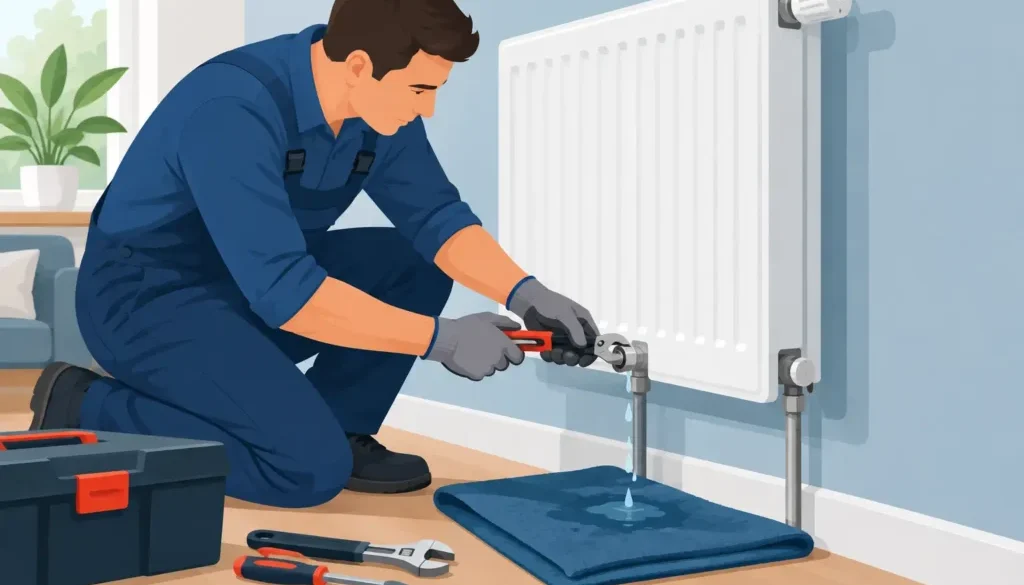
If the water is coming from a compression nut where the valve joins the radiator or pipework, a slight tightening may be enough. Hold the valve body steady with one tool while turning the nut with another. This prevents twisting the connected pipe, which could make the leak worse.
Do not keep tightening a fitting that continues to drip. The olive inside a compression joint may be worn, the valve may be corroded, or the joint may require dismantling and resealing. At that stage, the radiator normally needs to be isolated and drained before work is carried out properly.
A leak from the bleed valve can sometimes be resolved by gently tightening it with a radiator key or suitable screwdriver, depending on the fitting. Use very little force. If the screw is damaged or the valve still leaks, it should be replaced rather than forced closed.
Isolate the radiator before any larger repair
For anything beyond a very minor adjustment, isolate the radiator first. Turn the thermostatic radiator valve fully clockwise. On the other side, remove the cap from the lockshield valve if fitted and turn the spindle clockwise. Count the number of turns as you close the lockshield, so it can be returned to its original setting afterwards.
Place towels and a shallow tray below the valves. A radiator can hold more water than expected, and dark heating water can mark carpets and flooring. If you are removing a radiator, open the bleed valve slightly to allow air in as water drains from the loosened valve connection.
This work can be manageable for an experienced homeowner, but it is easy to spill system water, damage a valve or create a further leak. If the radiator is heavy, awkwardly positioned or fitted with older pipework, it is usually safer to arrange a heating engineer.
Once repairs are complete and the valves are reopened, your boiler pressure may need topping up. Check the manufacturer’s guidance for your boiler, then run the heating and inspect the repaired area carefully. Bleed the radiator only if needed, as bleeding unnecessarily can also lower system pressure.
When a leaking radiator needs replacing
A radiator that leaks from the panel itself is often nearing the end of its serviceable life. Internal sludge and corrosion can gradually weaken the metal until pinholes form. While an external repair compound might provide a short emergency measure, it does not remove the corrosion inside.
Replacement is normally the more sensible option if the panel is leaking, rusty around the bottom edge or repeatedly losing water. A new radiator should be correctly sized for the room, fitted with suitable valves and tested once the system is repressurised.
If several radiators have cold areas, rusty water or recurring leaks, the wider heating system should be assessed. Sludge and corrosion may be circulating through the pipework. A professional power flush is not necessary in every case, but it can be appropriate where contamination is affecting circulation, radiator performance and component lifespan.
Avoid quick fixes that can cause more trouble
Radiator sealants and leak-stopping additives are often tempting when water is dripping onto the floor. They can have a limited place as a temporary measure, but should not be treated as a permanent answer to a failed radiator or valve. Some products can also create complications elsewhere in the system if used incorrectly.
Avoid using excessive PTFE tape on a compression fitting. The sealing is generally provided by the olive inside the joint, not tape wrapped around the outer nut. Likewise, do not attempt to seal a leak with adhesive while the radiator is hot or pressurised.
It is also wise not to ignore a boiler pressure gauge that keeps falling. Repressurising the boiler repeatedly without finding the cause can mask a leak and leave your heating system vulnerable to further faults. A visible radiator leak is a likely cause, but leaks can also occur at pipework, valves, the boiler or safety-discharge pipework.
When to call a qualified heating engineer
Call for professional help if the leak cannot be stopped with a minor valve adjustment, if water is coming through the radiator panel, or if boiler pressure repeatedly drops. You should also arrange an inspection if you are unsure how to isolate the radiator, have concealed pipework, or notice water close to electrical sockets or appliances.
A qualified heating engineer can identify the source, isolate and drain the radiator correctly, replace failed valves or radiators, and check that the system is refilled, vented and pressurised safely. For landlords, prompt repairs are particularly important: a leak can affect the condition of the property and leave tenants without reliable heating.
AquaHeat Heating Services provides practical heating and plumbing repairs for homeowners and landlords across Warrington and the wider North West. A proper repair may cost more than a temporary patch, but it protects your heating system, your flooring and your peace of mind.
The best time to deal with a small radiator leak is before it becomes a pressure loss, a damaged floor or a failed heating system. Turn the heating off, contain the water and get the fault assessed if there is any doubt about the source or repair.