Boiler Servicing and Repairs Explained
When the boiler stops on a cold morning, most people are not thinking about parts, pressure or pipework. They are thinking about getting the heating back on, keeping the hot water running, and finding someone reliable to sort it properly. That is why boiler servicing and repairs matter. A well-maintained boiler is usually safer, more efficient and less likely to leave you without heating when you need it most.
For homeowners and landlords, the challenge is often knowing when a boiler simply needs routine attention and when a fault needs urgent repair. The two are closely linked, but they are not the same thing. Servicing is about prevention. Repairs are about putting a problem right. Leaving either too long can lead to bigger costs, more disruption and, in some cases, avoidable safety risks.
Why boiler servicing and repairs should not be left too long
A boiler works hard in the background for much of the year, especially through autumn and winter. Because it is out of sight, small warning signs are easy to ignore. You may notice the radiators taking longer to warm up, the pressure dropping now and then, or the hot water running unevenly. None of these issues automatically means a major fault, but they do suggest the system needs checking.
Regular servicing helps identify wear and tear before it becomes a breakdown. Components can be inspected, safety checks carried out, and early signs of trouble picked up before they affect the whole system. In practical terms, this often means lower risk of inconvenient call-outs, more dependable performance and a better chance of keeping energy use under control.
Repairs, on the other hand, are needed when something has already gone wrong. That could be a failed part, an ignition issue, a leak, a circulation problem or a fault code that stops the boiler operating correctly. Some repairs are straightforward. Others depend on the age of the appliance, the condition of the wider heating system and whether replacement parts are still available.
What happens during a boiler service
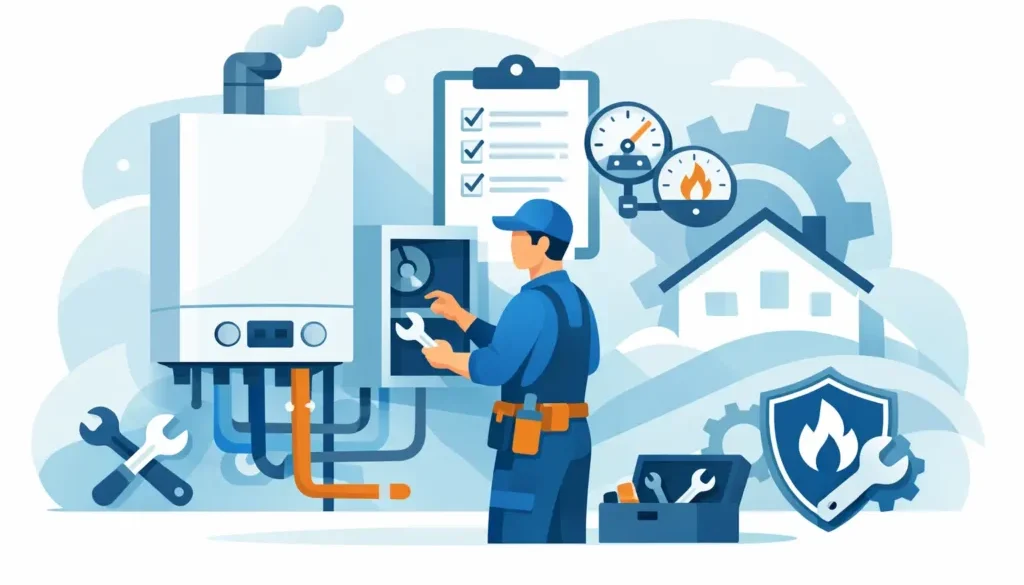
A proper boiler service is more than a quick glance at the casing. It involves checking that the appliance is operating safely and as it should. The engineer will inspect key components, test the system, and look for signs of damage, wear or unsafe operation.
The exact work can vary slightly depending on the type and model of boiler, but the aim is always the same – to confirm safe performance and spot issues early. That might include checking the flue, combustion, seals, pressure, controls and internal components, as well as making sure there are no obvious leaks or signs of corrosion.
For many households, an annual service is the sensible approach. It keeps maintenance regular without becoming excessive. If the boiler is older, heavily used, or has a history of faults, that yearly check becomes even more valuable.
Common signs your boiler may need repairs
Not every boiler fault causes a full breakdown straight away. In many cases, there are warning signs first. Unusual noises such as banging, whistling or gurgling can point to internal issues or circulation problems. A boiler that keeps losing pressure may have a leak somewhere in the system. If the pilot light keeps going out, or the boiler locks out repeatedly, it needs professional attention.
You might also notice that some radiators stay cold even when the boiler is running, or that the hot water temperature keeps fluctuating. Sometimes the issue is with the boiler itself. Sometimes it is linked to sludge in the system, air in the radiators, faulty controls or pump-related problems. That is why proper diagnosis matters. Replacing the wrong part wastes time and money.
Any sign of a petrol smell should be treated differently from a routine fault. In that situation, safety comes first. The system should be turned off and the issue dealt with as an urgent petrol safety matter.
Boiler servicing and repairs for older systems
Older boilers often need a more balanced decision. A repair may still be worthwhile if the appliance has generally been reliable and the fault is limited to a single component. On the other hand, if breakdowns are becoming more frequent, efficiency has dropped, and parts are harder to source, continued repairs may stop making financial sense.
There is no single age at which every boiler should be replaced. Much depends on condition, service history and how the system performs day to day. Some older boilers keep running well with regular maintenance. Others become expensive to keep patching up. A good engineer will explain the trade-off clearly rather than pushing one answer for every home.
For domestic customers, the real question is usually this: is the repair likely to restore dependable heating at a reasonable cost, or are you spending money on borrowed time? Honest advice matters most at that point.
Why regular servicing can save money
People sometimes put off a boiler service because the boiler seems fine. The difficulty is that many internal problems start quietly. A small issue such as debris build-up, poor combustion, or a worn part may not be obvious until performance drops or the boiler stops altogether.
Routine servicing can help the boiler run more efficiently, which may reduce unnecessary energy use. It can also lower the chance of emergency breakdowns, which tend to happen at the worst possible moment and often come with more disruption. While no service can guarantee that a boiler will never fail, it can reduce the risk of preventable faults.
It also helps protect the wider heating system. If a boiler is struggling, radiators may heat poorly, hot water may become inconsistent, and other components can come under strain. Looking after the boiler is part of looking after the home’s whole heating setup.
Landlords and legal responsibilities
For landlords, boiler servicing and repairs are not only about comfort and efficiency. They are also closely tied to safety responsibilities. A rented property needs safe, working heating and hot water, and petrol appliances must be properly maintained.
An annual petrol safety check is a legal requirement where petrol appliances are provided, but it is worth remembering that a safety check and a service are not exactly the same thing. A CP12 confirms that required petrol safety checks have been carried out. A service focuses on maintenance and operational condition. In many properties, both are sensible.
If a tenant reports heating issues, delays can quickly become more than an inconvenience. Fast action protects the tenant, the property and the landlord’s responsibilities. Keeping on top of servicing also makes it easier to spot ageing appliances before they become an urgent problem.
Choosing the right engineer for boiler work
Boiler work is not the place to cut corners. Repairs and servicing should always be carried out by a properly qualified Petrol Safe registered engineer. That protects both safety and standards, and it gives you confidence that the work is being done correctly.
It is also worth choosing someone who can look at the system as a whole, not just the immediate fault code on the display. Heating issues are not always isolated to one component. Poor circulation, dirty system water, failing controls or installation defects can all affect boiler performance. An experienced local engineer will usually recognise those wider patterns more quickly.
For many customers in Warrington and across the North West, that local knowledge matters. Homes vary, heating systems vary, and practical advice counts for a lot when you want a fair answer rather than guesswork. AquaHeat Heating Services Limited works with homeowners and landlords who want exactly that – straightforward guidance, qualified workmanship and a proper focus on safety.
When to book a service and when to call for a repair
If your boiler is working normally, an annual service is the best habit to keep. Late summer or early autumn is often ideal because it gives time to deal with any issues before the colder months start.
If the boiler is making unusual noises, losing pressure, failing to heat water properly, showing fault codes or cutting out, that is the time to book a repair visit. Waiting rarely improves the situation. In many cases, a smaller repair handled early is simpler than dealing with a full breakdown later on.
The key is not to treat servicing and repairs as separate worlds. Good servicing helps prevent repairs. Good repairs restore safety and reliability when faults do happen. Both have their place, and both protect the comfort of your home.
A boiler rarely chooses a convenient moment to show signs of trouble. Paying attention early, and getting the right help when you need it, usually makes the difference between a manageable job and a much bigger one.