Gas Boiler vs Heat Pump: Which Suits Your Home?
A failed boiler in the middle of winter makes the gas boiler vs heat pump decision feel urgent. While heat pumps are increasingly popular, they are not an automatic replacement for every gas boiler. The right choice depends on your property, insulation, existing heating system, budget and how you use hot water.
For many homes in Warrington and across the North West, a modern gas boiler remains a practical, dependable option. For others, particularly well-insulated homes with suitable radiator space, an air source heat pump can reduce reliance on gas and provide efficient heating over the long term.
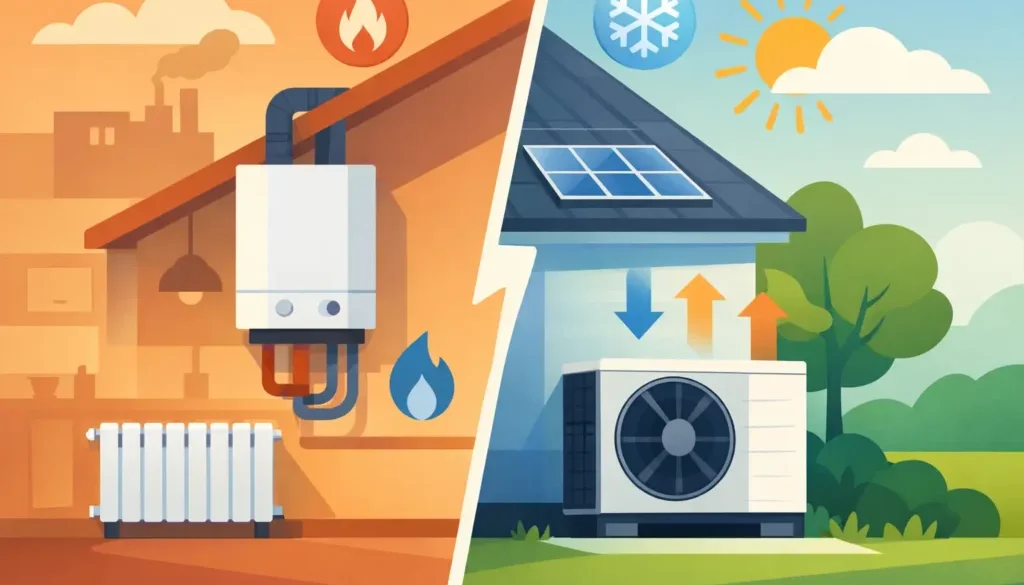
Gas boiler vs heat pump: the main difference
A gas boiler burns natural gas to heat water for radiators, taps and showers. Modern condensing boilers are highly efficient when correctly installed, sized and maintained. They produce heat quickly and generally work with the existing radiators and pipework found in most UK homes.
An air source heat pump uses electricity to collect low-level heat from the outside air and transfer it indoors. It does not create heat in the same way as a boiler. Instead, it moves heat, allowing it to produce several units of warmth for every unit of electricity it uses in suitable conditions.
That difference affects how each system feels in day-to-day use. A boiler delivers hotter water and can warm radiators rapidly. A heat pump typically runs for longer at a lower flow temperature, keeping the home at a more even background temperature rather than delivering a quick burst of heat.
Upfront cost and installation work
Replacing a like-for-like gas boiler is usually the simpler and lower-cost option. If the existing system is in reasonable condition, the installation may involve replacing the boiler, updating controls and making any necessary safety improvements. A power flush or system clean may also be recommended where sludge is affecting circulation.
Installing a heat pump often requires more planning. The outdoor unit needs a suitable location with good airflow, and the system must be designed around the heat loss of the property. Some homes will need larger radiators, additional insulation work, upgraded pipework or a hot water cylinder. This is particularly relevant in older properties with small radiators originally designed for high-temperature boiler systems.
Government support may be available for eligible heat pump installations, but grants, eligibility rules and installer requirements can change. It is sensible to look at the full cost of the work, not just the advertised price of the unit.
A heat pump can be an excellent long-term investment where the property is ready for it. It can become expensive and disappointing when fitted to a draughty house without addressing the rest of the heating system.
Running costs are not as simple as fuel prices
Gas is generally cheaper per unit than electricity, which is why an efficient gas boiler can still be economical to run. However, a heat pump can use electricity very efficiently. Its real-world running cost depends on how efficiently it performs through the year, your electricity tariff, the temperature you keep the house at and the condition of the property.
A well-designed heat pump in a well-insulated home can offer competitive running costs. A poorly sized system, undersized radiators or constant heat loss through lofts, walls, windows and draughts will reduce those savings.
A gas boiler is easier to understand for many households because it works in the familiar way: turn up the thermostat and the radiators heat up. That does not mean it should be ignored once installed. Incorrect boiler settings, old controls and dirty system water can all increase bills and reduce comfort.
Before replacing either system, it is worth checking whether better controls, insulation improvements, radiator balancing or a repair could solve the immediate problem. Replacing a boiler that has a straightforward repair left in it is not always the best use of money.
Heating performance and hot water comfort
For homes with high hot water demand, a combi gas boiler can be very convenient. It supplies hot water on demand without needing a separate cylinder, making it popular in smaller homes and properties where storage space is limited. Larger households may prefer a system boiler with a hot water cylinder, particularly where several bathrooms are used at similar times.
Heat pumps normally work with a cylinder to store hot water. This takes up space, but it can provide a good supply when the system has been properly designed. The cylinder needs to be sized around the household’s routine, rather than simply chosen as the largest one that will fit in the cupboard.
Radiators also matter. Boilers often operate at higher temperatures, so existing radiators may be adequate. Heat pumps work best at lower temperatures, which can mean fitting larger radiators or, in some cases, underfloor heating. This is not a fault with heat pumps – it is a design requirement that should be assessed before installation.
Which homes suit a heat pump?
Heat pumps are often best suited to homes that retain heat well and have enough space for the outdoor unit, cylinder and potentially larger radiators. A newer property may already be close to ready, but older homes can work well too after sensible improvements.
The key question is not simply whether your house is old or new. It is how much heat it loses. Loft insulation, wall construction, glazing, draughts and ventilation all affect the answer. A proper heat-loss survey should come before any recommendation.
Noise and location should also be considered. Modern outdoor units are much quieter than many people expect, but positioning still matters. The unit should not be squeezed into an unsuitable corner or placed where it may cause avoidable disturbance to neighbours.
When a gas boiler remains the sensible option
A gas boiler may be the better choice if you need a straightforward replacement, have limited space, rely on fast heating response or cannot reasonably make wider upgrades to the home. It may also suit households where the existing radiators and pipework are in good order and the priority is restoring reliable heat and hot water without major disruption.
For landlords, the immediate priorities are often safe operation, dependable heating for tenants and meeting gas safety responsibilities. An efficient replacement boiler, annual servicing and a valid Gas Safety Record can be the most practical route for a rental property, particularly where a heat pump installation would require extensive work while the home is occupied.
A modern boiler should always be installed and serviced by a properly qualified Gas Safe engineer. Gas work is not an area for shortcuts. Safe combustion, correct flue positioning, system pressure, ventilation and controls all matter to the performance and safety of the installation.
Maintenance and lifespan
Both options need ongoing care. A gas boiler should be serviced annually to help keep it operating safely and efficiently, identify worn parts early and protect any manufacturer warranty requirements. If radiators have cold spots, make noise or the boiler repeatedly loses pressure, the wider system may need attention rather than another boiler repair alone.
A heat pump also needs regular servicing and checks. Filters, system pressure, controls, refrigerant components and the outdoor unit should be inspected by an appropriately qualified engineer. Keeping the unit clear of leaves, vegetation and obstructions helps maintain airflow.
Neither system is maintenance-free. The advantage comes from choosing equipment that is suitable for the property and having it installed, commissioned and looked after correctly.
How to make the decision with confidence
Start with your current system. Is the boiler beyond economical repair, or does it need a reliable repair and service? Are your energy bills high because the boiler is inefficient, or because heat is escaping from the building? Do you have space for a cylinder? Would larger radiators be acceptable? These answers will narrow the options quickly.
Then look beyond the appliance itself. A heating system should be sized to the home, matched to your hot water needs and controlled properly. The cheapest quote can become the most costly choice if it overlooks system cleaning, controls, radiator upgrades or the condition of existing pipework.
AquaHeat Heating Services can help homeowners understand the condition of an existing gas heating system and make practical decisions about boiler repairs, replacement and ongoing servicing. The aim should be dependable warmth, safe hot water and a solution that makes financial sense for your household – not simply following the latest trend.