Gas Appliance Safety Checks at Home Made Simple
A boiler that takes longer to fire up, a cooker flame that has turned yellow, or a room that feels unusually stuffy can be easy to put off. Yet gas appliance safety checks at home are one of the simplest ways to spot a potential problem before it affects your heating, your property or your family’s wellbeing.
Most checks are visual and common-sense. They do not replace professional servicing or repair work, and homeowners should never remove a boiler case or try to work on a gas appliance themselves. But knowing what normal operation looks like helps you act promptly when something changes.
What you can safely check at home
Start by looking at your gas appliances when they are switched off and cool. Check that the boiler, gas fire, cooker or hob has no obvious signs of damage, loose parts, staining or corrosion. The appliance should be accessible, with no stored boxes, clothes, paint tins or household items blocking ventilation grilles, flues or cupboards.
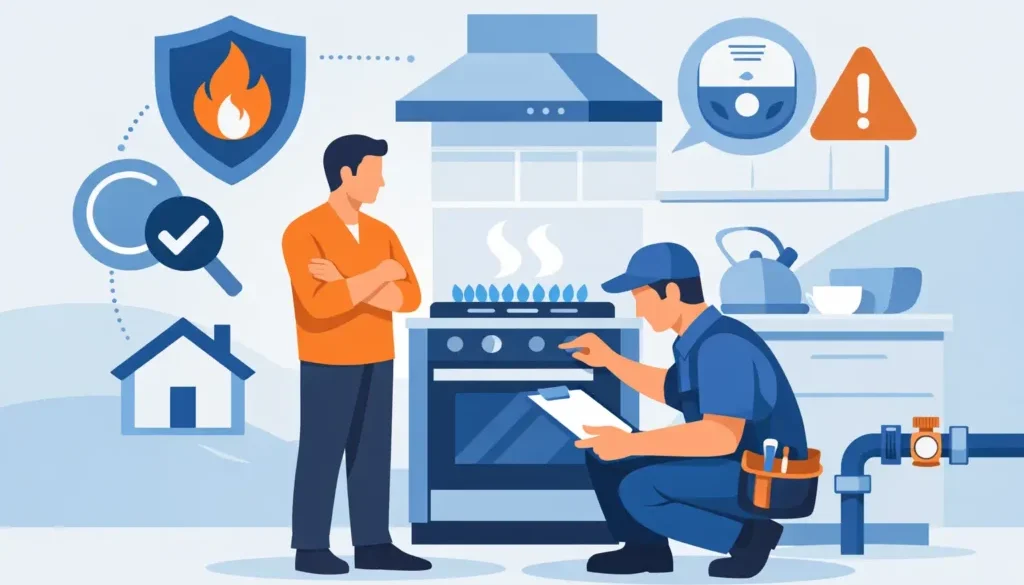
For a gas hob or cooker, look at the flame when the burner is lit. A normal flame is generally crisp and blue. Orange or yellow flames, excessive flickering, soot around the burner or a flame that seems weak may point to a combustion or burner problem. Food residue can sometimes affect a hob burner, but repeated changes in flame colour should be checked by a Gas Safe registered engineer.
With a boiler, watch for new warning lights, error codes, unusual noises, dripping water or a regular loss of pressure. A boiler should not smell of fumes, produce black marks around the casing or switch itself off repeatedly. These signs do not always mean there is an immediate danger, but they do mean the boiler needs professional attention.
You can also look outside at the boiler flue terminal, where fumes leave the property. It must not be covered by garden furniture, plants, decorations or building materials. Keep the area clear and do not attempt to adjust the flue yourself.
Why ventilation and carbon monoxide alarms matter
Gas appliances need sufficient air to burn fuel correctly and allow combustion gases to leave the home safely. That is why ventilation openings, air bricks and purpose-built vents should never be blocked, even in cold weather. Blocking them to stop a draught can create a far more serious issue.
Carbon monoxide is colourless and odourless, so you cannot rely on smell to detect it. A carbon monoxide alarm provides an essential warning if dangerous levels are present. Fit an audible alarm in rooms containing a fixed gas appliance, following the manufacturer’s positioning instructions, and test it regularly using the test button. Replace batteries where required and replace the whole alarm by its stated expiry date.
An alarm is a safeguard, not a substitute for a properly installed and maintained appliance. It cannot diagnose a boiler fault or make an unsafe appliance safe to use.
Warning signs you should not ignore
A faulty gas appliance can cause poor heating performance long before it becomes an urgent safety concern. It is sensible to arrange an inspection if you notice persistent pilot light or burner problems, new soot marks, unexplained condensation, recurring boiler faults, or a boiler that is noticeably noisier than usual.
The more urgent warning signs are symptoms that may be linked to carbon monoxide exposure. These include headaches, dizziness, nausea, breathlessness, confusion and unusual tiredness, particularly if symptoms improve when you leave the property. Do not assume these symptoms are caused by a cold, flu or poor sleep if they seem to occur at home or near a gas appliance.
If you suspect carbon monoxide, turn off the appliance if you can do so safely, open doors and windows, leave the building and seek appropriate urgent medical advice. Do not go back inside until the property has been assessed and it is safe to return.
A smell of gas is different from carbon monoxide and must also be treated seriously. Avoid using electrical switches, naked flames, cigarettes or anything that could cause a spark. Turn off the gas supply at the emergency control valve if it is safe to do so, open windows and doors, leave the building, and contact the gas emergency service from outside.
Gas appliance safety checks at home are not servicing
It is helpful to make simple visual checks throughout the year, especially as heating use increases in autumn and winter. However, a professional gas safety check goes much further. A qualified engineer can inspect the appliance, its flue and ventilation, test gas pressures and combustion where appropriate, check safety devices and identify faults that cannot be seen from the outside.
For homeowners, an annual boiler service is the sensible baseline for maintaining a central heating system. It can help preserve efficiency, catch developing faults and confirm the appliance is operating safely. The exact work required depends on the make, model, age and condition of the appliance, which is why a proper visit should never be reduced to a quick visual glance.
Landlords have additional legal responsibilities. Every rented property with gas appliances must have a valid Gas Safety Record, often referred to as a CP12 certificate, completed by a Gas Safe registered engineer at least every 12 months. Landlords must provide the record to existing tenants within 28 days of the check and to new tenants before they move in. Tenants should still report faults, damaged appliances or concerns promptly rather than waiting for the next annual visit.
A sensible routine for your household
There is no need to turn gas safety into a complicated monthly task. A practical approach is to test carbon monoxide alarms regularly, keep vents and flue outlets clear, and pay attention to changes in how appliances look, sound or perform. If you have a gas fire, arrange servicing in line with the manufacturer’s guidance and before regular seasonal use.
Keep paperwork from boiler services, repairs and safety inspections in one place. It gives an engineer useful history if a fault develops and can be valuable when selling a property. Where a boiler is still under warranty, annual servicing may also be a condition of that cover.
It is worth teaching everyone in the household the basic warning signs too. They should know where the gas emergency control valve is, understand that carbon monoxide cannot be smelled, and know not to tamper with a boiler, gas meter, flue or gas pipework.
When to call a Gas Safe registered engineer
Call a qualified engineer when an appliance is due its annual service, develops a fault, shows a warning code, has an unusual flame, produces soot or staining, leaks water, or has been affected by building work, a leak or accidental damage. A professional should also inspect gas appliances after a long period of disuse, particularly before putting a gas fire back into service.
Do not be tempted by a quick fix from an unqualified person. Gas work is regulated for good reason. A competent Gas Safe registered engineer has the training and equipment to test an appliance properly and, where necessary, make it safe before recommending repair or replacement.
For homeowners across Warrington and the wider North West, AquaHeat Heating Services can provide straightforward advice, annual servicing and professional gas appliance checks. The aim is not to create unnecessary work, but to give you a clear picture of your system’s condition and the right next step.
A small change in a gas appliance is often easiest and least disruptive to deal with early. Keep an eye on the signs, keep alarms working, and arrange qualified help whenever something does not seem right.