Boiler Condensate Pipe Regulations Explained
A frozen condensate pipe can stop a perfectly healthy condensing boiler from working, often on the coldest morning of the year. That is why boiler condensate pipe regulations are not just a technical detail. They affect whether your heating remains safe, reliable and protected from avoidable winter breakdowns.
Modern gas boilers are usually condensing boilers. They recover heat that would otherwise leave through the flue, producing mildly acidic water known as condensate. This water needs a correctly installed route to a suitable drain. If that route is too small, poorly supported, incorrectly sloped or exposed to freezing weather, it can cause fault codes, leaks and boiler lockouts.
What the regulations are designed to achieve
In England, boiler installations must meet the relevant Building Regulations, manufacturer instructions and recognised industry standards, including BS 6798 guidance for the installation of gas-fired boilers. The exact arrangement depends on the property, the boiler location and the available drainage points, but the purpose is consistent: condensate must drain safely without creating a risk to people, property or the boiler.
For householders, the key point is simple. The pipe should normally be routed internally wherever possible, discharged into a suitable waste pipe or internal soil stack, and installed with enough fall for the water to drain freely.
A properly installed condensate pipe is not usually something you need to think about. It should quietly do its job in the background. Problems tend to arise when an external route has been used unnecessarily, or when previous work has not allowed for frost protection.
Where can a boiler condensate pipe discharge?
The preferred option is an internal connection to a gravity waste pipe, soil stack or internal drain. Internal pipework is protected from freezing temperatures and is generally the most dependable arrangement.
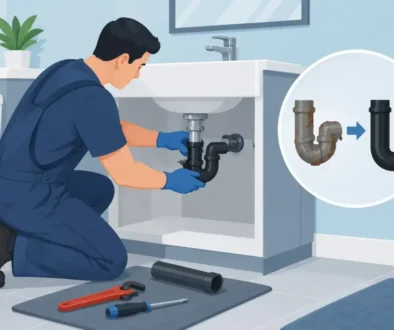
Depending on the installation, the condensate may discharge into a sink, basin, washing machine waste pipe or internal soil stack through a suitable connection. The arrangement must include an appropriate trap or air break where required, preventing foul air from travelling back towards the boiler.
An external connection can be acceptable where an internal route is not practical, but it needs extra care. The pipe should be kept as short as possible, use a larger diameter than a typical internal run and be properly insulated. Simply taking a narrow pipe through the wall and down the outside of the house is a common cause of cold-weather failures.
Discharging condensate straight onto the ground, into a rainwater downpipe or onto a path is not normally suitable. Condensate can freeze on paving, creating a slip risk, and rainwater systems are not necessarily intended for this type of discharge.
Soakaways and specialist arrangements
A condensate soakaway may be used in some situations, particularly where there is no practical connection to a foul drain. However, it must be designed and installed correctly, with suitable drainage conditions and positioning away from the building. This is not a shortcut for avoiding proper pipework.
Some boilers also require a condensate pump where gravity drainage is not possible. Pumps can be effective, but they add another component that needs correct installation, electrical connection and maintenance. The boiler manufacturer’s instructions are particularly important in these cases.
Pipe size, slope and materials matter
A condensate pipe needs to be made from a material suitable for handling mildly acidic condensate. Plastic pipework is commonly used. Metal pipework can corrode over time, especially where condensate is not properly diluted or the pipework has been poorly arranged.
The pipe must also have a continuous fall towards the drain. If it runs uphill, has low spots or is poorly clipped, water can collect inside it. That standing water can freeze, cause blockages and eventually leak from joints.
Internal pipework is typically smaller than external pipework. Where a pipe has to run outside, current industry guidance generally calls for a larger bore, normally at least 32mm internal diameter, to reduce the chance of freezing. It should also be insulated with weather-resistant insulation that is fitted closely around the pipe and protected from damage.
The correct size and fall are not details to guess at during a DIY alteration. A small change to a pipe route can affect the boiler’s drainage and, in some cases, invalidate the manufacturer’s installation requirements.
External condensate pipework needs frost protection
External condensate routes are more vulnerable in Warrington and across the North West, where prolonged cold snaps and damp winter weather can quickly expose weak points in an installation.
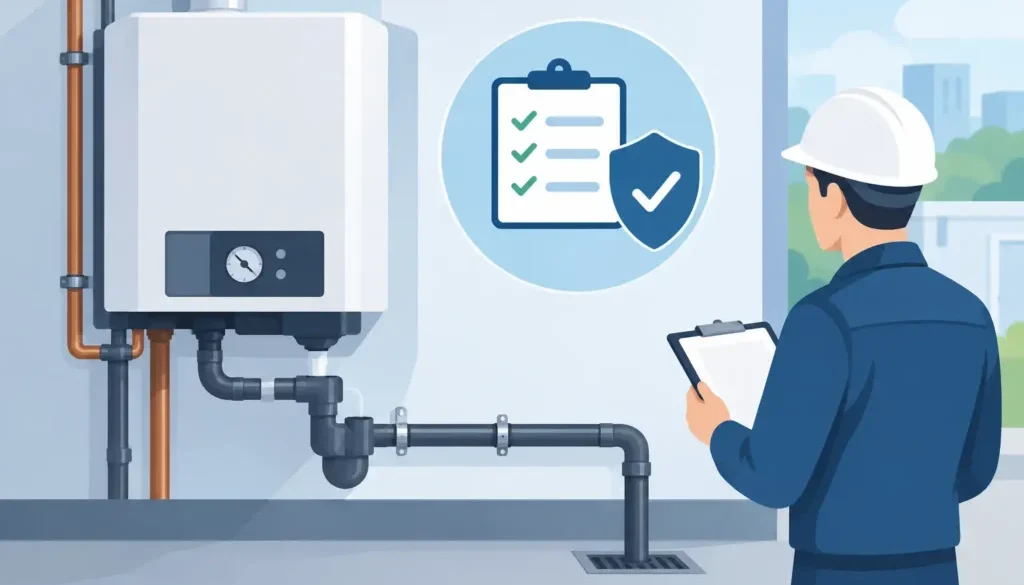
The best protection is to avoid external pipework where possible. If it cannot be avoided, the run should be short, vertical where practical, and installed in a larger pipe with suitable insulation. Long horizontal sections outside are especially problematic because they hold more water and lose heat quickly.
A frozen condensate pipe often causes the boiler to shut down as a safety measure. You may notice a gurgling sound, a visible blockage near the external outlet, or a fault code on the boiler display. Never attempt to thaw a pipe with boiling water, a naked flame or a heat gun. Boiling water can crack plastic pipework, while flames and high heat create obvious safety risks.
Warm water from a tap, applied carefully to an accessible external pipe, may thaw a minor blockage. But if the boiler repeatedly stops in cold weather, the answer is usually to improve the pipework rather than keep treating the symptom.
Who is responsible for compliance?
For a new boiler installation or replacement, the installer is responsible for fitting the condensate system in line with the boiler manufacturer’s instructions and applicable requirements. Work on the gas boiler itself must be completed by a Gas Safe registered engineer.
A competent installer will assess the available drainage routes before fitting the boiler, rather than treating condensate disposal as an afterthought. They should also explain the route of the pipework and point out any external section that may need monitoring during severe weather.
Homeowners should not assume that an older arrangement meets current expectations. A boiler may have been installed years ago when different guidance was common, or it may have been altered during kitchen, utility room or extension work. If you are having a boiler serviced, repaired or replaced, it is sensible to ask for the condensate pipework to be checked at the same time.
Landlords and rental properties
Landlords have clear duties to maintain gas appliances and arrange annual gas safety checks. Although a CP12 inspection is not a full boiler service or a complete assessment of every drainage detail, a condensate issue that affects safe operation should not be ignored.
A tenant reporting repeated boiler lockouts during freezing weather needs a proper response. A temporary thaw may restore heating, but recurring problems should be investigated and corrected. Keeping the heating system dependable is both good property management and a practical way to avoid emergency call-outs.
Signs your condensate pipe may need attention
You do not need to inspect your pipework every week, but a few signs should prompt a qualified engineer to take a look:
- The boiler regularly stops working during frosty weather.
- There is a narrow pipe running externally for a long distance.
- External pipe insulation is split, missing or waterlogged.
- The pipe visibly sags, has loose clips or runs back towards the boiler.
- You see drips, staining or water collecting around the boiler or outside discharge point.
Not every boiler fault is caused by condensate drainage. Low system pressure, ignition faults, frozen pipework elsewhere and boiler component failures can produce similar symptoms. That is why diagnosis matters before any work is carried out.
When to call a heating engineer
Call a qualified heating engineer if your boiler has locked out, the condensate pipe is leaking, the external route looks undersized, or you are planning alterations that could affect the drain connection. This is particularly worthwhile before winter, when a preventative adjustment is often simpler and less disruptive than a no-heating call-out.
At AquaHeat Heating Services, the focus is on practical, compliant work that suits the property rather than a one-size-fits-all route. A well-designed condensate pipe is a small part of a boiler installation, but it can make a real difference when the temperature drops. If yours is exposed, repeatedly freezing or simply looks poorly installed, having it assessed now can help keep your home warm when you need it most.