Should Landlords Service Boilers Annually?
A boiler that stops working in a rented property is rarely a small inconvenience. It can mean no heating, no hot water, unhappy tenants and an urgent repair bill – often at the worst time of year. So, should landlords service boilers annually? In most cases, yes. Annual servicing is a sensible part of looking after a rental property, protecting the boiler and helping you meet your wider gas safety duties.
There is, however, an important distinction between a boiler service and the annual gas safety check. They are closely related, but they are not automatically the same job or the same document.
Should landlords service boilers annually?
A landlord must arrange a gas safety check at least once every 12 months for gas appliances and flues provided in a rented property. This work must be completed by a Gas Safe registered engineer. If the boiler is supplied as part of the tenancy, it will normally be included in that check.
A full boiler service is not named as a separate annual legal requirement in the same way as the gas safety check. But landlords are responsible for keeping gas appliances, pipework and flues in a safe condition. An annual service is usually the most practical way to support that responsibility, identify developing faults and maintain the boiler in line with the manufacturer’s instructions.
For many modern boilers, annual servicing is also a condition of the manufacturer’s warranty. Missing a service may leave the landlord with a costly repair if a component fails and the warranty provider refuses a claim.
The sensible approach is to have the boiler serviced every year by a suitably qualified Gas Safe engineer, while also making sure the annual gas safety check and certificate are completed. In some cases, both can be carried out during the same appointment. Always check what the engineer is providing rather than assuming a service automatically includes a Gas Safety Record, often known as a CP12.
Boiler service and CP12: what is the difference?
A CP12 is the record issued following a landlord gas safety check. It confirms that the relevant gas appliances and flues have been checked for safety at the time of the visit. The engineer will inspect key areas such as gas tightness, ventilation, safe operation, flue performance and whether safety devices are working correctly.
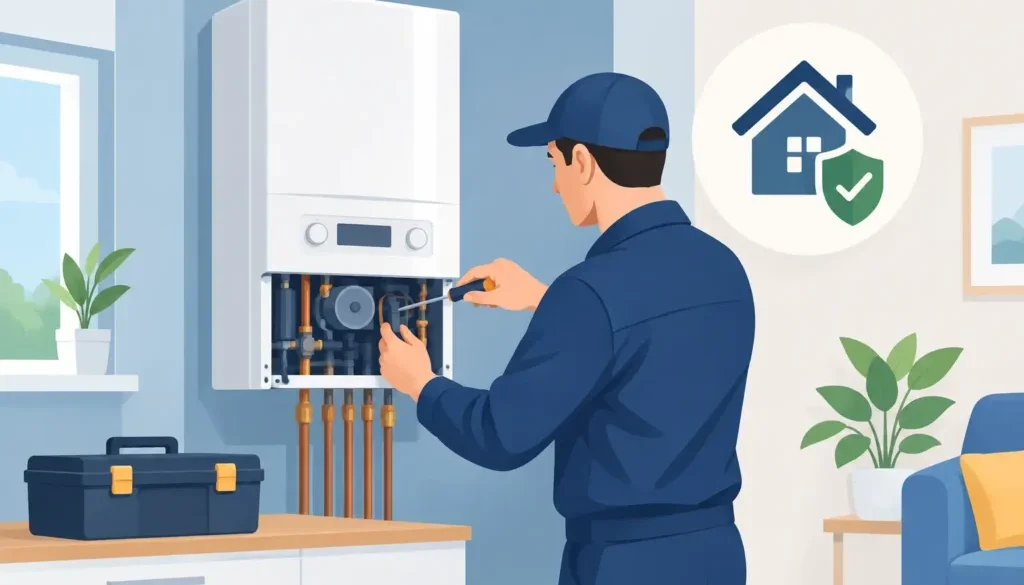
A boiler service is focused on the boiler’s condition, performance and maintenance needs. Depending on the appliance and manufacturer guidance, this may include inspecting internal components, checking the burner and heat exchanger where appropriate, cleaning parts, checking operating pressures and controls, and looking for signs of wear, leaks or inefficient combustion.
There can be overlap. A thorough visit may involve safety checks and servicing work, but the scope matters. A safety inspection may not include every maintenance task required for a full manufacturer-standard service. Equally, a service is not proof of landlord compliance unless the required gas safety checks have been completed and the correct record issued.
When booking, make it clear that the property is rented and ask for an annual boiler service and landlord gas safety certificate. That helps ensure the appointment is planned correctly and that you receive the paperwork you need.
Your main landlord responsibilities
Landlords need to ensure gas appliances, flues and associated pipework they provide are safe for tenants to use. The annual safety check must be carried out by a Gas Safe registered engineer, and records must be kept for at least two years.
You must give existing tenants a copy of the current Gas Safety Record within 28 days of the check. New tenants should receive a copy before they move in. These are not just administrative details. Clear records show that safety checks have been arranged and provide useful information if questions arise later.
The responsibility usually applies to appliances you supply, such as the central-heating boiler, gas fire or cooker. A tenant’s own gas appliance may be their responsibility to maintain, but landlords can still have duties relating to the gas supply and installation serving it. Where ownership or responsibility is unclear, getting advice from a qualified engineer is the safest option.
Gas safety checks can be carried out between 10 and 12 months after the previous check while keeping the original renewal date. This gives landlords a useful window to arrange access without allowing the certificate to expire. Do not leave it until the last minute, particularly during autumn and winter when engineers are often dealing with higher demand.
Why annual servicing is worth the cost
A boiler does not need to be completely broken to be wasting energy or becoming unreliable. Small issues such as a weak fan, worn seal, poor system pressure, blocked condensate pipework or a build-up of debris can develop gradually. A planned service gives the engineer a chance to spot concerns before they become a no-heating callout.
This is particularly useful in rental homes because tenants may not recognise early warning signs. A boiler that is making unusual noises, losing pressure or taking longer to heat water may still be running, but it may need attention. Regular servicing helps prevent these faults being ignored until the system fails.
There is also a property-protection benefit. Central-heating faults can lead to leaks, water damage or frozen pipes if heating is lost during cold weather. A service cannot guarantee that a boiler will never break down, especially as it gets older, but it can reduce the risk of avoidable failures and give you a clearer picture of the system’s condition.
For landlords managing several properties, planned annual appointments are easier to budget for than emergency repairs. They also provide a useful opportunity to discuss whether a boiler is becoming uneconomical to repair or whether other work, such as a power flush or replacement controls, may be worthwhile.
What landlords should do between appointments
Tenants should know how to report a heating or hot-water issue promptly, but they should not be expected to repair or remove the boiler casing themselves. Give them a reliable point of contact and encourage them to report warning signs early, including repeated pressure loss, unusual smells, soot marks, error codes, banging noises or a pilot flame that will not stay lit on an older appliance.
Carbon monoxide alarms are another essential safeguard. In England, landlords must ensure a carbon monoxide alarm is fitted in rooms used as living accommodation that contain a fixed combustion appliance, excluding gas cookers. Requirements can vary across Great Britain, so check the rules that apply to the property location. Alarms should be tested in line with the manufacturer’s guidance, but they never replace proper gas safety checks and servicing.
Keep a simple property file for each tenancy. Alongside the current Gas Safety Record, retain service reports, repair invoices, boiler warranty information and details of any recommendations from the engineer. This makes it easier to track recurring faults and demonstrate that the property has been managed responsibly.
When an annual service may not be enough
Annual servicing is the baseline, not a reason to wait if the boiler shows signs of trouble. Arrange an inspection sooner if a tenant reports a fault, if the boiler is leaking, if there is a suspected gas smell, or if the engineer identified an advisory issue at the previous visit.
A gas smell should always be treated as urgent. Do not attempt to find or fix the source. Follow the emergency gas guidance for your area, avoid switches and naked flames, ventilate where safe to do so, and get professional help immediately.
Older boilers may also need more attention. If repairs are becoming frequent, parts are difficult to source or the appliance is inefficient, replacement can be a better long-term decision than repeated callouts. The right choice depends on the boiler’s age, repair history, expected tenancy length and the condition of the wider heating system.
For landlords in Warrington and across the North West, arranging a combined annual boiler service and landlord gas safety visit with a qualified local engineer is a straightforward way to stay ahead of problems. It protects your tenants, supports compliance and gives your boiler the best chance of providing reliable heating when it is needed most.