Power Flushing vs Chemical Flush Explained
When radiators stay cold at the bottom, the boiler becomes noisy or rooms take far too long to warm up, sludge in the heating system may be part of the problem. The choice between power flushing vs chemical flush is not simply about picking the strongest option. The right treatment depends on the condition of your system, its age and the fault an engineer finds.
A central heating system should circulate clean water efficiently between the boiler, pipes and radiators. Over time, corrosion can create a dark, magnetite sludge that settles in radiators and restricts water flow. Limescale, debris from previous work and a lack of inhibitor can add to the issue. Left untreated, this can reduce comfort, put extra strain on the boiler and contribute to avoidable repair costs.
What is a chemical flush?
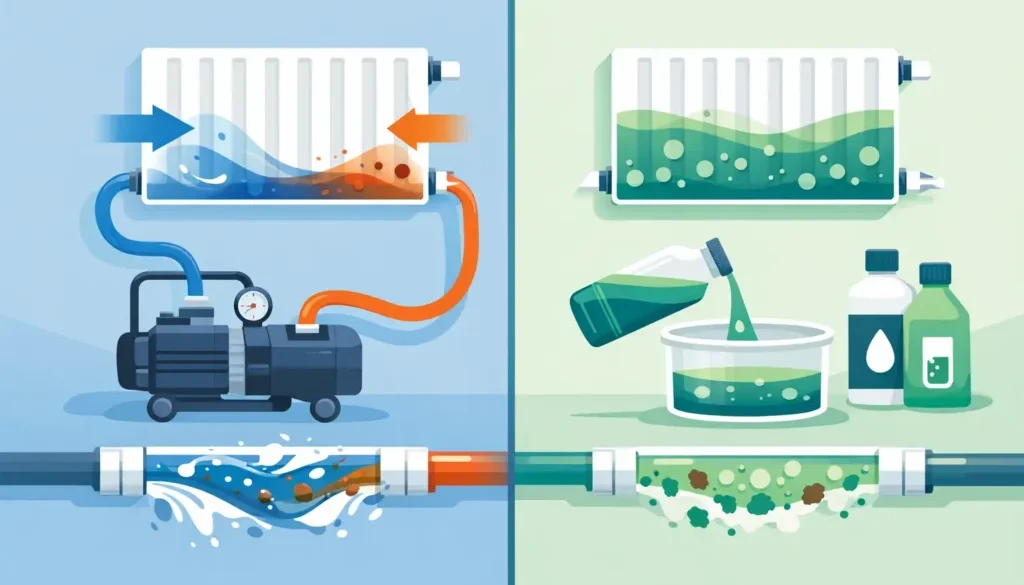
A chemical flush uses a purpose-made cleaning chemical to loosen corrosion deposits and debris inside a heating system. The chemical is added to the system water, circulated through the boiler and radiators, then drained and thoroughly rinsed out before the system is refilled.
The term can mean slightly different things in practice. Sometimes it describes a standard system clean carried out during boiler replacement or following a repair. In other cases, it may involve leaving a gentler cleaner in the system for a specified period before returning to drain, rinse and protect it. The method, chemical and circulation time should all suit the system rather than being treated as a one-size-fits-all job.
For a system with light contamination, a chemical flush can be an effective and proportionate option. It is also commonly used as part of good installation practice when a new boiler is fitted to existing pipework and radiators. Once cleaning is complete, the system should be refilled correctly and treated with inhibitor to help slow future internal corrosion.
What is power flushing?
Power flushing is a more intensive cleaning process. An engineer connects a specialist flushing pump to the heating system and circulates water and cleaning chemicals at a high flow rate. This is designed to dislodge and remove built-up sludge and debris from radiators, pipework and other parts of the system.
Individual radiators are usually flushed in turn, helping the engineer target poor circulation and remove dirty water more effectively. Depending on the equipment and the condition of the system, magnetic filters or agitation tools may also be used to collect magnetite and shift stubborn deposits.
Despite the name, power flushing is not about forcing excessive pressure through your heating system. A qualified engineer controls the process carefully, using high flow rather than damaging pressure. That distinction matters, particularly with older systems or radiators where the condition of components needs to be assessed first.
Power flushing vs chemical flush: the key difference
Both treatments use cleaning chemicals and both aim to improve water quality. The main difference is how actively the debris is moved and removed.
A chemical flush relies on the system’s normal circulation, or a controlled cleaning process, to allow the product to break down deposits before the system is drained and rinsed. It is often suitable where contamination is limited and there is no evidence of severe circulation problems.
A power flush combines cleaning chemicals with a dedicated pump that creates a much stronger flow through the system. It is generally more suitable where there is significant sludge, several cold radiators, recurring blockages or evidence that poor water quality is affecting boiler performance.
Power flushing is not automatically better in every case. It takes more time, requires specialist equipment and can cost more than a straightforward chemical flush. On a system with only mild contamination, it may not be necessary. Equally, a quick chemical clean may not resolve a heavily sludged system that needs a more thorough approach.
Signs your heating system may need cleaning
A heating problem does not always mean sludge. A faulty pump, sticking valve, incorrect system pressure, air in the radiators or a boiler fault can produce similar symptoms. That is why diagnosis should come before treatment.
However, an inspection may identify system contamination if you notice four or more of the following:
- radiators that are cold at the bottom or heat unevenly
- persistent banging, kettling or unusual boiler noises
- brown or black water when a radiator is bled
- rooms taking longer to heat than they used to
- frequent pump, valve or boiler component issues
- a magnetic filter collecting a heavy amount of dark debris
If only one radiator is cold, the cause may be local to that radiator or its valve. If several radiators are affected and the system water is visibly dirty, a wider clean becomes more likely to be worthwhile.
When a power flush is usually the better choice
Power flushing is often recommended where sludge has built up over years and is restricting circulation across the system. It can be particularly useful before fitting a replacement boiler where existing radiators and pipework are being retained. A modern boiler works best with clean system water, and manufacturers’ installation requirements commonly include proper cleaning and protection of the system.
It may also be the sensible option after repeated radiator cold spots, pump failures or circulation faults linked to debris. The aim is not just to make the radiators feel warmer for a short period. It is to remove contamination that could continue travelling around the system and affect new or repaired components.
There are limits. A power flush cannot repair a corroded radiator, a failed thermostatic valve, damaged pipework or a boiler fault. In an older system, cleaning can sometimes expose weak components that were already close to failure. A professional engineer should explain this risk honestly and check for leaks, poor radiator condition and other concerns before work begins.
When a chemical flush may be enough
A chemical flush may be appropriate for a newer system, a system with mild dirty-water symptoms or as part of a planned boiler installation. It can also suit a system where an engineer has checked circulation and found no serious sludge blockage.
The quality of the work matters more than the label. Cleaning chemical needs enough time to do its job, the system must be properly flushed through afterwards, and inhibitor needs to be added at the correct concentration. Leaving old chemical or dirty water in the system defeats much of the purpose.
For some homes, a careful chemical clean followed by inhibitor and regular boiler servicing is the most sensible balance of cost and protection. For others, particularly where several radiators are underperforming, power flushing offers a more complete solution.
What happens after the system is cleaned?
Whether your system has a chemical flush or power flush, the final steps are essential. The engineer should refill the system, remove air, check the pressure, test radiator heat-up and confirm there are no leaks. Inhibitor should then be added to protect the clean system water from further corrosion.
A magnetic filter can provide useful ongoing protection by catching magnetic debris before it reaches sensitive boiler parts. It should be checked and cleaned as part of routine boiler servicing. Keeping the system sealed, dealing with leaks promptly and avoiding frequent unnecessary top-ups also helps preserve water quality.
For landlords, a heating clean is separate from the annual gas safety responsibilities covered by a CP12 certificate. However, maintaining reliable heating is still an important part of looking after the property and reducing avoidable call-outs.
Choose the treatment after a proper assessment
The best answer to power flushing vs chemical flush comes from examining the system, not from choosing the cheapest or most intensive service by default. A qualified heating engineer can test the system water, inspect radiator performance and identify whether the issue is contamination, a component fault or something else entirely.
For homeowners across Warrington and the North West, AquaHeat Heating Services can assess poor heating performance and recommend a clear, practical route forward. A clean, protected heating system gives your boiler a better working environment and gives you a better chance of warm radiators when you need them most.