Who Can Issue a Gas Safety Certificate in the UK?
A gas safety certificate is only useful if the person signing it is legally qualified to carry out the inspection. If you are asking who can issue gas safety certificate records, the answer is a Gas Safe registered engineer with the correct, current qualifications for the appliances and type of gas work involved.
For landlords, this is a legal requirement rather than a matter of preference. For homeowners, it is a sensible safeguard whenever gas appliances, pipework or flues are being checked. Choosing the right engineer protects your property, the people living in it and the validity of the record itself.
Who can issue a gas safety certificate?
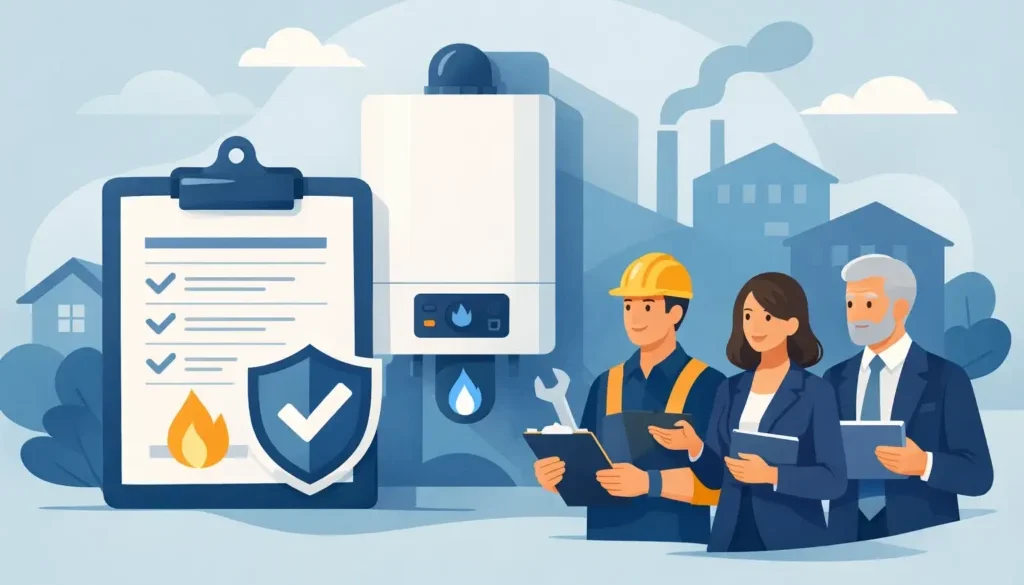
In the UK, a Landlord Gas Safety Record can be issued only by an engineer registered with the Gas Safe Register. The engineer must also be qualified for the particular appliance they are inspecting. Gas Safe registration is the official requirement for anyone carrying out gas work in domestic properties.
You may hear the certificate called a CP12. This is a commonly used term, although the formal name is a Landlord Gas Safety Record. It confirms that the relevant gas appliances, flues and associated installation have been checked for safety on the date shown.
A company may arrange and carry out the work, but the inspection and record must be completed by an appropriately qualified Gas Safe engineer. Do not assume that a general plumber, handyman or boiler installer can issue one simply because they have worked on gas appliances before. Registration and the right appliance categories are what count.
Gas Safe registration is not the only check
Gas Safe registration is essential, but it is not the whole picture. Engineers hold qualifications for specific types of gas work and appliances. Someone qualified to inspect a domestic gas boiler may not necessarily be qualified for a gas fire, cooker, LPG appliance or commercial heating system.
For a typical rented house, the engineer needs to be qualified for each appliance included in the check. That may include a boiler, gas hob, oven, fire and any relevant flue. If the property uses LPG rather than mains natural gas, the engineer needs the appropriate LPG qualifications too.
This is why it is worth describing the appliances in the property when booking. It helps the engineer allow the right amount of time and ensures they can complete the inspection properly rather than discovering an unlisted appliance on arrival.
How to check an engineer before the appointment
A genuine Gas Safe engineer carries a Gas Safe ID card. Ask to see it when they arrive. The front confirms their identity and registration details, while the reverse lists the types of gas work and appliances they are qualified to work on.
You can also check the engineer or business on the Gas Safe Register before the appointment. Confirm that the registration is current and that the listed qualifications match the work required. This takes only a few minutes and is particularly worthwhile if you are using an engineer for the first time.
Be cautious if someone avoids showing their card, offers a certificate without carrying out a proper inspection, or quotes a price that seems unrealistically low. A legitimate safety check involves testing, examining ventilation and flues where applicable, and recording the findings. It is not paperwork that can be issued remotely or based on a quick glance at a boiler.
What is checked during a landlord gas safety inspection?
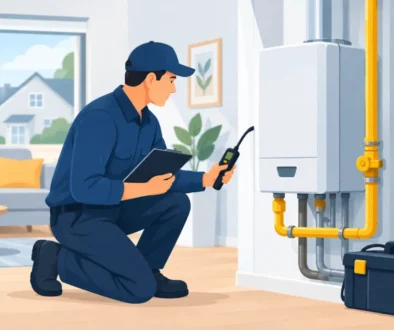
The exact work depends on the appliances at the property, but a proper inspection is focused on safe operation. The engineer will examine accessible gas appliances and associated flues, carry out relevant safety tests, and check for issues such as unsafe combustion, poor ventilation, incorrect gas pressure, damaged components or products of combustion failing to discharge correctly.
They will record the appliances checked, the inspection results, defects found and any action taken. If an appliance is unsafe, the engineer may need to label it, isolate it from the gas supply or advise that it must not be used until repairs are completed. The action depends on the seriousness of the fault.
A gas safety check is not the same as a full boiler service. A service normally involves a more detailed assessment and maintenance work in line with the manufacturer’s guidance. Many landlords choose to have both carried out at the same visit where appropriate, as it can help keep heating reliable as well as meeting safety duties. However, the two should not be confused.
Landlord responsibilities for gas safety records
Landlords are legally responsible for arranging an annual gas safety check for gas appliances and flues they provide for tenants. The check must be completed by a suitably qualified Gas Safe registered engineer.
You must provide existing tenants with a copy of the current record within 28 days of the check. New tenants should receive a copy before they move in. Records must be kept for at least two years. These requirements apply whether you manage the property yourself or use a letting agent. An agent can organise the appointment, but the legal responsibility remains with the landlord.
There are a few situations that need care. If a tenant owns and has installed their own gas appliance, the landlord’s responsibilities can differ. Shared gas appliances in communal areas are usually the landlord’s responsibility. Where there is any uncertainty, it is better to establish responsibility clearly rather than leave an appliance unchecked.
Landlords should also make reasonable efforts to gain access for the annual check. Keep a record of appointment offers, messages and attempted visits if a tenant does not provide access. Safety obligations do not disappear because arranging a visit is difficult.
Do homeowners need a gas safety certificate?
Homeowners are not generally required by law to obtain an annual Landlord Gas Safety Record for their own home. That said, gas appliances still need professional attention. An annual boiler service by a qualified Gas Safe engineer is usually recommended by manufacturers and can identify faults before they affect heating, hot water or household safety.
A homeowner may need evidence of gas work for other reasons, such as a house sale, insurance query, warranty condition or building work. The documents required will depend on the work completed. A boiler service record, a gas safety record, a building regulations notification and an installation certificate are different documents with different purposes.
If you are buying a property, do not rely on an old certificate as proof that everything is currently safe. It records the condition on the inspection date only. Arrange your own appropriate checks if you have concerns about the boiler, gas fire, cooker or flue.
What makes a gas safety certificate invalid or unreliable?
A record is not reliable simply because it has a CP12 heading. Problems arise when the person who issued it was not Gas Safe registered, was not qualified for the appliances listed, did not inspect every relevant appliance or entered inaccurate details.
An inspection may also be incomplete if access was not available to an appliance, meter, flue route or room. In that case, the record should make clear what could not be checked. It should never suggest that an uninspected appliance has passed.
Check the document for the engineer’s name, Gas Safe registration number, the property address, appliance details, inspection date, results and any warnings or remedial work. If a certificate is unclear or seems inconsistent with the appliances in the property, ask the engineer or managing agent to explain it promptly.
Choosing a local engineer for a CP12 check
Price matters, but it should not be the only deciding factor. A straightforward safety check may cost less than a visit involving several appliances, difficult flue access or faults needing attention. Ask what the quoted price includes and whether it covers the number and type of appliances at your property.
Choose an engineer who is clear about arrival times, qualifications, findings and any repair options. A good engineer should explain faults in plain language, distinguish urgent safety work from recommended improvements, and provide the completed record after the inspection.
For landlords and homeowners in Warrington and the wider North West, AquaHeat Heating Services can carry out domestic gas safety inspections through qualified Gas Safe engineers, alongside servicing, repairs and heating work where required.
Do not wait until a tenant is due to move in or a boiler has stopped working to check credentials. Book with a properly qualified engineer, confirm their ID and appliance categories, and keep the completed record somewhere easy to find when you need it.