Toilet Keeps Running? Fix Common Faults
A toilet that trickles into the pan long after flushing can waste a surprising amount of water. A toilet keeps running fix is often straightforward, but the right repair depends on where the water is escaping inside the cistern. Leaving it unchecked can raise your water bill, create an irritating noise, and in some cases lead to a full flush failure.
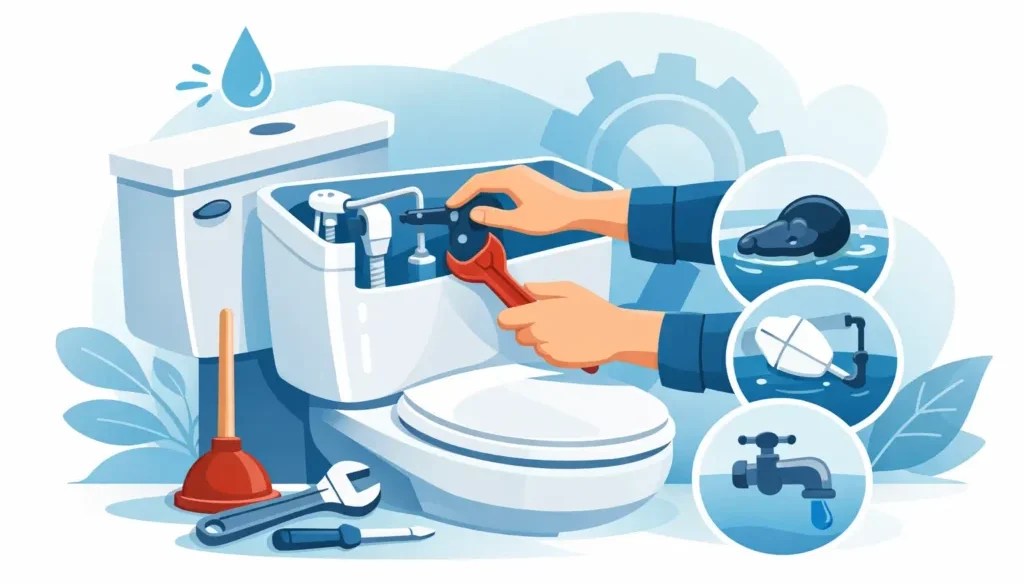
Most modern toilets have a concealed cistern mechanism made up of a flush valve, a fill valve and an overflow. Once you know what each part does, you can usually narrow down the fault without taking the toilet apart unnecessarily.
First, identify where the water is going
Remove the cistern lid carefully and flush the toilet while watching what happens. If you have a push-button flush, the lid may be connected to the button mechanism, so do not force it. Some lids lift off, while others need the button bezel unscrewed first.
After the flush has finished, look for either water continuing to run into the pan or water rising into the overflow tube. These are different problems.
If water is visibly flowing down the inside of the bowl, the flush valve is usually not sealing properly. If the water level in the cistern keeps rising until it enters the overflow, the fill valve is the more likely cause. A hissing sound without an obvious flow can point to either valve, so it is worth checking the water level closely.
Before working on the cistern, locate the small isolation valve on the pipe feeding the toilet. Turning it clockwise will normally shut off the supply. If there is no local valve, you may need to use the internal stop tap for the property. Test the flush afterwards to confirm the water supply is off before removing any parts.
Toilet keeps running fix: check the flush valve seal
The flush valve sits in the centre of the cistern and lifts when you press the button or handle. Once the water has flushed away, a rubber seal at its base should sit flat and stop any further water entering the bowl. Over time, this seal can become worn, coated in limescale or distorted.
A quick test is to turn off the water supply, flush the toilet, then wait. If the cistern empties and water continues to seep into the pan, the flush valve seal is likely the issue. In a hard-water area, scale or debris on the seating can be enough to prevent a watertight seal.
For an accessible valve, lift off the valve cap or remove the seal in line with the manufacturer’s instructions. Clean the seal and its seating with a soft cloth. Do not use abrasive tools, as these can damage the rubber or plastic. If the seal feels stiff, cracked or misshapen, replace it with the correct type for the valve.
It is tempting to use a universal seal, but cistern fittings vary. Taking the old seal or the valve details to a plumbing merchant helps avoid fitting a part that looks right but does not seal correctly. Once reassembled, turn the water back on and allow the cistern to refill. Watch the pan for several minutes before replacing the lid.
When the whole flush valve needs replacing
If cleaning or changing the seal does not stop the leak, the valve body may be worn or damaged. This is more common in older cisterns and on mechanisms that have been repeatedly adjusted or forced. A complete flush valve replacement may be the more reliable option, particularly if the buttons are sticking or the toilet occasionally flushes by itself.
Replacing a valve can require removing the cistern from the toilet pan, depending on the design. That is a sensible point to call a plumber. Incorrectly refitting the cistern bolts or doughnut washer can cause a leak onto the floor, which is a more disruptive problem than the original running toilet.
Check whether the fill valve is overfilling
The fill valve controls how much water enters the cistern after a flush. On newer toilets, it is usually a compact plastic unit on one side of the cistern, often with a float that rises with the water level. On older systems, there may be a larger float arm and ball valve.
When the valve fails to shut off, water keeps entering the cistern. The excess then passes through the overflow and into the pan. The toilet may sound as though it is constantly refilling, even though the flush valve itself is working properly.
Look at the water level. It should sit below the top of the overflow tube, usually around 20 to 25mm beneath it. If it is too high, adjust the fill valve in small increments. Many modern valves have an adjustment screw or sliding clip that lowers the float position. Older float arms can sometimes be adjusted gently, but take care not to bend or crack ageing plastic components.
If adjusting the level makes no difference, the fill valve may be sticking internally or its diaphragm may have failed. Sediment from the water supply can also affect its operation. Turning off the water, removing the valve cap and carefully rinsing accessible debris may help, but replacement is often the better long-term repair when a valve is unreliable.
Do not overlook simple fitting problems
A toilet can keep running because the push button, handle or cable is holding the flush valve slightly open. This can happen after a button has been replaced, a cistern lid has been refitted incorrectly, or a cable-operated mechanism has slipped out of adjustment.
With the cistern lid off, press and release the flush button several times. The mechanism should return freely and allow the valve to close fully. If there is a cable, it should have a little slack when the button is not being pressed. A cable pulled too tight can prevent the seal from seating.
On a dual-flush toilet, check both flush buttons. One side may be catching while the other works normally. Avoid cutting, stretching or forcing cables to make them fit. The correct adjustment differs between manufacturers, and an over-tightened mechanism may create a permanent leak.
When a running toilet needs professional help
A homeowner can often clean a seal, adjust a fill valve or replace a straightforward internal component. However, call a qualified plumber if the cistern is cracked, the toilet is leaking externally, isolation valves will not close, or the fault continues after the obvious parts have been checked.
It is also worth getting help where the toilet has a concealed cistern behind tiles or furniture. Access panels can be limited, and forcing parts out can damage the flush plate, wall finish or pipework. For landlords, arranging a prompt repair is particularly important, as a persistent leak can affect tenants and increase water use between inspections.
A local plumbing engineer can identify the make of the fittings, source compatible parts and test the toilet properly once repaired. AquaHeat Heating Services Limited provides practical plumbing repairs for homeowners and landlords across Warrington and the wider North West, including toilet faults that need a dependable, lasting repair.
A running toilet is rarely something that improves on its own. Turn off the supply if the flow is severe, avoid repeated flushing while you investigate, and deal with the small fault before it turns into unnecessary water waste or a leak around the cistern.