Why Is One Radiator Not Heating? Common Causes
A single cold radiator can make an otherwise warm home feel surprisingly uncomfortable, particularly when it is in a bedroom, bathroom or the room you use most. If you are asking, why is one radiator not heating, the cause is often local to that radiator rather than a complete boiler failure. Some checks are straightforward, but issues involving valves, system pressure or dirty heating water may need a qualified engineer.
Why is one radiator not heating when the others work?
When other radiators are heating normally, your boiler is usually producing heat and the heating controls are calling for it correctly. The problem is more likely to be restricted water flow through the cold radiator, trapped air, a stuck valve or a balancing issue.
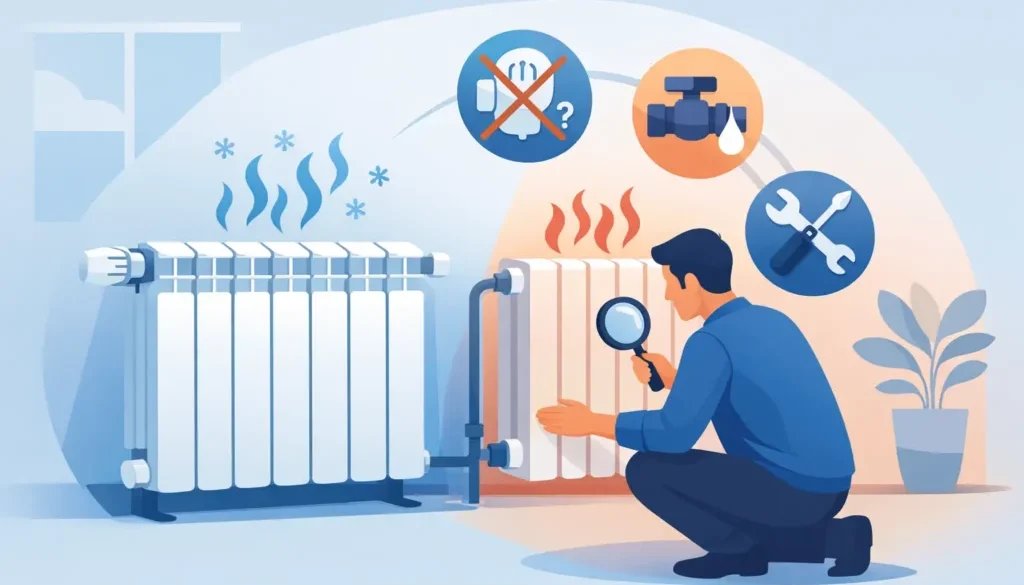
The way the radiator feels provides a useful clue. A radiator that is cold at the top but warmer below is commonly affected by air. One that is warm at the top but cold along the bottom may contain sludge or debris. If it is cold all over, check the valves first, as one may be shut or stuck.
Before touching anything, make sure the central heating is switched off and the radiators have cooled sufficiently. Hot water and metal surfaces can cause burns, and forcing a valve can create a leak.
Start with the radiator valves
Each radiator normally has two valves at the bottom. One is often a thermostatic radiator valve, or TRV, with a numbered head. The other is a lockshield valve, usually hidden beneath a plain plastic cap. Both need to be open enough for heated water to pass through.
Turn the TRV to its highest setting and wait for the system to run. If the radiator remains cold while the pipe entering it is warm, the valve pin may be stuck. This can happen after the heating has been off for a long period, especially over summer.
You can remove the TRV head on many models by loosening its retaining ring, but do not remove the valve body itself. Beneath the head is a small metal pin. It should move gently up and down. If it is seized, avoid pulling it out or applying excessive force, as this can damage the valve and cause a leak. A heating engineer can free or replace it quickly if needed.
The lockshield valve can also be closed accidentally, perhaps after decorating or previous work on the system. Remove the cap and turn the spindle anti-clockwise very gradually. Take care not to alter it too much, as lockshield valves are used to balance the heating system. If you have no improvement after a small adjustment, it is better to stop and investigate the wider cause.
Check for trapped air in the radiator
Air rises within a radiator, preventing hot water from reaching its upper section. If the top is cold and the bottom feels warm, bleeding the radiator may restore heat.
Turn the heating off and let the system cool. Hold a cloth and a small container beneath the bleed valve, usually found at the top corner of the radiator. Use a radiator key to turn the valve slowly anti-clockwise. You should hear air escaping. Once water begins to emerge steadily, close the valve carefully. It only needs to be snug – overtightening can damage it.
After bleeding any radiator, check your boiler pressure gauge if you have a sealed system. Pressure may drop slightly when air and water are released. Most domestic systems operate around 1 to 1.5 bar when cold, but always follow the guidance for your particular boiler. If pressure is too low, the boiler may stop working correctly.
If a radiator needs bleeding repeatedly, that is not something to ignore. Frequent air build-up can point to a leak, a faulty expansion vessel or corrosion within the system. An engineer should assess the cause rather than simply bleeding it again.
Cold at the bottom? Sludge could be restricting flow
Heating systems gradually collect small amounts of rust, scale and other debris. Over time, this material can settle in the bottom of radiators and restrict circulation. A radiator may feel hot at the top but noticeably cooler along the lower edge, or it may take much longer than the others to warm up.
This is particularly common in older systems or where the heating water has not been treated with inhibitor. It can also affect boiler efficiency, increase wear on pumps and valves, and leave certain rooms colder than others.
A single affected radiator may be removable and flushed separately, but that is not always the most effective answer. If several radiators have cold patches, make noise, or need regular bleeding, the system may benefit from a professional power flush. This uses specialist equipment to circulate cleaning chemicals and dislodge debris before the system is refilled and protected.
Power flushing is not automatically required for every cold radiator. The right approach depends on the age and condition of the system, the water quality and the extent of the problem. A proper assessment avoids spending money on work that is not necessary.
Your heating system may need balancing
Radiators do not always heat evenly because water takes the easiest route around the pipework. Radiators close to the boiler can receive more flow, while one at the end of the circuit may stay lukewarm or cold. This is known as an unbalanced system.
Balancing involves adjusting the lockshield valves so each radiator receives an appropriate share of hot water. It is more precise than simply opening every valve fully. An engineer will usually measure pipe temperatures and make small adjustments across the system until the heat is distributed properly.
Balancing is especially worth considering if the radiator eventually gets warm but takes far longer than the rest of the house. It may also help after a new boiler, radiator or extension to the heating system has been installed.
Look at boiler pressure and heating controls
Although one cold radiator usually points to a local issue, check the basics before assuming the radiator itself is at fault. Confirm that the boiler is running in heating mode, the programmer is set correctly and the room thermostat is above the current room temperature.
On a sealed system, low pressure can reduce circulation or cause the boiler to lock out. Check the pressure when the system is cool and refer to the boiler instructions for the recommended range. If you need to repressurise the boiler regularly, arrange an inspection. Constant pressure loss can indicate a leak or a fault that needs repairing.
If your home has separate heating zones or smart controls, make sure the cold radiator is on the active circuit. This is less common in smaller properties but can be relevant in larger homes, converted lofts and extensions.
When to call a heating engineer
Simple checks such as opening a TRV, bleeding a radiator or confirming boiler pressure can be sensible for a confident homeowner. It is time to call a qualified heating engineer if the radiator stays cold after these checks, the valve is leaking or seized, boiler pressure keeps falling, or more than one radiator has cold areas.
You should also seek professional help if you notice discoloured water, banging noises, a boiler fault code or signs of water around pipework. Do not remove boiler covers or attempt repairs to gas appliances yourself. Any work on the boiler or gas supply must be carried out by a Gas Safe registered engineer.
For landlords, a cold radiator is worth addressing promptly. Tenants need reliable heating, and a poorly performing system can lead to complaints, higher running costs and avoidable breakdowns during colder weather.
Prevent the problem returning
A yearly boiler service helps identify pressure, circulation and water-quality issues before they become a loss-of-heating call-out. Keeping thermostatic valves moving during warmer months can also help prevent them sticking. Turn them up and down occasionally rather than leaving every valve in one position all year.
If you are replacing radiators, changing pipework or having a boiler fitted, ask whether the system should be cleaned and dosed with inhibitor. This protects the internal components and reduces the risk of sludge collecting in radiators over time.
A cold radiator is rarely something you need to put up with. A careful check of the valve position, trapped air and system pressure may identify a simple fix, while a qualified local engineer can diagnose circulation, balancing and sludge problems safely before they affect the rest of your heating.