Why Does Boiler Pressure Drop?
If you have looked at your boiler gauge and noticed the needle sitting lower than usual, it is natural to wonder why does boiler pressure drop and whether it means an expensive repair is on the way. In many homes, a pressure drop starts as a small annoyance – radiators not heating properly, the boiler needing a reset, or a fault code appearing at the worst possible time. Sometimes the cause is minor. Sometimes it points to a leak or a faulty component that needs attention.
Boiler pressure matters because your central heating system is sealed. It relies on the right amount of water pressure to move heated water around your radiators and, in many cases, help your boiler operate properly. If the pressure falls too low, the boiler may lock out as a safety measure or work less efficiently.
What boiler pressure should be
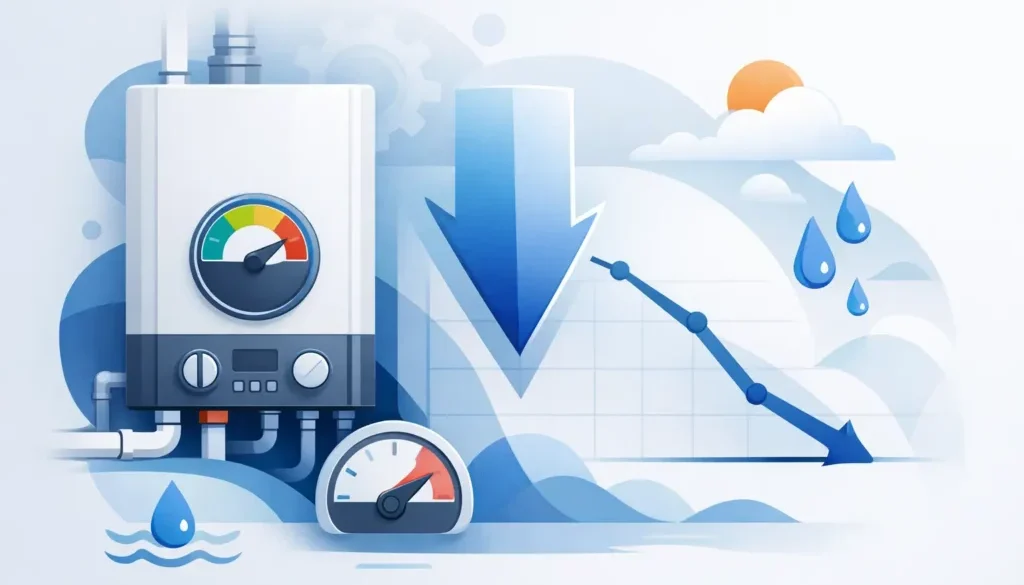
Most modern combi and system boilers run best when the pressure is roughly between 1 and 1.5 bar when the system is cold. You may see a slightly different recommended range in your manufacturer manual, and pressure often rises a little when the heating is on. That is normal.
The concern starts when the gauge keeps dropping below the normal range, especially if you have topped it up before and the same thing happens again. A one-off top-up after bleeding radiators is not unusual. Repeated pressure loss is different. That usually means there is an underlying issue somewhere in the system.
Why does boiler pressure drop in the first place?
In simple terms, pressure drops when water leaves the sealed heating system or when a component that controls pressure is no longer doing its job properly. The reason is not always obvious because some leaks are tiny, hidden under floors, inside pipe boxing, or within the boiler casing itself.
A drop in pressure can happen slowly over weeks, or quite quickly over a day or two. The speed of the pressure loss often gives a clue about the severity of the fault. A gradual drop may point to a small leak or a worn expansion vessel. A rapid drop can suggest a more serious leak or failed part.
The most common causes of boiler pressure loss
A leak somewhere in the heating system
This is one of the most common answers to the question why does boiler pressure drop. If water is escaping from the pipework, radiators, valves or boiler components, the pressure will fall.
Some leaks are easy to spot. You might notice a damp patch near a radiator valve, staining on pipework, or water marks on ceilings. Others are much less obvious. A very small leak under floorboards can keep pressure dropping without leaving a clear visible sign until the damage becomes more noticeable.
If you suspect a leak, look around radiator valves, exposed copper pipework, and beneath the boiler for drips or moisture. Even a small greenish mark on a joint can be a warning sign.
Radiators have been bled recently
If you have let air out of your radiators, the system pressure will usually reduce afterwards. That is because you have released part of what was helping maintain the pressure balance inside the sealed system.
In this case, a drop is not necessarily a fault. You may simply need to re-pressurise the system using the filling loop, following the boiler instructions. If the pressure then stays stable, there is usually no bigger issue. If it keeps falling, that points back to a fault rather than routine maintenance.
A faulty pressure relief valve
The pressure relief valve is there to protect the system if pressure becomes too high. If this valve develops a fault or does not reseat properly after opening, it can allow water to escape outside through the discharge pipe.
This is not always something a homeowner notices straight away because the water may be draining externally. If your boiler pressure keeps dropping and there are no visible leaks indoors, this is one area an engineer may check.
The expansion vessel has lost its charge
The expansion vessel helps absorb changes in pressure as water heats up and expands. If it loses its air charge or the internal diaphragm fails, your boiler can start behaving oddly. A common pattern is pressure rising too high when the heating is on, then dropping too low once the system cools.
This is a very typical boiler fault and one that often catches people out. They top the pressure up, it seems fine for a short while, and then the same issue returns. The boiler is not always leaking in the usual sense. It may simply no longer be regulating pressure properly.
A problem inside the boiler
Not every pressure drop is caused by radiators or pipework. Internal parts inside the boiler can leak as seals, heat exchangers, pumps or other components wear over time. Because these parts sit within the casing, the signs are not always visible from the outside.
This is one reason repeated pressure loss should not be ignored. A qualified Gas Safe engineer can inspect the appliance safely and identify whether the fault is internal.
What you can check safely at home
Before assuming the worst, there are a few sensible checks you can make. Start by looking at the pressure gauge when the system is cold. Make a note of the reading, then check it again later that day and the next morning. A clear pattern helps.
Walk around the house and inspect visible radiators, especially around the valve connections. Check exposed pipework, the area under the boiler, and any discharge pipe outside if you can do so safely. Damp patches, rust marks, staining or regular drips all matter.
If you have recently bled radiators, it may be perfectly normal to top the system up once. Do this only according to the manufacturer instructions and avoid overfilling. Too much pressure creates its own problems.
What you should not do is keep topping the pressure up again and again for weeks. That can mask the real fault, allow water damage to worsen, and in some cases add fresh oxygenated water into the system, which can increase corrosion over time.
When low boiler pressure is an emergency and when it is not
Low pressure is not always an emergency, but it should not be left indefinitely. If the boiler still runs and the pressure is only slightly under the normal range, you may have time to arrange a routine repair.
It becomes more urgent if the boiler keeps locking out, the pressure drops very quickly, you can see active leaking, or there are signs of water near electrical parts. Any concern involving the gas appliance itself, unusual noises, or visible boiler leaks should be checked by a qualified engineer promptly.
For landlords, there is also the practical issue of keeping heating and hot water working reliably for tenants, especially in colder weather. A pressure fault that seems minor can turn into a breakdown call at the least convenient moment.
Why does boiler pressure drop after you top it up?
If you repressurise the boiler and the gauge falls again soon after, that usually means the underlying cause has not been resolved. In most cases, it comes down to one of three things: a leak, a failing expansion vessel, or a faulty pressure relief valve.
That is why repeated topping up is not a repair. It is a temporary measure at best. If the pressure holds for months, fine. If it drops again within days or a couple of weeks, it is time for a proper inspection.
Can low pressure damage the boiler?
Low pressure itself does not always cause immediate damage, but it can stop the system working as designed. Your radiators may heat unevenly, the boiler may shut down, and regular resets can become a nuisance. More importantly, the cause of the pressure loss may lead to bigger problems if ignored.
A hidden leak can damage floors, plaster or ceilings. A faulty expansion vessel can place strain on other components. A small issue tends to stay small only if it is found early.
The value of a proper diagnosis
Boiler pressure faults are a good example of why guessing rarely saves money. The symptoms often look the same from the outside, but the fix can vary a lot. One home may simply need a radiator valve tightened or a small section of pipe repaired. Another may need an expansion vessel recharge or a replacement part inside the boiler.
That is where experience matters. A heating engineer should check the boiler, the pressure behaviour, visible system components and any signs of discharge or leakage before recommending repairs. For homeowners in Warrington and the surrounding area, using a qualified local engineer means the problem is dealt with safely and without unnecessary work.
If your boiler pressure has dropped once, keep an eye on it. If it keeps happening, treat that as a sign rather than a quirk. A stable heating system should not need constant topping up, and catching the cause early usually makes the repair simpler, cleaner and less stressful.