Why Is My Boiler Kettling?
That sharp rumbling or whistling noise from your boiler can be unsettling, especially when the heating is on and the house should simply be warming up quietly. If you are asking, why is my boiler kettling, the short answer is that water inside the system is overheating or struggling to flow properly, which creates noises similar to a kettle boiling.
Kettling is not a fault to ignore. Sometimes the cause is relatively straightforward, such as limescale or sludge build-up. In other cases, it points to circulation problems, pressure issues, or worn components that need proper attention. The important thing is to understand what the noise is telling you before it turns into a larger and more expensive repair.
What does boiler kettling mean?
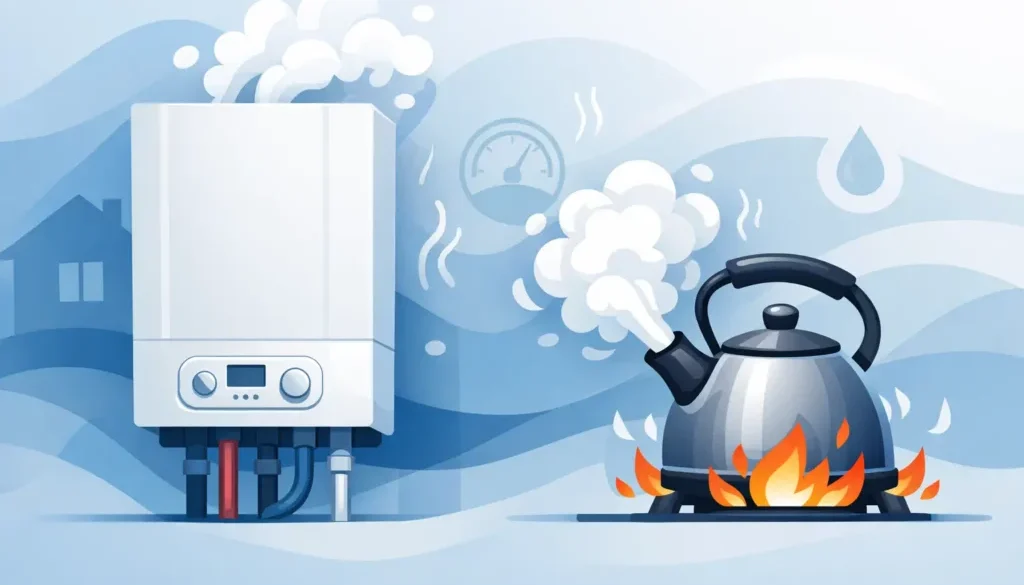
Boiler kettling is the term used when a boiler makes banging, rumbling, tapping or whistling noises because water is being heated too quickly in a restricted part of the system. Instead of moving smoothly through the heat exchanger and around the heating circuit, the water can become trapped or slowed down. That causes localised overheating and the formation of steam bubbles, which collapse and create the noise.
The sound often gets compared to a kettle coming to the boil, which is where the term comes from. Modern boilers are designed to run far more quietly than older systems, so unusual noise is usually a sign that something is not working as it should.
Why is my boiler kettling? Common causes
Limescale in the heat exchanger
One of the most common causes of kettling is limescale build-up, particularly in hard water areas. As scale collects inside the heat exchanger, it narrows the passageways that hot water needs to flow through. The boiler then has to work harder, and water can overheat in restricted sections.
This tends to be more common in older boilers, but it can affect newer appliances as well if the system water quality is poor. The longer it is left, the more strain it puts on the boiler.
Sludge and debris in the system
Central heating systems can collect magnetite sludge, rust particles and general debris over time. This build-up can settle in radiators, pipework and key boiler components, reducing circulation and creating cold spots. If the water cannot move around the system properly, parts of the boiler may get hotter than they should.
This is why kettling often appears alongside other symptoms such as radiators that are warm at the top but cold at the bottom, slow heating, or repeated boiler lockouts.
Poor water circulation
A boiler relies on steady circulation to move heat away safely. If the pump is struggling, a valve is partially blocked, or air is trapped in the system, the hot water may not travel as it should. That poor flow can lead to overheating and the noises homeowners notice first.
Circulation faults can be quite simple or more involved. A seized pump is different from a system heavily contaminated with sludge, and the right fix depends on proper diagnosis.
Faulty thermostat or controls
If the boiler is being told to keep heating beyond the correct temperature, the water can become too hot within the heat exchanger. In some cases, a thermostat fault or issue with temperature sensors may be behind the problem.
This is less obvious to a homeowner because the sound may seem like a mechanical issue, when in fact the boiler controls are allowing temperatures to rise too far.
Low system pressure or trapped air
Low pressure does not always cause kettling on its own, but it can contribute to poor circulation. Airlocks can do the same. If parts of the system are not filling and flowing properly, the boiler may produce noise as water heats unevenly.
These issues can sometimes come and go, which is why the noise may seem worse at certain times of day or when the heating first starts up.
Signs that kettling is more than just noise
A noisy boiler does not always mean immediate danger, but it does mean the appliance is not operating efficiently. If kettling is happening, you may also notice that the boiler takes longer to heat the home, some radiators stay cooler than others, or your energy bills start to creep up without a clear reason.
You might also see the boiler switching itself off, showing fault codes, or struggling to maintain hot water temperature. In rental properties, these issues can quickly become more than an inconvenience, especially if tenants are left without reliable heating or hot water.
Can I still use my boiler if it is kettling?
If your boiler is kettling, it is best not to ignore it and hope it settles down. A brief noise once is one thing, but repeated banging, whistling or rumbling suggests the system needs checking. Continuing to run it for too long can increase wear on important components and may make the eventual repair more costly.
That does not automatically mean you are facing a full boiler replacement. In many cases, the problem can be resolved with the right repair or cleaning work. The key is getting it looked at before overheating and poor circulation cause wider damage.
If you notice a gas smell, a burning smell, leaks, or the boiler repeatedly locking out, switch it off and arrange for a qualified Gas Safe engineer to inspect it.
How an engineer diagnoses boiler kettling
When a customer asks why is my boiler kettling, the answer usually comes from testing rather than guesswork. A proper inspection should look at system pressure, water circulation, pump operation, boiler temperatures, and signs of scale or sludge contamination.
An engineer may also check whether radiators are heating evenly, inspect the heat exchanger condition, and test the controls and sensors. On some jobs, the boiler itself is sound but the wider heating system is contaminated. On others, the fault sits within the appliance.
That difference matters. Treating sludge with a quick chemical dose is not the same as dealing with a failing pump or a scaled heat exchanger. A dependable engineer should explain the cause clearly and recommend the most sensible next step based on the age and condition of the system.
How boiler kettling is fixed
The repair depends on the cause. If sludge and debris are restricting circulation, a chemical system clean or power flush may be needed. If limescale is affecting the heat exchanger, that component may need cleaning or, in some cases, replacement.
Where circulation is the issue, the fix might involve repairing or replacing the pump, freeing up valves, removing airlocks, or correcting system pressure. If the controls are at fault, thermostats or sensors may need testing and replacement.
There is no one-size-fits-all answer. A newer boiler with an otherwise healthy system may be well worth repairing. An older boiler with repeated kettling, heavy contamination and worn parts might make less financial sense to keep patching up. That is where honest advice is important.
Can boiler kettling be prevented?
In many cases, yes. The best protection is regular servicing and keeping the heating system water clean. Annual boiler servicing helps spot circulation issues, worn parts and early signs of overheating before they become breakdowns.
It also helps to pay attention to changes in radiator performance. If some rooms are taking longer to warm up or radiators feel patchy, the system may already be showing signs of sludge build-up. Fitting and maintaining a magnetic filter can also help reduce the amount of debris circulating through the boiler.
For homes in hard water areas, scale prevention can be worth discussing, especially if you have had repeated heating system issues before. Not every property needs the same approach, but prevention is usually cheaper than dealing with a damaged heat exchanger later.
When to call a professional
If your boiler has started making kettle-like noises, the safest approach is to book a proper inspection rather than trying to diagnose it by sound alone. Kettling can overlap with several different faults, and getting the cause right is the difference between a lasting repair and a temporary fix.
For homeowners and landlords in Warrington and the wider North West, a qualified local engineer can check whether the problem is scale, sludge, circulation, pressure, or a failing component and advise you fairly on the next step. AquaHeat Heating Services Limited deals with these kinds of domestic heating faults regularly, and the aim is always the same – make the system safe, reliable and efficient again.
A boiler should not sound like it is boiling a kettle in your airing cupboard. If it does, treat it as an early warning and get it checked before a noisy system turns into a cold house.