How to Bleed Radiators Correctly at Home
If your radiator is hot at the bottom but cold at the top, or one room never seems to warm up properly, trapped air is often the cause. Knowing how to bleed radiators correctly can make a noticeable difference to comfort, heating efficiency, and how hard your boiler has to work.
This is one of the simpler bits of home heating maintenance, but it still needs to be done properly. A rushed job can leave you with dirty water on the carpet, a bleeding key you cannot find halfway through, or pressure problems on some systems. The good news is that with the right approach, most homeowners can deal with it safely.
How to bleed radiators correctly
Bleeding a radiator means releasing trapped air from the system so hot water can circulate fully again. Air pockets stop parts of the radiator from filling with hot water, which is why you get cold spots and poor heat output.
The usual signs are fairly easy to spot. The radiator may feel warm at the bottom and cooler at the top, you might hear gurgling or bubbling noises, or the room may take much longer to heat than the rest of the house. If several radiators are affected, your whole system can start to feel less efficient.
Before you start, make sure the heating is switched off and the radiators have had time to cool. You do not want hot water pushing through the system while you are opening bleed valves. It also gives you a more accurate sense of which radiators are not heating properly.
What you need before you start
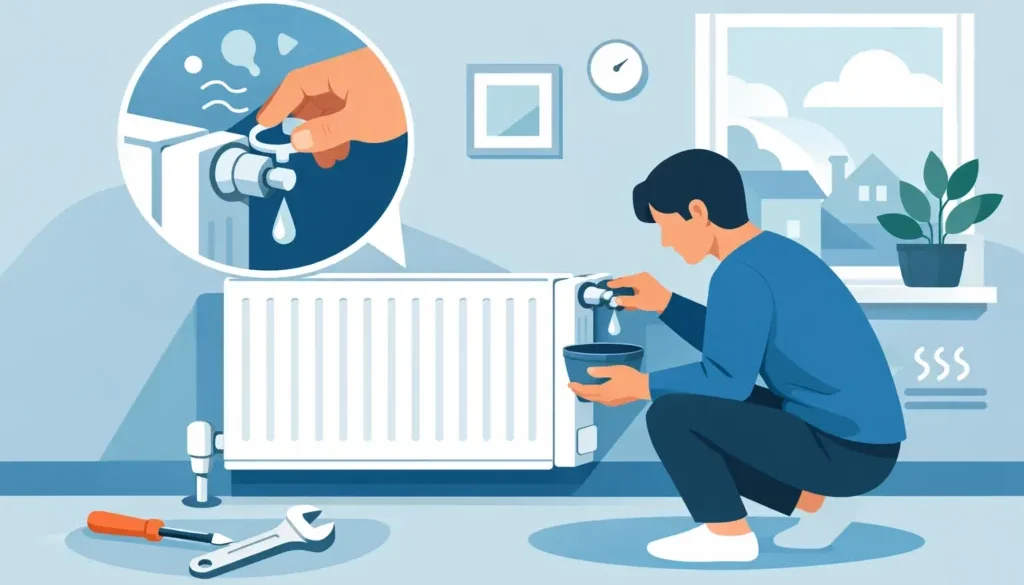
You do not need much. A radiator bleed key is the main item, along with an old cloth or towel and a small container if you want to catch any drips. Some newer radiators use a flat-head screwdriver rather than a standard key, but most domestic systems still use the traditional square bleed screw.
It is worth wearing old clothes, especially if your system water is discoloured. The water that comes out can be dark from sludge and corrosion within the system, and it can stain if you are not careful.
Step-by-step method
Start by checking every radiator in the house while the heating is off. Make a note of any that are cold at the top, patchy across the surface, or generally underperforming.
Place your towel beneath the bleed valve, which is usually found at the top corner of the radiator. Insert the bleed key and turn it slowly anti-clockwise, usually no more than a quarter to half turn. You should hear a hissing sound as trapped air escapes.
Keep the valve open just enough for the air to come out. Once water starts to appear in a steady stream rather than spits and air, close the valve by turning the key clockwise. Do not overtighten it. It only needs to be snug enough to stop leaks.
Repeat the process on each radiator that needs attention. Once you have finished, switch the heating back on and check whether the radiators now warm up evenly from top to bottom.
Which radiator should you bleed first?
If you are only dealing with one radiator that clearly has a problem, you can start there. If you are checking the whole house, many people begin downstairs and work their way up, especially in a two-storey home where air often collects in higher parts of the system.
That said, the exact order is not usually critical for a straightforward domestic job. What matters more is being methodical and checking each radiator properly. If you have a large property or an older heating setup, there can be some variation in how the system behaves.
What to do about boiler pressure
This is the step many homeowners miss. On a sealed central heating system, bleeding radiators can reduce the boiler pressure because you are releasing air and sometimes a small amount of water from the system.
Once you have finished bleeding, check the pressure gauge on your boiler. In many homes, the normal cold pressure sits around 1 to 1.5 bar, but you should always follow the manufacturer guidance for your appliance. If the pressure has dropped too low, you may need to top it up using the filling loop.
If you are not sure how to repressurise your boiler, do not guess. Topping up incorrectly can cause its own problems. This is one of those situations where it is sensible to call in a qualified heating engineer rather than risk damaging the system.
When bleeding radiators will not solve the problem
Bleeding helps when trapped air is the issue. It will not fix every heating fault.
If a radiator is cold at the bottom rather than the top, sludge build-up is more likely than trapped air. That usually points to corrosion and debris in the system, and in some cases a power flush or a more targeted system clean may be needed.
If only one radiator stays cold even after bleeding, the thermostatic radiator valve or lockshield valve may be stuck or out of balance. If several radiators are slow to heat, there could be a circulation issue, pump problem, or a wider fault with the boiler or controls.
There is also a difference between a radiator that needs occasional bleeding and one that constantly fills with air. If you are bleeding the same radiators every few weeks, it may suggest a deeper issue such as a leak, failing component, or corrosion within the system. That is worth having checked rather than treating it as routine.
Common mistakes to avoid
The biggest mistake is bleeding radiators while the heating is still on. This can draw more air through the system and increases the chance of hot water escaping.
Another common issue is opening the valve too far. You only need a small turn. Open it slowly and keep control of the key so you can close it quickly once water appears.
People also sometimes confuse a cold top with a cold bottom. That matters because the cause is often different. Air rises, so trapped air tends to affect the top of the radiator. Sludge settles, so blockage problems usually show lower down.
Finally, do not ignore repeated pressure loss. If your boiler pressure keeps dropping after bleeding, or you need to top it up often, there may be a leak or another fault in the system.
How often should radiators be bled?
For most homes, checking the radiators once or twice a year is enough. Early autumn is a sensible time, before the heating starts working hard again for winter.
You do not need to bleed radiators on a schedule if they are heating properly. It is better to watch for signs such as cold spots, unusual noises, or rooms taking longer to warm up. Overdoing it serves no purpose and may lead to unnecessary pressure adjustments.
Landlords should also keep an eye on radiator performance between tenancies or during routine property maintenance. Heating complaints often begin with uneven radiators, and small issues are easier to sort before they turn into bigger ones.
Safety and when to call a professional
Bleeding a radiator is generally safe for a competent homeowner, but only if the job stays within that simple boundary. If the bleed valve is damaged, the key will not grip, water continues to leak afterwards, or the system pressure becomes unstable, it is best to stop and get advice.
The same applies if your heating system is older, has ongoing faults, or you are unsure whether it is sealed or open vented. There is no benefit in forcing a DIY fix if the signs point to something more than trapped air.
For homes in Warrington and the wider North West, this is often where a local heating engineer can save time and prevent a small maintenance issue becoming a boiler breakdown or a larger repair. AquaHeat Heating Services regularly sees cases where a cold radiator turns out to be part of a wider circulation or sludge problem rather than a simple air lock.
A quick check after the job
Once the heating is back on, give the system 20 to 30 minutes and then feel each radiator carefully. They should heat more evenly, with no cool section across the top. Listen for any remaining gurgling as well.
If everything is working as it should, that is the job done. If not, the system is telling you that bleeding was only part of the answer. Catching that early is always better than waiting until the house is cold and the boiler is under strain.
A warm radiator should be something you can take for granted. If it is not, a careful bleed is a good first step, and knowing when to get expert help is just as valuable.